
E-Invoicing Compliant System: 12 Questions to Check Your Vendor
The word "compliant" in a vendor's proposal isn't enough. Twelve specific questions reveal whether a system is truly e-invoicing compliant or only compliant on paper.
سامي الحيدري
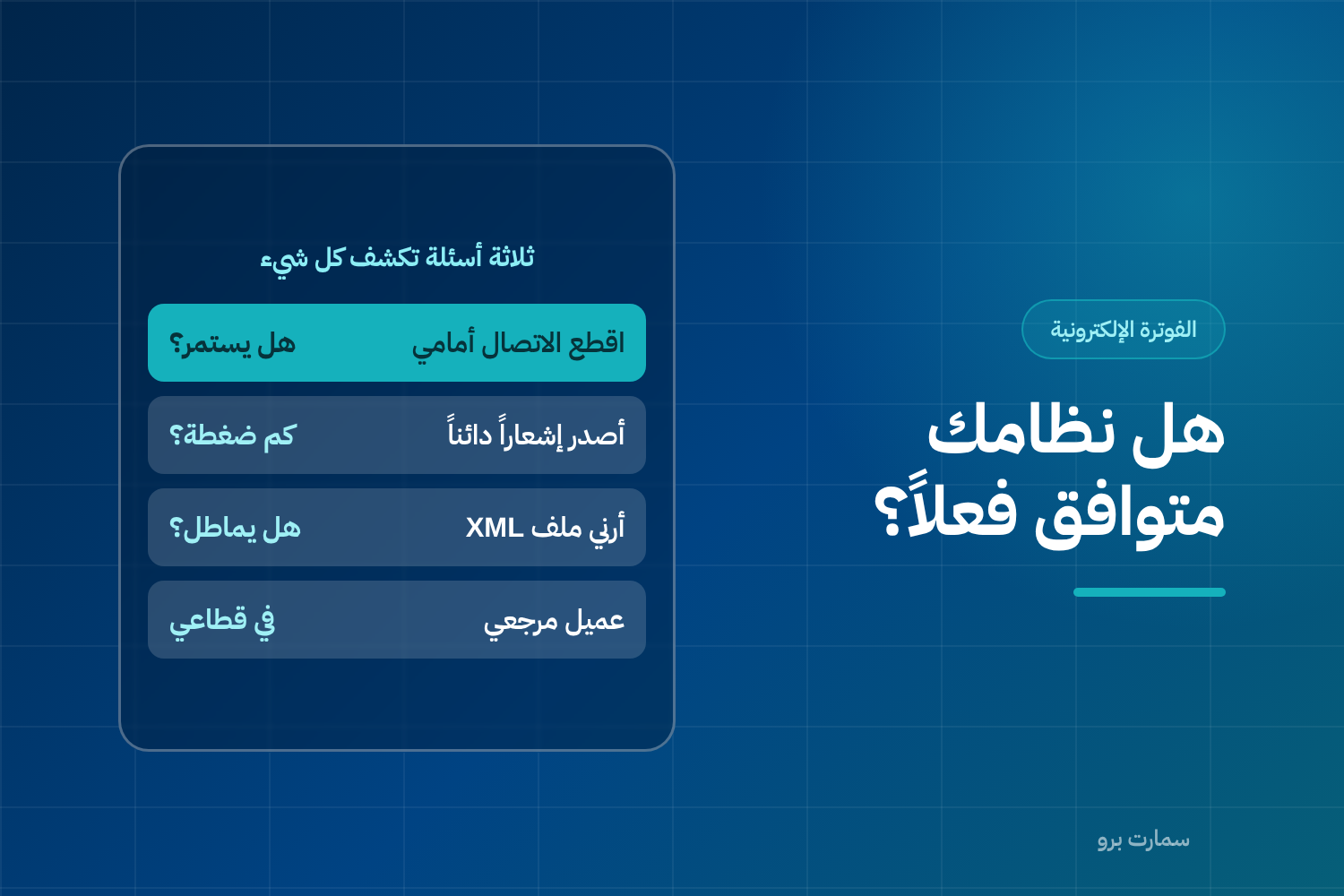
The phrase "e-invoicing compliant system" appears in almost every sales pitch. The problem is that it means nothing specific. Compliant with which phase? Is integration included, or is it a paid add-on? Has it been tested on cases like yours?
This article gives you twelve questions to put to every vendor, with the answers requested in writing. Only written answers reveal the difference between a system that is ready and one that is still on its way.
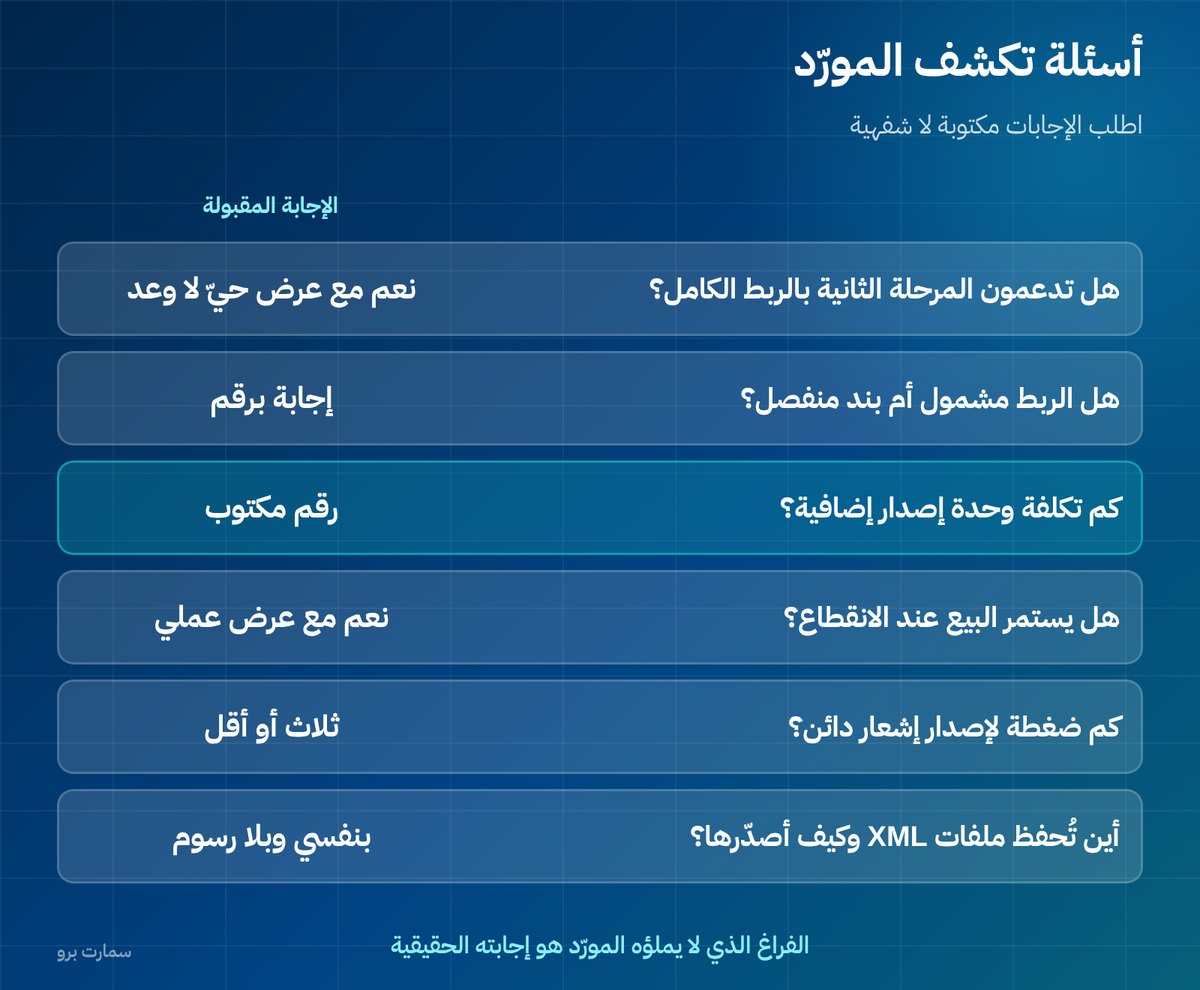
What are the 12 questions to ask an e-invoicing vendor?
| # | Question | Acceptable answer |
|---|---|---|
| 1 | Do you support Phase 2 with full integration? | Yes, with a live demo, not a promise |
| 2 | Do you issue tax invoices and simplified invoices from the same screen? | Yes |
| 3 | Is integration included in the price or a separate line item? | An answer with a number |
| 4 | How much does an additional invoicing unit cost? | A written figure |
| 5 | Does selling continue when the connection drops? | Yes, with a practical demo |
| 6 | How many clicks to issue a credit note? | Three or fewer |
| 7 | Where do I see pending and rejected invoices for each unit? | A specific screen |
| 8 | Do you alert me before the certificate expires? | Yes, with a specific lead time |
| 9 | Where are XML files stored and how do I export them? | A clear answer |
| 10 | Does the system contain any prohibited function? | No, with a written declaration |
| 11 | Who bears the cost of any future regulatory update? | The vendor |
| 12 | What happens to my data if I stop the subscription? | Full export at no charge |
Print this table and take it to every demo. A serious vendor answers all twelve in a single session.
Which three questions reveal everything?
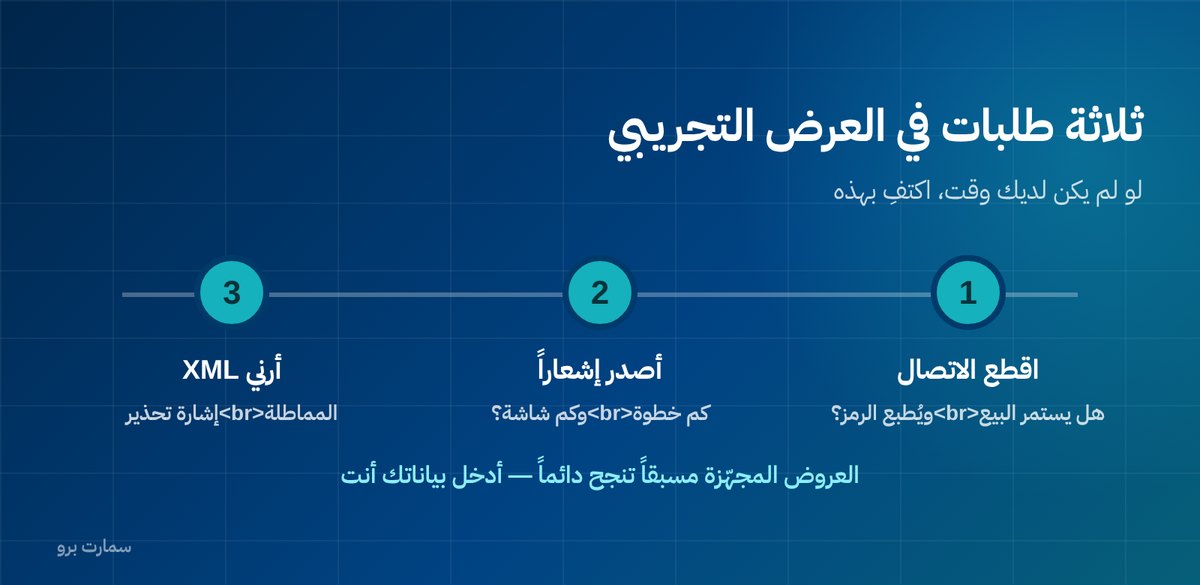
If you don't have time, settle for three:
First: cut the connection in front of me right now. This request alone separates systems. A system that stops or prints an empty QR code won't help you.
Second: issue a credit note on an invoice you issued a moment ago. Watch the number of steps and screens. Complexity here means your staff will look for workarounds.
Third: show me the XML file for a single invoice. A vendor who can't show it, or stalls, is hiding something. The file is yours, not theirs.
How do you confirm an e-invoicing compliant system is real?
Compliance is proven by testing, not by a slogan. Ask for a test session on your own data: three of your items, a real customer of yours, and an exempt item if you have one.
Remember that any demo prepared in advance always works. The value lies in entering your own data in front of you.
What are the warning signs in vendor proposals?
- "100% compliant" with no detail on which phase or which requirements.
- Refusing to show an XML file, or postponing it until "after signing".
- Vagueness about the cost of additional units, or an answer of "it depends".
- No screen for rejected invoices, just a generic success message.
- Promises of features "under development" that will arrive before your deadline. Don't buy a promise.
- No reference customer in your sector you can talk to.
Why ask a reference customer instead of the vendor?
The vendor will give you the best possible picture. A customer who has used the system for a year will give you the real one. Ask for the number of a customer in your sector and of a similar size to yours, and ask them four questions:
- How long did integration actually take, from signing to the first approved invoice?
- What problem recurred most in the first month? And how did support handle it?
- Did any fees appear that weren't in the proposal? How much?
- If you could go back, would you choose it again?
The last question sums up everything before it. And if the vendor can't give you a single reference customer in your sector, that is an answer in itself.
What should you ask about support at peak times?
Invoicing usually breaks at the worst possible moment: Thursday evening, the last day of the month, or during a busy season. Ask about this specifically:
- What are the actual support hours? Do they cover evenings and weekends?
- What is the support channel: phone, or tickets answered within a business day?
- What is the committed response time for a fault that stops invoicing completely?
- Is there an emergency number separate from regular support?
"24/7 support" in a marketing pitch is very different from a committed response time in the contract.
How many vendors should you compare?
Three proposals is the practical number. Two give you no point of reference, and five eat up time without adding anything.
Compare them on the same sheet: the twelve questions in one column and the vendors in three columns. The gaps a vendor doesn't fill are their real answer. Comparing on price alone, without this table, is what leads businesses to pick the cheapest option and then pay the difference twice. For a fuller view of costs, see what ERP costs in Saudi Arabia in year one and at renewal.
What should be in the contract?
- An explicit statement that Phase 2 integration is included, and its scope.
- The vendor bears the cost of updates that future requirements impose.
- Your right to export all XML files and your data at no charge, at any time.
- A specific support response time at peak periods, not "within business days".
- A declaration that the system contains no prohibited functions.
The third clause in particular is the one everyone forgets and anyone who later changes vendor needs.
The official list of requirements any system must meet is published by the Zakat, Tax and Customs Authority (ZATCA), and that is what proposals should be measured against, not marketing claims.
Read also
- Sandbox testing before go-live
- What does ERP cost in Saudi Arabia?
- E-invoicing penalties: violations and amounts
Key takeaway: A system is e-invoicing compliant only when it passes live tests on your own data and the vendor commits to the answers in writing and in the contract.
To run these same tests on SmartPro with your own data, start a free trial or book a demo.
Frequently asked questions
How can I make sure a system is truly e-invoicing compliant?
Through testing, not slogans. Ask for a test session on your own data: your items, a real customer and an exempt item, then ask the vendor to cut the connection in front of you, issue a credit note and show the XML file for an invoice. Demos prepared in advance always work.
What are the three most important questions to ask a vendor?
Cut the connection in front of me now and show me what happens; issue a credit note on an invoice you issued a moment ago and count the steps; and show me the XML file for a single invoice. Stalling on any of them is a warning sign.
What are the warning signs in system proposals?
The phrase "100% compliant" with no detail, refusing to show an XML file before signing, and vagueness about the cost of additional units. Other signs are no screen for rejected invoices, promises of features under development, and no reference customer in your sector.
What clauses should be in the contract?
The inclusion and scope of Phase 2 integration, and the vendor bearing the cost of later regulatory updates. The contract should also give you the right to export all XML files at no charge at any time, a specific support response time, and a declaration that the system has no prohibited functions.