
E-Invoicing Wave 25: The SAR 187,500 Threshold and the February 2027 Deadline
A SAR 187,500 threshold, the first wave to count 2025 revenue, and an integration deadline of 1 February 2027. Who is covered, what integration actually requires, and an eight-week plan.
Author:سامي الحيدري
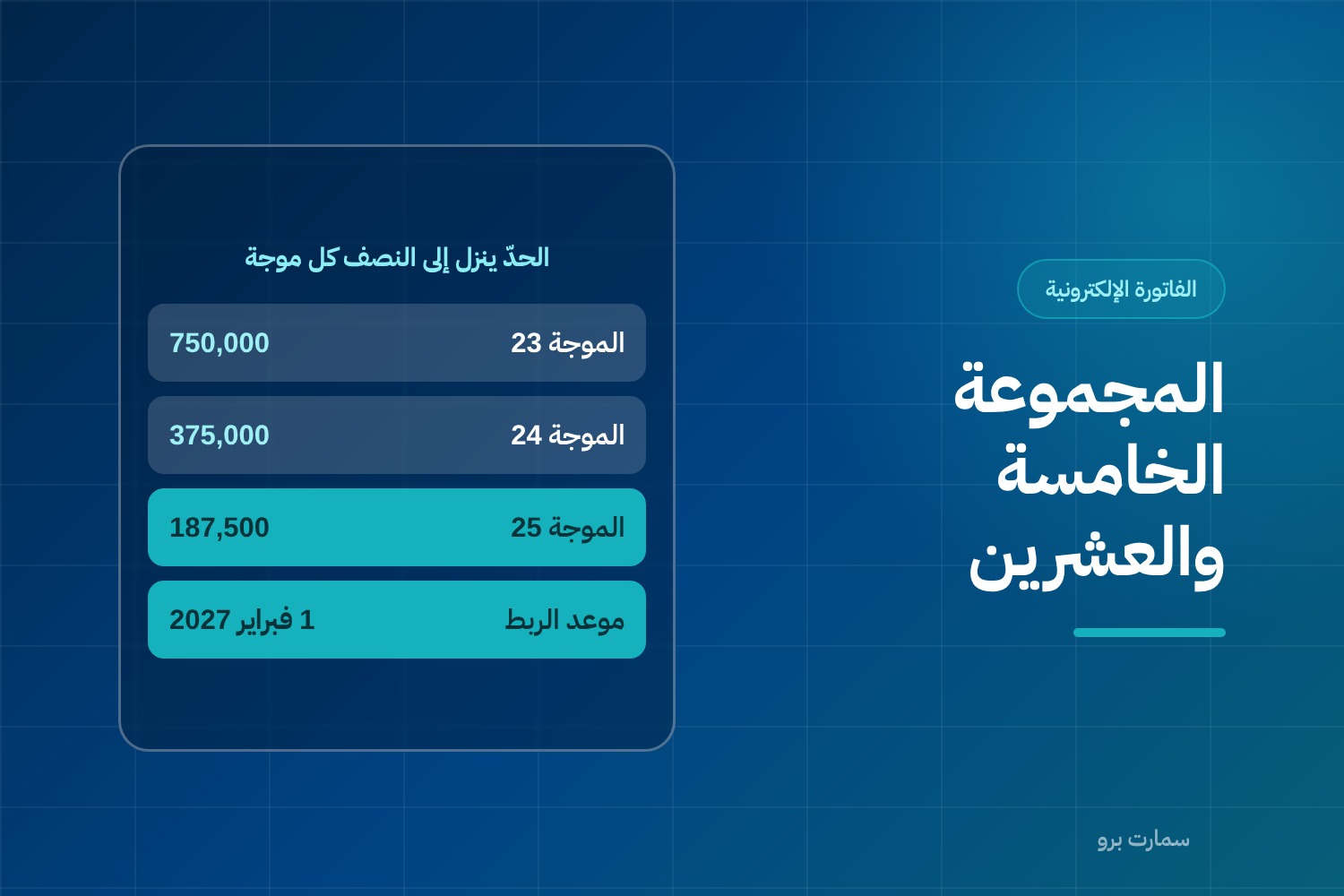
E-invoicing Wave 25 is the widest integration wave ZATCA has announced so far, and the one with the lowest threshold. The test is now SAR 187,500 in taxable revenue, half the previous wave's threshold, and the integration deadline is 1 February 2027. If your revenue exceeded that figure in any one of four years, you are in.
The criterion was announced on 24 July 2026 by the Zakat, Tax and Customs Authority (ZATCA), and it contains a detail no earlier wave had: four years are counted, not three.
Who is covered by e-invoicing Wave 25?
The published criterion: every taxpayer whose taxable revenue exceeded SAR 187,500 in any of the years 2022, 2023, 2024 or 2025.
Adding 2025 to the list of years is what is new. Waves 22 to 24 counted only 2022, 2023 and 2024, so a business that started trading in 2025, or grew during it, fell outside the criterion. Now it is in.
Exceeding the threshold in a single year is enough. Your revenue does not need to be above the figure today, or above it every year. One year out of four brings you in.
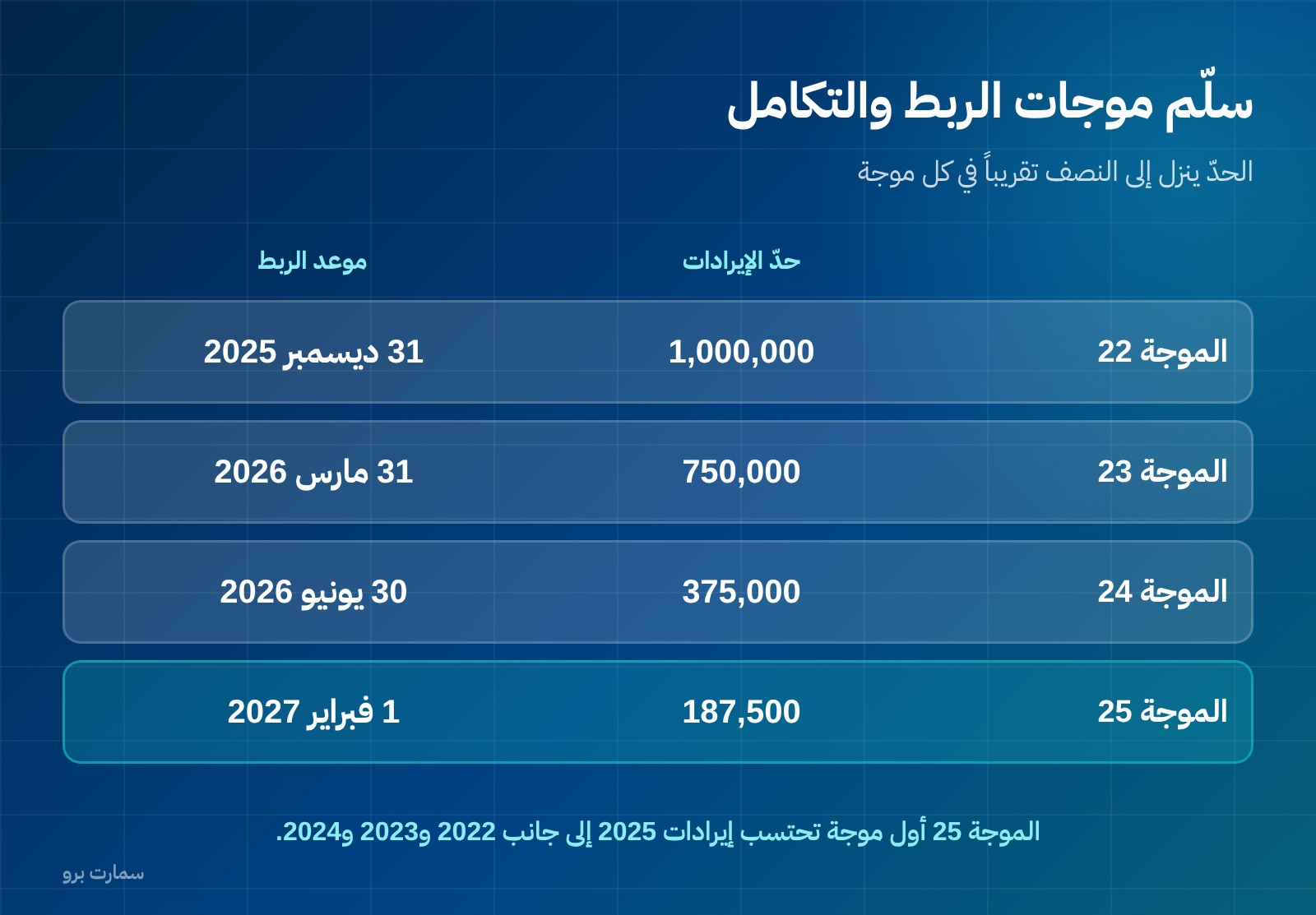
| Wave | Announced | Revenue threshold | Years counted | Integration deadline |
|---|---|---|---|---|
| 22 | 21 March 2025 | Over SAR 1,000,000 | 2022 / 2023 / 2024 | 31 December 2025 |
| 23 | 27 June 2025 | Over SAR 750,000 | 2022 / 2023 / 2024 | 31 March 2026 |
| 24 | 26 September 2025 | Over SAR 375,000 | 2022 / 2023 / 2024 | 30 June 2026 |
| 25 | 24 July 2026 | Over SAR 187,500 | 2022 / 2023 / 2024 / 2025 | 1 February 2027 |
Look at the threshold column: one million, then 750,000, then 375,000, then 187,500. Each wave is roughly half the one before. The pattern is clear, and if you sit just below the Wave 25 threshold, the sensible move is to prepare before a later criterion is announced.
What does the integration phase actually require?
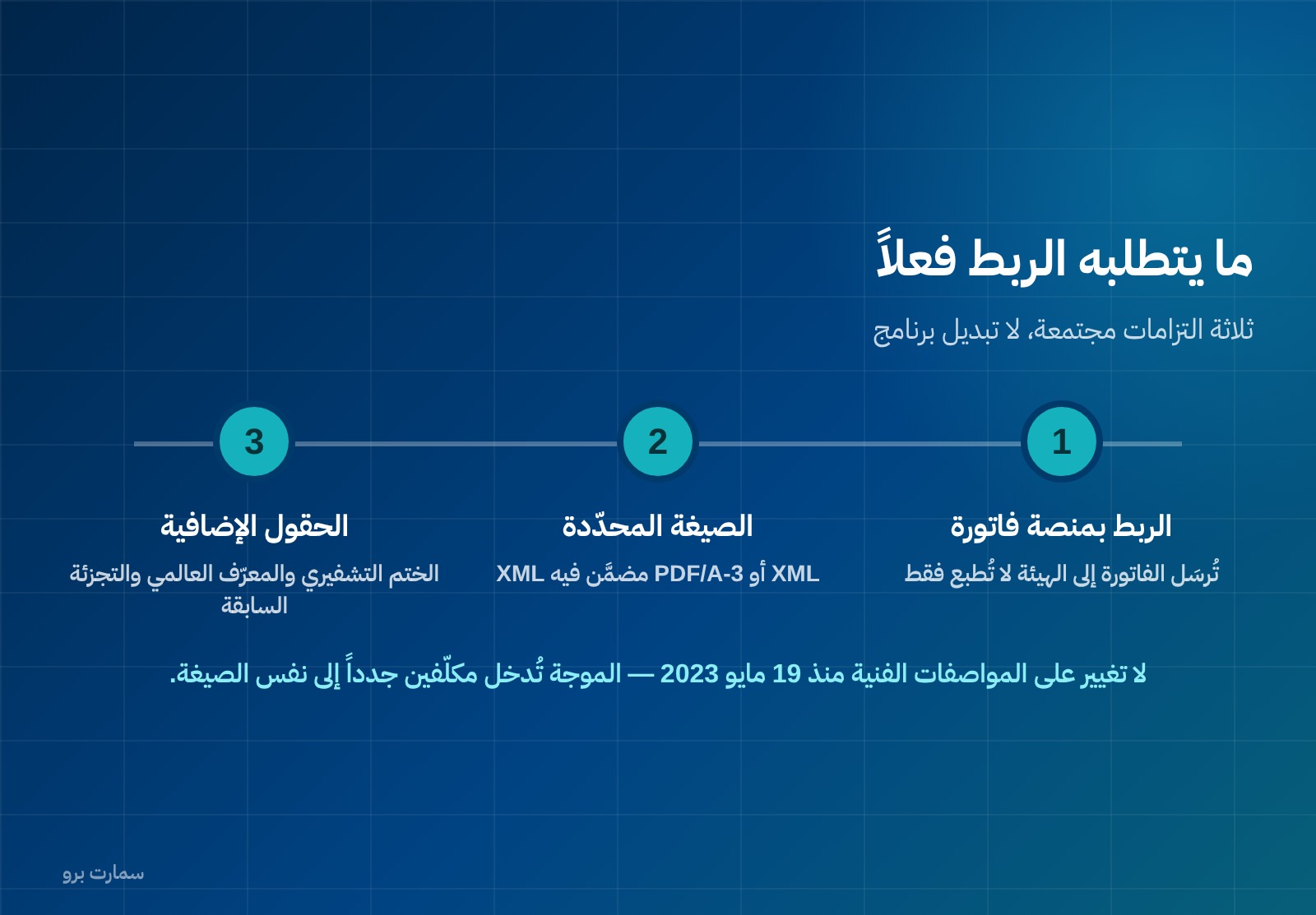
Phase 2 is not just issuing an electronic invoice. That was Phase 1, which has applied to everyone since December 2021. Phase 2, the integration phase, requires three things together:
- Connecting your system to the Fatoora platform, so the invoice is sent to ZATCA rather than only printed.
- Issuing invoices in the specified format, meaning XML, or PDF/A-3 with the XML embedded.
- Adding the extra fields that Phase 1 does not require, including the cryptographic stamp, the invoice's universally unique identifier (UUID) and the previous invoice hash.
The key difference between the two invoice types is that a standard tax invoice (the B2B invoice) passes through ZATCA before it is handed to the customer, while a simplified tax invoice (the B2C invoice) is sent after it is issued, within a set period. This is known as clearance versus reporting, covered in our ZATCA e-invoicing guide, and it shapes your sales process, not just the file format.
Will ZATCA notify you, and should you wait for it?
ZATCA states that it notifies each targeted business directly, at least six months before its integration date. So a notification is coming, and the lead time is there on purpose, to give you time to prepare.
Waiting for the notification is still a poor decision, for two reasons. First, the 1 February 2027 deadline is already public, and any delay in choosing or configuring a system eats into your own preparation time, not ZATCA's. Second, technical setup is not just swapping software: it involves obtaining a certificate, generating keys, testing in the simulation environment, then moving to production. Anyone who has been through this cycle knows that two weeks of actual work can stretch to a month if one field fails.
The onboarding steps on the Fatoora platform are published in detail. If you have several branches, plan how you will onboard more than one EGS unit (e-invoice generation solution, meaning each device or system that issues invoices) before you start, because how you arrange branches at the outset determines how many certificates you manage afterwards.
What has not changed, and why that is good news
This point deserves clarity because the market often confuses it: there is no change to the E-Invoicing Regulation or to the technical resolution. The latest version of the controls, requirements and technical specifications is dated 19 May 2023, the data dictionary and the XML implementation standard carry the same date, and neither has been updated in 2025 or 2026.
What does this mean in practice? Your system vendor faces no format change, only new taxpayers joining the same format. If the system is already integrated and proven with taxpayers in earlier waves, setting you up is account configuration, not software development. That is a direct question to put to any vendor before you sign: do you have businesses actually integrated in previous waves?
What are the Phase 2 penalties?
Failing to integrate by the deadline is a violation in its own right, separate from Phase 1 violations. Penalty details are set out by ZATCA, but the principle is that integration is not a regulatory option you can postpone; it is an obligation with a date.
The core obligation also still stands: a tax invoice needs all of its required particulars. Integration does not exempt you from any of them; it adds to them. Corrections after issue also go through the system, as explained in our guide to credit notes and debit notes under VAT.
An eight-week plan
- Week 1: Review your revenue for 2022, 2023, 2024 and 2025 from the VAT returns you filed. Your highest year decides your position, not the current year.
- Week 2: If you exceeded the threshold in any of them, treat yourself as targeted and do not wait for the notification.
- Week 3: Ask your system vendor which businesses it has actually integrated, about the simulation environment, and who manages the certificate when it expires.
- Week 4: Prepare your registration data: VAT number, commercial registration number, national address and additional number.
- Weeks 5–6: Obtain the certificate, connect to the simulation environment, and test a standard invoice, a simplified invoice and a credit note.
- Week 7: Test the case that trips up most businesses: issuing invoices when the internet goes down.
- Week 8: Move to production and keep a record of your tests.
That is eight weeks of organised work, and you have until February 2027. The businesses that ran late in earlier waves did not do so because of technical difficulty, but because they started in the final month.
If you are choosing a system for this, SmartPro supports ZATCA (Fatoora) Phase 2 e-invoicing, and its Sales & POS keeps working offline, which matters for the week 7 test.
Key takeaway: If your taxable revenue exceeded SAR 187,500 in any year from 2022 to 2025, you must integrate with Fatoora by 1 February 2027. Start the eight-week plan now rather than waiting for ZATCA's notification.
To see Phase 2 invoicing in action on your own data, start a free trial or book a demo.
Article visuals
Frequently asked questions
Who does E-Invoicing Wave 25 cover?
Every taxpayer whose VAT-taxable revenue exceeded SAR 187,500 in any of the years 2022, 2023, 2024 or 2025. Crossing the threshold in just one of those four years is enough, and your revenue does not need to be above the figure today.
What is the integration deadline for Wave 25?
1 February 2027. ZATCA states it notifies each targeted business directly at least six months before its integration date, but the deadline has been public since 24 July 2026, so there is no reason to wait for the notice.
What is new in this wave's criteria?
Two things: the threshold dropped to SAR 187,500, half that of Wave 24, and 2025 was added to the years counted. Earlier waves counted only 2022, 2023 and 2024, so businesses that started or grew in 2025 were outside the criteria and are now inside.
Have the e-invoicing specifications changed with this wave?
No. The latest version of the controls, requirements and technical specifications is dated 19 May 2023, and the data dictionary and XML implementation standard carry the same date with no update since. The wave brings new taxpayers into the same format rather than changing it.
What is the difference between Phase 1 and Phase 2 of e-invoicing?
Phase 1 means issuing and storing electronic invoices, and it has applied to everyone since December 2021. Phase 2 adds connecting your system to the Fatoora platform, issuing in XML or PDF/A-3 with embedded XML, and extra fields including the cryptographic stamp, the invoice UUID and the previous invoice hash.