
Invoice vs Invoicing vs E-Invoicing: What's the Difference?
The difference between an invoice and invoicing isn't just about words. Three terms get used interchangeably but mean different things, and mixing them up leads to the wrong system choice.
سامي الحيدري
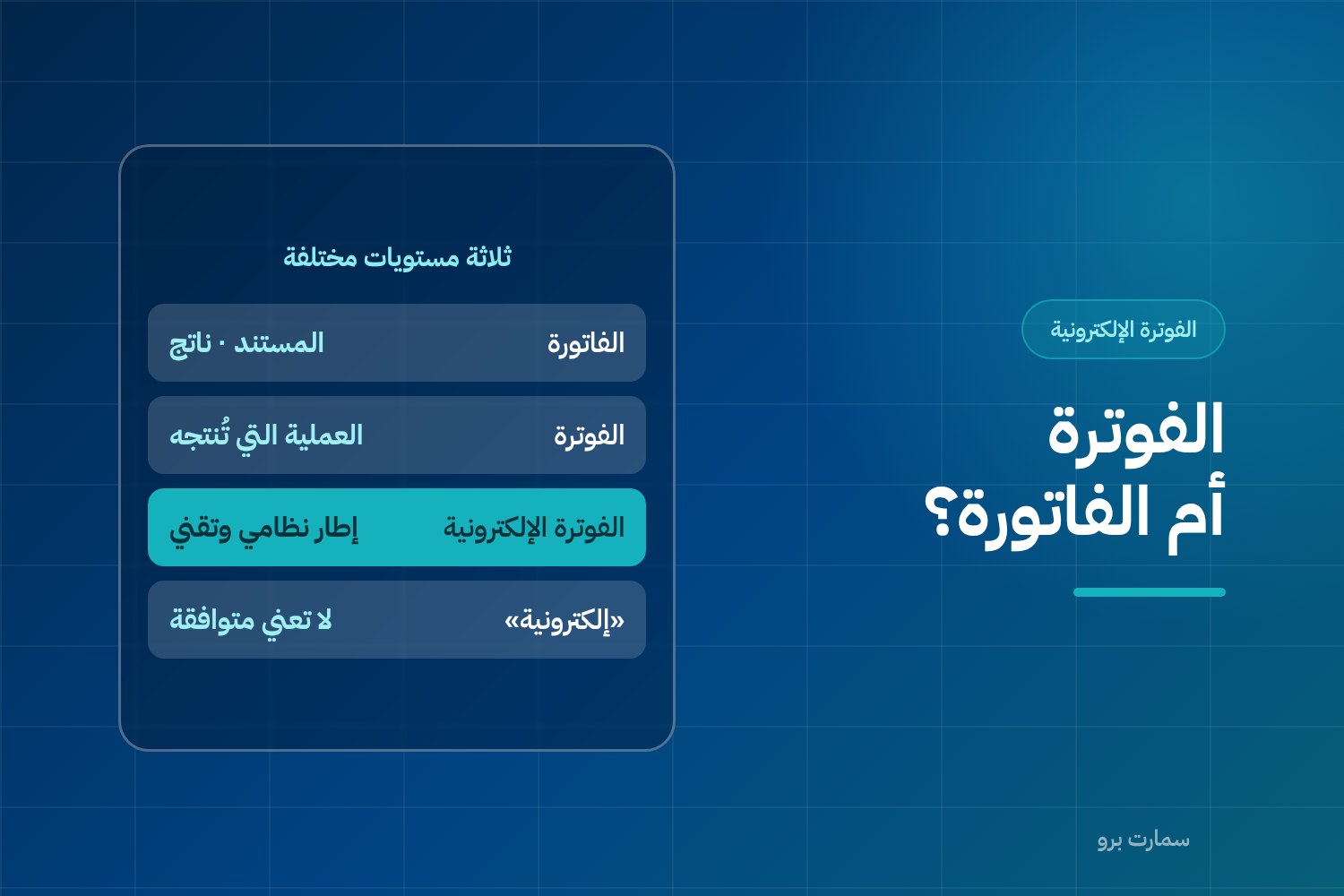
The difference between an invoice and invoicing sounds like a language question, but it causes real mistakes. One business buys an "invoicing system" when it actually needs accounting software. Another assumes it complies with e-invoicing because it sends invoices electronically. An invoice is a document, invoicing is a process, and e-invoicing is a regulated framework.
Separating the three clears up all of this confusion.
What is the difference between an invoice and invoicing?
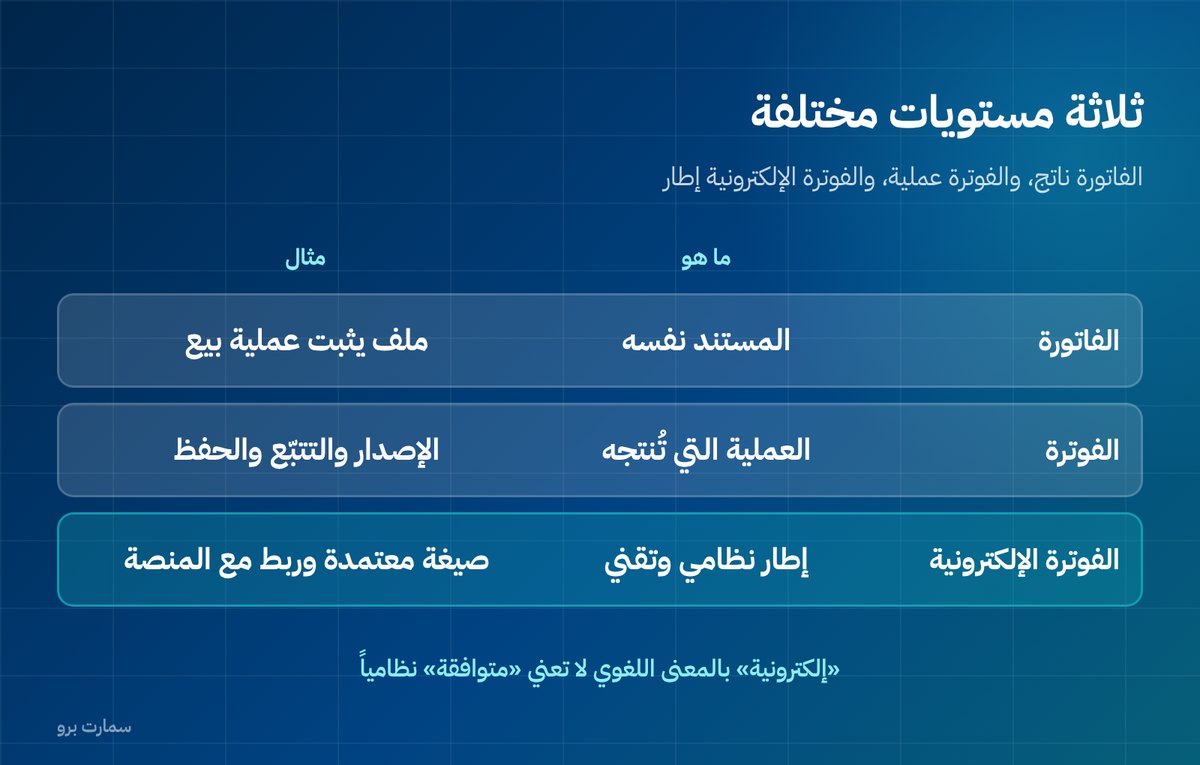
| Term | What it is | Example |
|---|---|---|
| Invoice | The document itself | A paper or file that proves a sale |
| Invoicing | The process that produces the document | Issuing, tracking and storing invoices |
| E-invoicing | A specific regulatory and technical framework | Issuing in an approved format and integrating with the platform |
In short: an invoice is an output, invoicing is a process, and e-invoicing is a regulatory framework that governs both.
Why does this distinction matter in practice?
Because each level asks something different of you:
- At the invoice level: the question is which fields are mandatory and how the document should look. Details in tax invoice requirements.
- At the invoicing level: the question is who issues, when, and how invoices are followed up and collected. Details in the invoice workflow.
- At the e-invoicing level: the question is whether your system qualifies for integration, and whether each invoice was sent and approved.
A business that only fixes the first level issues invoices that look correct, yet still collects late and still has some invoices rejected.
Which other terms get confused with these?
- Invoice vs receipt: an invoice proves the supply and the amount due; a receipt proves the money was received. The two can fall on different dates.
- Invoice vs quotation: a quotation is an invitation to negotiate and has no accounting effect.
- Invoice vs proforma invoice: a proforma is a non-final document that is neither recorded nor sent to the platform. Details in the proforma invoice.
- Invoicing vs accounting: invoicing is part of accounting, not a replacement for it. An invoicing system on its own produces no financial statements and no trial balance.
That last point is a common reason businesses buy the wrong system. A business that needs full accounting buys an invoice-issuing tool, then ends up keeping its books somewhere else.
Does "electronic" mean "compliant"?
No, and this is the biggest misunderstanding in the market. An invoice produced on a computer and emailed as a PDF is electronic in the everyday sense, but it is not an invoice within Saudi Arabia's e-invoicing system.
The difference is that a compliant e-invoice requires a specific format, a cryptographic stamp (a digital seal proving the invoice hasn't been altered), a QR code with specific encoding, a counter and a hash chain, and it must pass through the Fatoora platform. Details in Phase 2 e-invoicing, with the official requirements published by ZATCA.
What do vendors really mean by these three phrases?
- "Our system issues electronic invoices": this may mean a PDF file only. Ask: in what format? And is it sent to the platform?
- "We're ZATCA compliant": compliant with which phase? Phase 1 and Phase 2 differ fundamentally.
- "Integration is included": included in the price, or available as a service? And does it cover all your invoice-issuing units, or just one?
The difference between these answers isn't a commercial detail. It decides whether you will be compliant by your deadline or not.
Why is this confusion so widespread?
Because the terms reach the Saudi market through translation, and they are translated in more than one way. In Arabic, "invoicing" becomes فوترة, "invoice" becomes فاتورة and "e-invoicing" becomes فوترة إلكترونية, yet in daily use all three are used interchangeably, in both languages.
The result is that the reader of a proposal understands something other than what its writer meant, without bad intent on either side. The fix is simple: ask for a description of what the system does, not a label. "The system generates an XML file, sends it to the platform and receives the response" leaves no room for interpretation, unlike "a compliant invoicing system".
How do you know which level you need?
Ask three questions, in this order:
- Do my invoices contain all the required fields? If not, start here before anything else.
- Is the issuing and follow-up procedure under control? Who issues and when, and who follows up on collection.
- Does my system qualify for integration? And can I see the status of every invoice: sent, approved, rejected.
Don't jump to the third before the first. An excellent system that integrates invoices with incomplete data will see them rejected one after another.
Where does each commercial document fit?
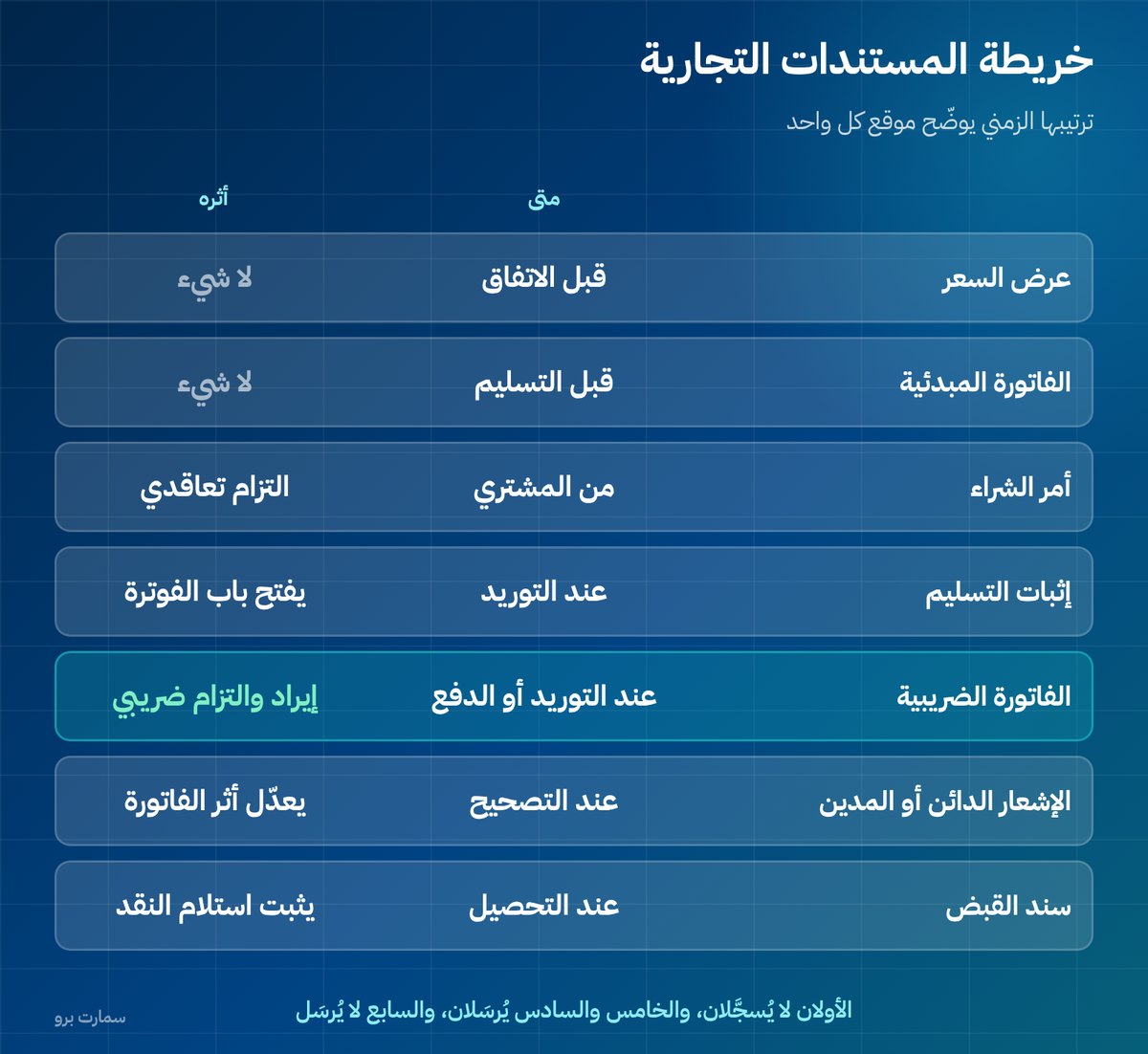
Their chronological order shows where each one sits:
| Document | When | Effect |
|---|---|---|
| Quotation | Before agreement | None |
| Proforma invoice | After agreement, before delivery | None |
| Purchase order | From the buyer on approval | Contractual commitment |
| Proof of delivery | On supply | Opens the way to invoicing |
| Tax invoice | On supply or payment | Revenue and a VAT liability |
| Credit or debit note | On correction | Adjusts the invoice's effect |
| Receipt voucher | On collection | Proves cash was received |
The first two are not recorded; the fifth and sixth are recorded and sent to the platform; the seventh is recorded but not sent. Mixing up these roles is what produces books that don't match the VAT return.
What should you watch for in contracts and proposals?
Pay attention to the wording in vendor proposals. "Invoicing system", "accounting system" and "e-invoicing compliant system" are three different things that may be used interchangeably in the same proposal.
Ask for specifics in writing: what does the system issue? Does it send to the platform, or produce a file you send yourself? Does it produce financial statements, or only sales documents? The full checklist is in e-invoicing compliant system: 12 questions to check your vendor.
Read also
- Phase 2 e-invoicing: what integration means
- Tax invoice vs simplified invoice
- The invoice workflow: from order to collection
Key takeaway: An invoice is the document, invoicing is the process, and e-invoicing is the ZATCA framework governing both. A PDF invoice is electronic but not compliant, so ask vendors to describe what their system actually does.
To see how SmartPro connects invoicing, accounting and Fatoora Phase 2 e-invoicing in one system, start a free trial or book a demo.
Frequently asked questions
What is the difference between an invoice and invoicing?
An invoice is the document itself that proves a sale. Invoicing is the process that produces, tracks and stores that document. So an invoice is an output, invoicing is a process, and e-invoicing is the regulatory and technical framework that governs both.
Is every electronic invoice considered compliant?
No. An invoice produced on a computer and sent as a PDF is electronic only in the everyday sense. An invoice within Saudi Arabia's e-invoicing system requires a specific format, a cryptographic stamp, a QR code with specific encoding, a counter and a hash chain, and it must pass through the Fatoora platform.
What is the difference between an invoice and a receipt?
An invoice proves the supply and that an amount is due, while a receipt proves the amount was actually received. The two can fall on completely different dates, especially in credit sales, and each has its own separate accounting effect.
Is an invoicing system enough instead of accounting software?
Not if you need financial statements. Invoicing is part of accounting, not a replacement for it, and an invoicing system alone produces no trial balance, income statement or balance sheet. Ask the vendor to state in writing exactly what the system produces before you sign.