
Proforma Invoice: When You Need One and How It Differs from a Quotation
A proforma invoice is neither a tax invoice nor a quotation. Here is when to use each, what happens in your books and VAT return, and the most common mistake accountants make with it.
سامي الحيدري
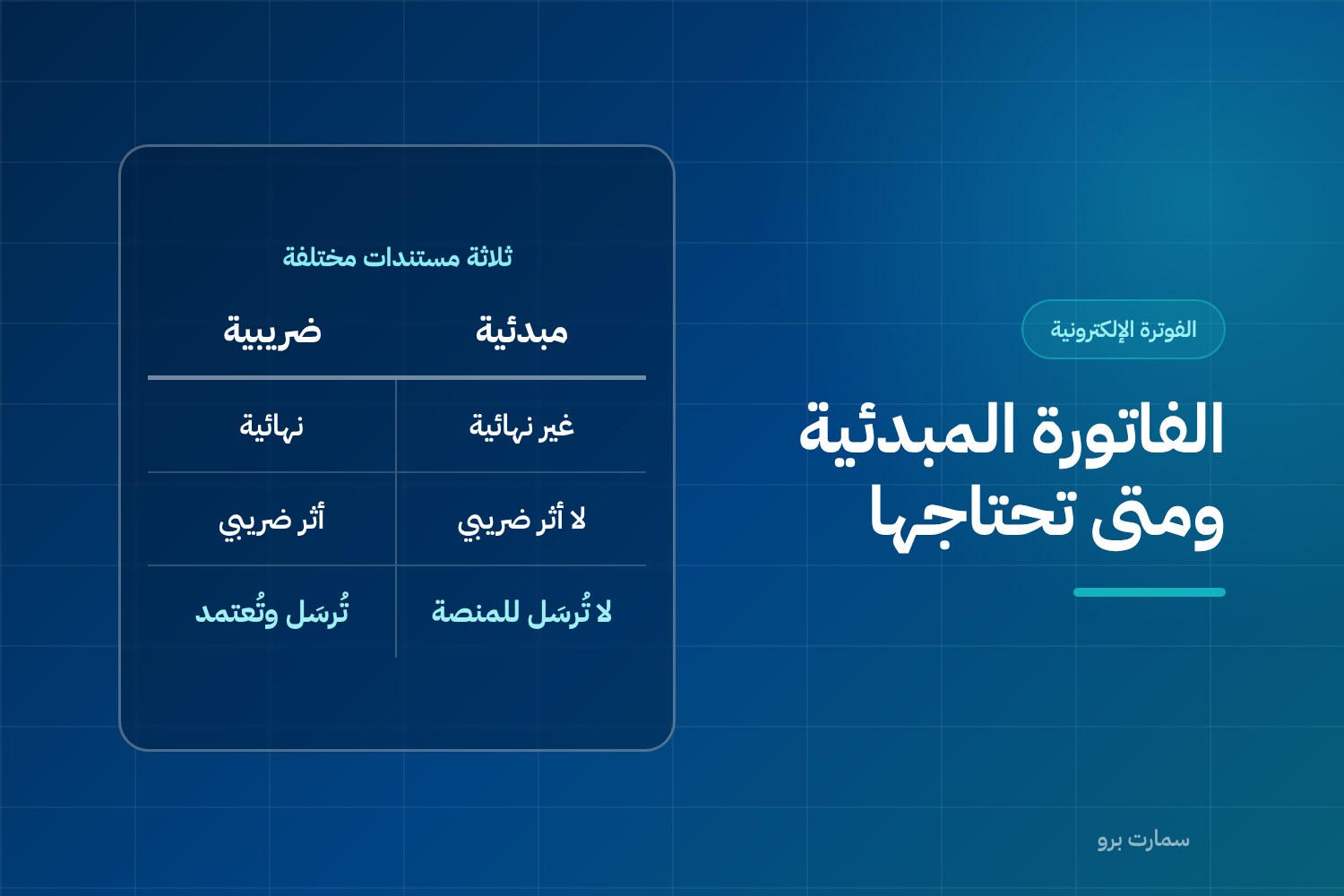
A proforma invoice is a non-final document that shows the buyer the details and amount of an expected supply before the deal is completed. It creates no VAT liability, is not recorded as revenue and is never sent to the Fatoora platform. It is neither a quotation nor a tax invoice, and it never replaces one.
It is still one of the most misunderstood documents in day-to-day work. Some teams treat it as a quotation, and others post it in the books as if it were a tax invoice. Both are wrong.
How does a proforma invoice compare with a quotation and a tax invoice?
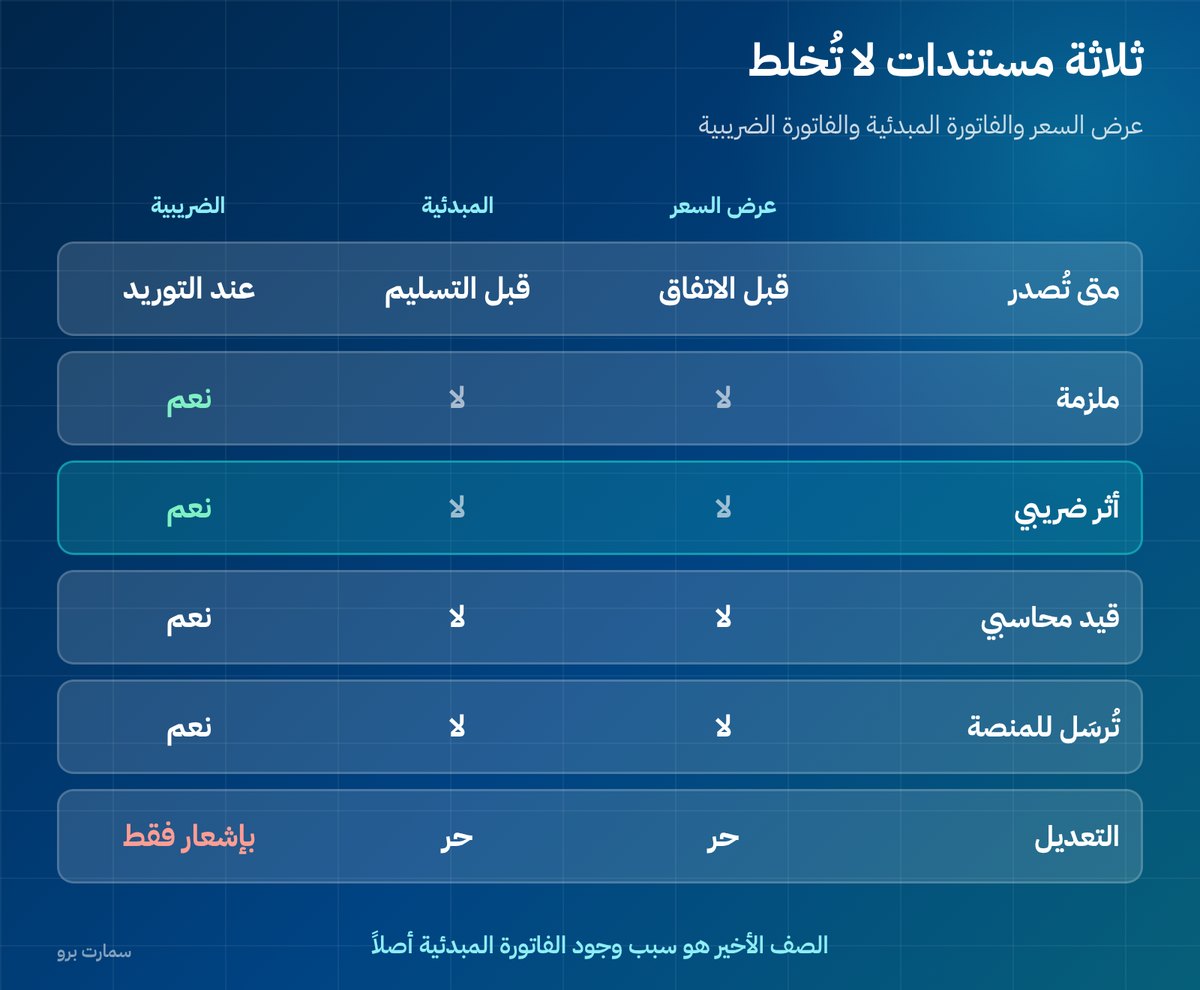
| Aspect | Quotation | Proforma invoice | Tax invoice |
|---|---|---|---|
| Purpose | An invitation to negotiate | Confirms details before delivery | Evidence that the supply took place |
| When issued | Before agreement | After agreement, before delivery | At supply or payment |
| Binding? | No | No, but closer to the agreement | Yes |
| VAT impact | No | No | Yes |
| Journal entry | No | No | Yes |
| Sent to Fatoora | No | No | Yes |
| Can be edited | Yes | Yes | No, only through a note |
The last row is the practical reason the proforma invoice exists at all. As long as the deal is not final, changing it costs nothing. Once the tax invoice is issued, every change needs a credit or debit note and a new document.
When do you actually need a proforma invoice?
- Before a customer makes a bank transfer: they need a document showing the amount and your details to enter into their payment system.
- In international trade: it is used for shipping, customs clearance and opening letters of credit before the goods arrive.
- With organisations that need internal approval: the procurement department submits it to approve the spend before issuing a purchase order.
- In multi-stage projects: to confirm the value of the next stage before work starts.
In every one of these cases, the proforma invoice does not replace the tax invoice once the supply is completed.
What is the most common mistake accountants make?
Recording the proforma invoice in the books as a sale. The result is revenue appearing in a month when no supply happened. Then either it is recorded again when the real invoice is issued, doubling the revenue, or it is left in place and creates a difference at closing that nobody can trace.
The correct treatment is that the document is never posted as a journal entry. The entry starts with one of two events: receiving an advance payment, or completing the supply.
What if you receive payment based on a proforma invoice?
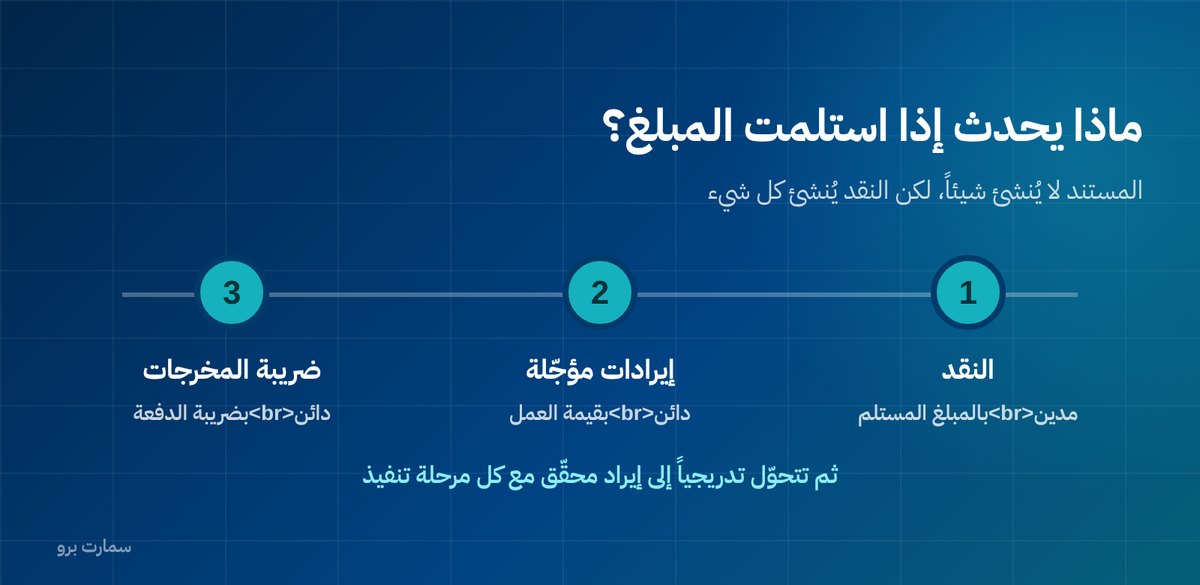
This is where an obligation really arises. Receiving cash before the supply means an advance payment, and an advance payment has its own treatment: a tax invoice is issued for it, and cash is debited against deferred revenue (credit) and output VAT (credit).
Put more plainly: the proforma invoice creates nothing, but the money you receive because of it creates everything. The treatment is explained in detail in Tax Invoice vs Simplified Invoice.
How do you make it look different so it isn't misused?
- State clearly on it that it is a proforma invoice and not final.
- Don't use your tax invoice sequence. Give it completely separate numbering, or you will break your official sequence.
- Don't put a QR code or a cryptographic stamp on it. Both belong only to compliant invoices, and their presence suggests the document is approved.
- State how long it is valid, because prices change and an open-ended document becomes a problem.
- Never send it to the Fatoora platform under any circumstances.
The third point matters most. Issuing a document that looks like a compliant invoice when it isn't one confuses the customer, and it may be read as an attempt to mislead.
What about accounting systems?
Most good systems separate three documents: the quotation, the proforma invoice and the tax invoice, each with its own numbering. You move between them by converting the document, not by re-entering it.
If your system doesn't distinguish between them and forces you to use the tax invoice for everything, that is a warning sign worth noting when you evaluate it. The full list of questions is in E-Invoicing Compliant System: 12 Questions to Check Your Vendor.
How should you number and archive proforma invoices?
Keep a separate register for proforma invoices with its own numbering, such as a clear prefix before the number. The reason isn't only tidiness: the tax invoice sequence must stay continuous with no gaps, and any number used on a non-compliant document creates a gap that needs explaining during an audit.
Store them in an archive separate from your compliant invoices. The first are commercial documents whose reference is the contract; the second is a financial record with specific retention requirements.
What if the customer asks for an invoice before delivery?
This happens often when supplying companies and government entities: procurement asks for an invoice to approve the payment before the goods are delivered. The wrong response is to issue a tax invoice early, which creates a VAT liability on a supply that hasn't happened and puts revenue in the wrong month.
The right response is to issue a proforma invoice and explain to the customer that it is for approval, and that the tax invoice will be issued at delivery or when payment is received. Most procurement departments accept this, because it is their usual process with well-organised suppliers.
If the customer insists on a tax invoice in advance, the correct treatment is to treat the amount as an advance payment with everything that follows from it, not to bring the supply date forward.
The difference in three lines
A quotation says "this is my price". A proforma invoice says "this is what we agreed, and here are the details". A tax invoice says "the supply has taken place, and this is what you owe, including VAT".
The first two are commercial documents with no effect on your books or your VAT return. Only the third is recorded, sent and archived.
For the official fields and conditions a tax invoice must meet, refer to the Zakat, Tax and Customs Authority (ZATCA).
Key takeaway: A proforma invoice confirms an agreed deal but never touches your books, your VAT return or Fatoora; the entry starts only when you receive an advance payment or complete the supply.
Read also
- ZATCA e-invoicing guide
- Credit and Debit Notes: How to Correct an E-Invoice
- Phase 2 E-Invoicing: What Integration Means
To see how quotations, proforma invoices and tax invoices flow through SmartPro, start a free trial or book a demo.
Frequently asked questions
What is a proforma invoice?
A proforma invoice is a non-final document that shows the buyer the details and amount of an expected supply before the deal is completed. It creates no VAT liability, is not posted as a journal entry, and is not sent to the Fatoora platform. It also does not replace the tax invoice once the supply takes place.
What is the difference between a proforma invoice and a quotation?
A quotation is an invitation to negotiate and is issued before any agreement. A proforma invoice is issued after agreement and before delivery to confirm the details and amount. It is commonly used for bank transfers, international trade and the buyer's internal approval process.
Is a proforma invoice recorded in the books?
No. Recording it as a sale is the most common mistake, and it puts revenue in a month when no supply happened, followed by duplication or an unexplained difference at closing. The journal entry starts only when an advance payment is received or the supply is completed.
Does a proforma invoice need a QR code?
No, and it should not carry one. The QR code and cryptographic stamp belong only to compliant tax invoices, and putting them on a non-final document suggests it is approved. Also give proforma invoices separate numbering so they don't break your official invoice sequence.