
The Additional Number in the National Address: What It Is and Why Invoices Get Rejected Without It
A missing additional number in the national address is one reason tax invoices get rejected. Here is what it is, where to find it, and every national address element a tax invoice needs.
سامي الحيدري
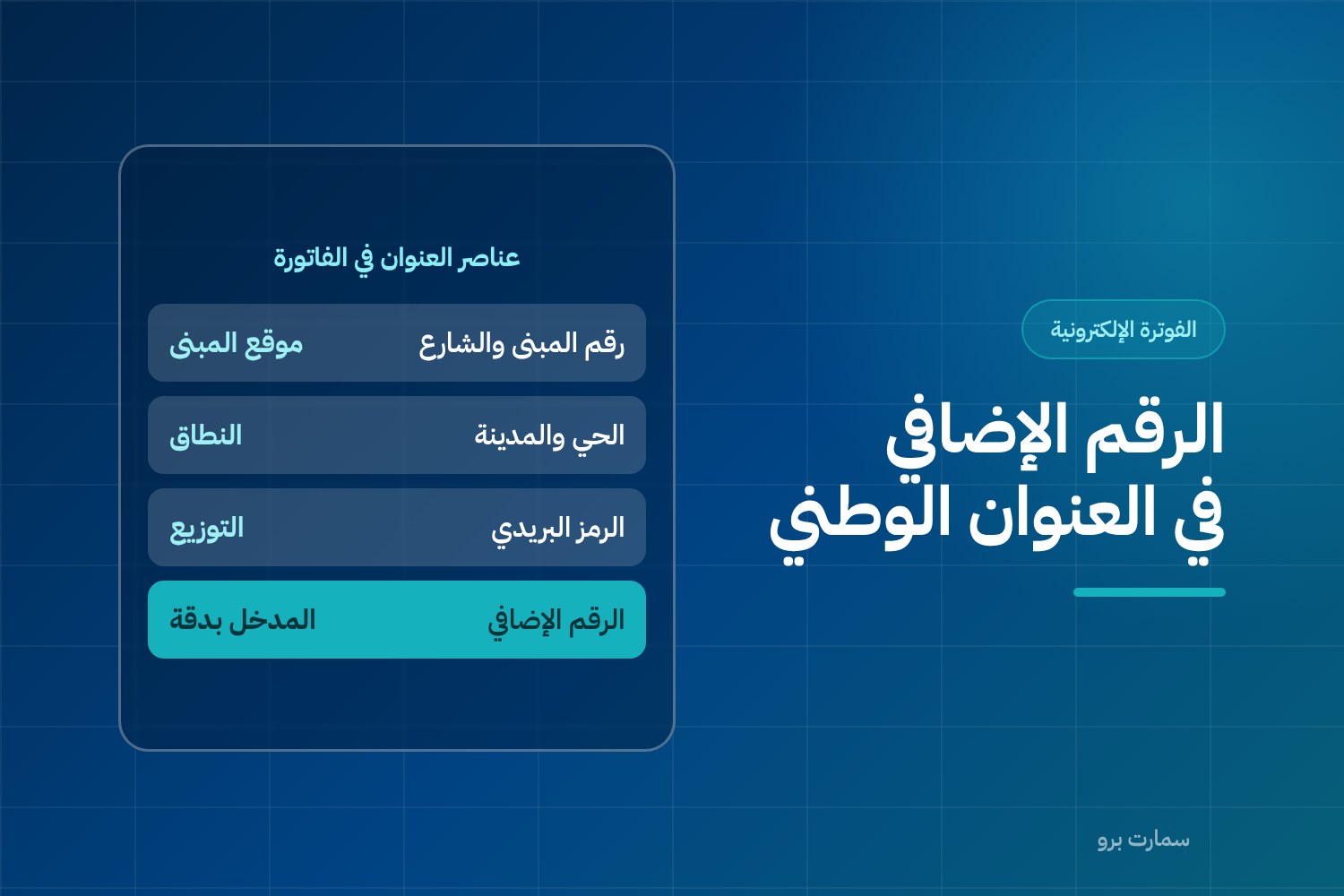
The additional number in the national address is the element that pinpoints a specific entrance or unit within a building or area. It is one of the fields most often left blank in customer records, and one of the most common reasons a tax invoice is rejected or accepted with incomplete data.
The confusion comes from treating the national address as just a district and a city. In fact, it is a set of defined elements, each with its own job, and the additional number is one of them.
What is the additional number in the national address?
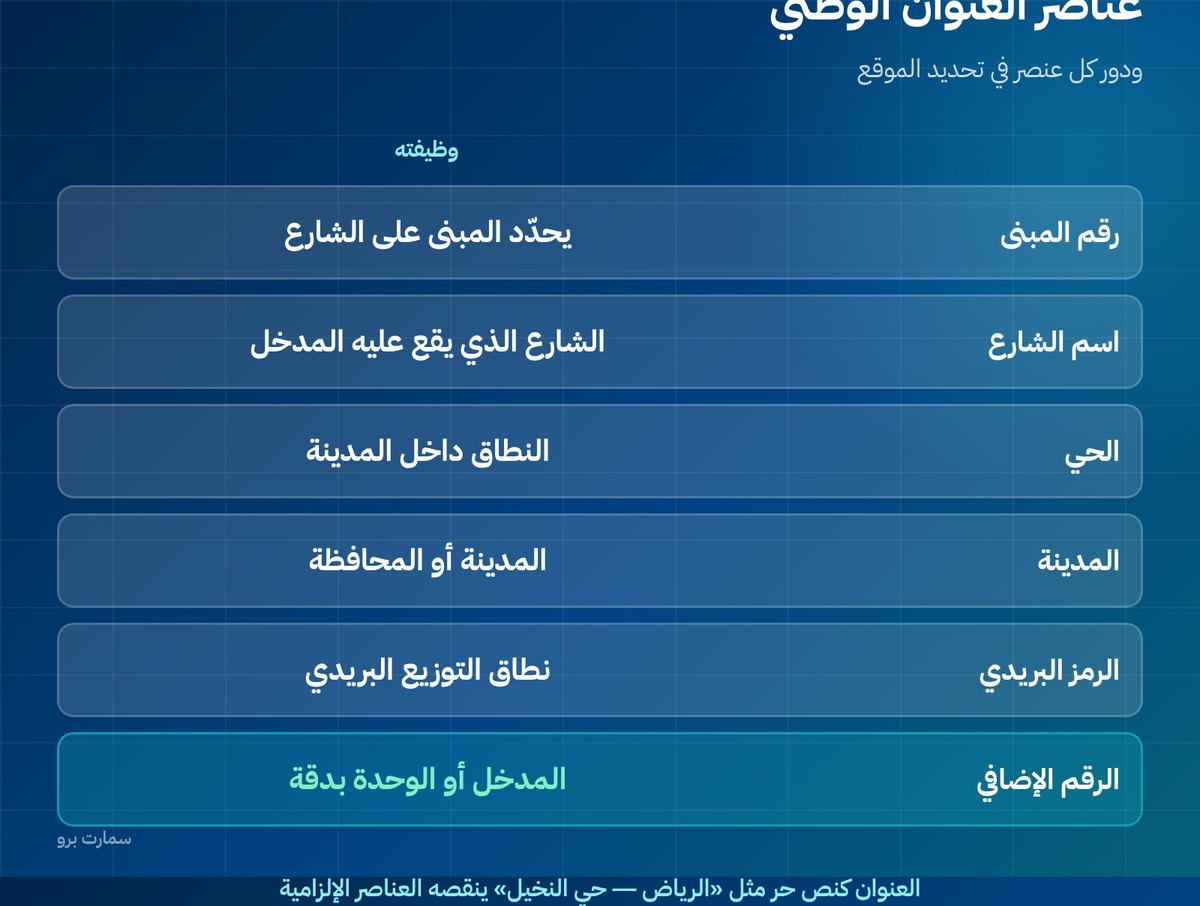
The national address is Saudi Arabia's unified addressing system, which identifies a location precisely instead of describing it roughly. Its elements include:
| Element | What it does |
|---|---|
| Building number | Identifies the building on the street |
| Street name | The street where the entrance is located |
| District | The area within the city |
| City | The city or governorate |
| Postal code | The postal delivery zone |
| Additional number | Pinpoints the entrance or unit within the building or area |
The additional number is what tells two entrances in one building, or two units in one complex, apart. Without it, the address is good enough to get you to the general location, but not to identify it precisely.
The official details of the national address elements, and how to obtain one, are published by the authority responsible for addressing. The requirements for showing the address on a tax invoice come from the Zakat, Tax and Customs Authority (ZATCA).
Why does it matter on an invoice?
A tax invoice, the full invoice issued to a business buyer, requires the buyer's address, and here the address means the national address with its elements, not a descriptive line. When the field is entered as free text such as "Riyadh – Al Nakheel district", mandatory elements are missing, so the invoice is rejected or goes through incomplete.
The practical result is the same either way: the buyer cannot rely on the invoice to deduct input VAT, so they ask you to reissue it. Reissuing means a credit note and a new invoice, as explained in credit and debit notes.
Where do you find the additional number?
- On the national address certificate of the business or individual. This is the most accurate source.
- In the commercial registration of some businesses, as part of the registered address details.
- On government services platforms that display the registered address.
- From the customer directly when you open their account: ask for the full national address, not a single line.
The last point is the real practical fix. Make requesting the address part of your customer account-opening procedure, not a task left until the first invoice.
How do you set this up in your system?
- Separate the fields: building number, street, district, city, postal code and additional number, each in its own field rather than one text box.
- Make them mandatory only for customers of type "business", so sales to individuals are not held up.
- Validate the length: the postal code and the additional number each have a fixed length, and a format check stops wrong entries.
- Block saving a customer record with missing fields if you will issue that customer a tax invoice.
These four controls stop the problem at its source instead of fixing it one invoice at a time. They are part of the data clean-up that comes before any integration, as covered in the plan for moving to Phase 2.
What about your own address as the seller?
A tax invoice also requires the seller's address. Many businesses tidy up their customer data and forget their own, so every invoice they issue goes out with an incomplete address.
Check one issued invoice now: does your national address appear with its elements, or as a descriptive line? If it is the latter, the problem lies in your system setup, not in customer data, and fixing it corrects all your future invoices in one go.
What about special cases?
- The customer is an individual not registered for VAT: the invoice is a simplified invoice and does not need their address at all.
- A customer with several branches: each branch has its own national address. Link the invoice to the purchasing branch, not the head office.
- A customer outside Saudi Arabia: the national address does not apply, and the treatment depends on the type of supply.
- The customer moves premises: update the address in their record. Older invoices keep the address that applied when they were issued, and that is correct.
How do you clean up your whole customer list at once?
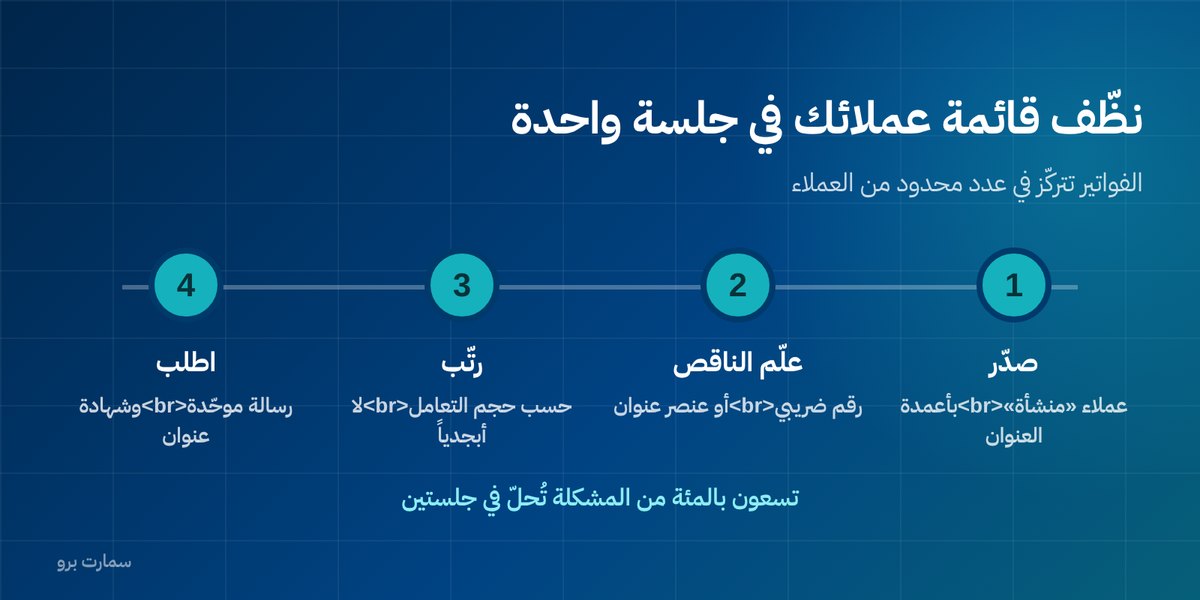
Do not wait for gaps to surface one invoice at a time. Four steps in a single session:
- Export your "business" customers to a file, with columns for the VAT number and each address element.
- Highlight what is missing in one colour: who lacks a VAT number, and who lacks an address element.
- Sort by transaction volume, not alphabetically. Twenty customers account for most of your invoices, so start with them.
- Request the data in one standard message to each customer, and ask for the national address certificate rather than a typed line.
Most businesses clear 90% of the problem in two sessions, because invoices are concentrated among a limited number of customers.
How can you tell your data is not ready?
Open the record of one customer you deal with often and look at the address field. If it is a single text box holding a descriptive sentence, your system does not separate the elements at all, and that is a setup problem, not a data-entry problem.
Fixing it needs a system change that separates and validates the fields, and that should come before data entry, because entering data into one box simply recreates the problem.
The bottom line
The additional number is not an administrative detail; it is part of an address required on a regulated document. One minute spent when opening a customer record saves a credit note, a new invoice and a call with the customer's accounts team later.
Key takeaway: Store the national address as separate, validated fields, including the additional number, for every business customer and for your own company, so tax invoices are not rejected or reissued.
Read also
- ZATCA e-invoicing guide
- Invoice rejection errors and how to fix each one
- Tax invoice vs simplified invoice
To see how SmartPro handles customer records and Phase 2 e-invoicing in practice, start a free trial or book a demo.
Frequently asked questions
What is the additional number in the national address?
It is one of the elements of the Saudi national address, and its job is to pinpoint the entrance or unit within a building or area. It sits alongside the building number, street name, district, city and postal code. Without it, the address is only approximate rather than precise.
Why does an invoice get rejected because of the address?
A tax invoice requires the buyer's address as the elements of the national address, not as a descriptive line. When the field is entered as free text, such as a city and district name, mandatory elements are missing. The invoice is then rejected or goes through incomplete, and the buyer cannot use it to deduct input VAT.
Where can I find the additional number?
The most accurate source is the national address certificate of the business or individual. Some businesses also have it in the registered address details of their commercial registration, or you can request it from the customer when opening their account. Make asking for the full address part of your account-opening procedure rather than a task you postpone.
Does a simplified invoice need the national address?
No. A simplified invoice is issued to a final consumer and does not require their address or VAT number. The national address is required on a tax invoice issued to buyers that are businesses or government entities.