
Fatoora Integration Waves: All 25 Waves and How to Find Your Date
Fatoora integration waves are set by your taxable revenue. Here is the full table of all 25 waves with thresholds and dates, and how to work out your wave and compliance date.
سامي الحيدري
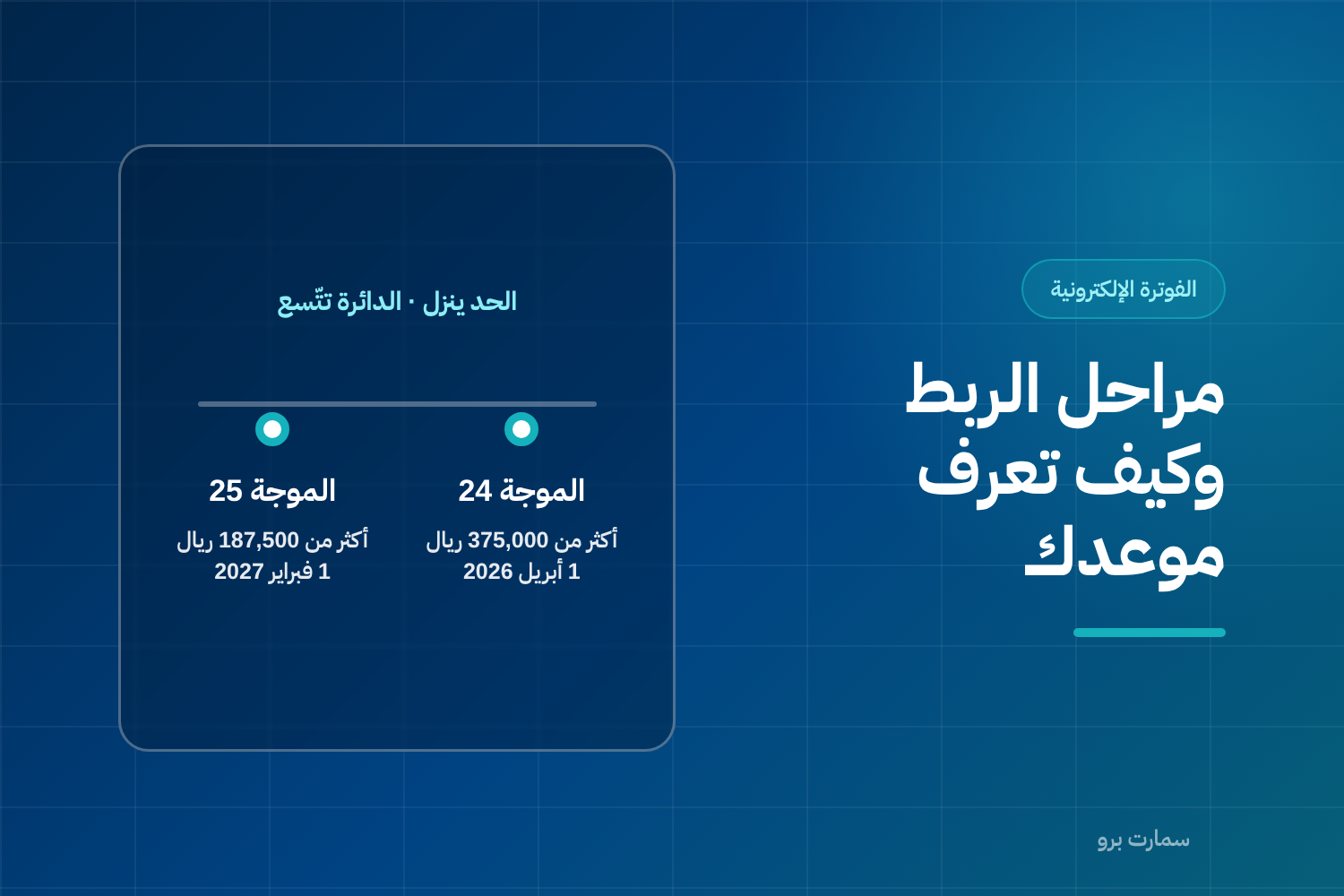
Fatoora integration waves are how ZATCA (the Zakat, Tax and Customs Authority) brings businesses into Phase 2 e-invoicing gradually, rather than requiring everyone to comply on a single date. Each wave is defined by a minimum taxable revenue in one or more specific years, and each has a date when the obligation starts.
The rule is simple: the lower the threshold, the wider the circle. Wave 1 covered businesses with revenue above SAR 3 billion. Wave 25 reaches SAR 187,500, which means most VAT-registered businesses are now in scope.
What are all 25 Fatoora integration waves?
| Wave | Minimum revenue (SAR) | Measurement year | Compliance start |
|---|---|---|---|
| 1 | More than 3 billion | 2021 | 1 January 2023 |
| 2 | More than 500 million | 2021 | 1 July 2023 |
| 3 | More than 250 million | 2021 or 2022 | 1 October 2023 |
| 4 | More than 150 million | 2021 or 2022 | 1 November 2023 |
| 5 | More than 100 million | 2021 or 2022 | 1 December 2023 |
| 6 | More than 70 million | 2021 or 2022 | 1 January 2024 |
| 7 | More than 50 million | 2021 or 2022 | 1 February 2024 |
| 8 | More than 40 million | 2021 or 2022 | 1 March 2024 |
| 9 | More than 30 million | 2021 or 2022 | 1 June 2024 |
| 10 | More than 25 million | 2022 or 2023 | 1 October 2024 |
| 11 | More than 15 million | 2022 or 2023 | 1 November 2024 |
| 12 | More than 10 million | 2022 or 2023 | 1 December 2024 |
| 13 | More than 7 million | 2022 or 2023 | 1 January 2025 |
| 14 | More than 5 million | 2022 or 2023 | 1 February 2025 |
| 15 | More than 4 million | 2022 or 2023 | 1 March 2025 |
| 16 | More than 3 million | 2022 or 2023 | 1 April 2025 |
| 17 | More than 2.5 million | 2022 or 2023 | 1 May 2025 |
| 18 | More than 2 million | 2022 or 2023 | 1 June 2025 |
| 19 | More than 1.75 million | 2022 or 2023 | 1 July 2025 |
| 20 | More than 1.5 million | 2022 or 2023 | 1 August 2025 |
| 21 | More than 1.25 million | 2022, 2023 or 2024 | 1 September 2025 |
| 22 | More than 1 million | 2022, 2023 or 2024 | 1 October 2025 |
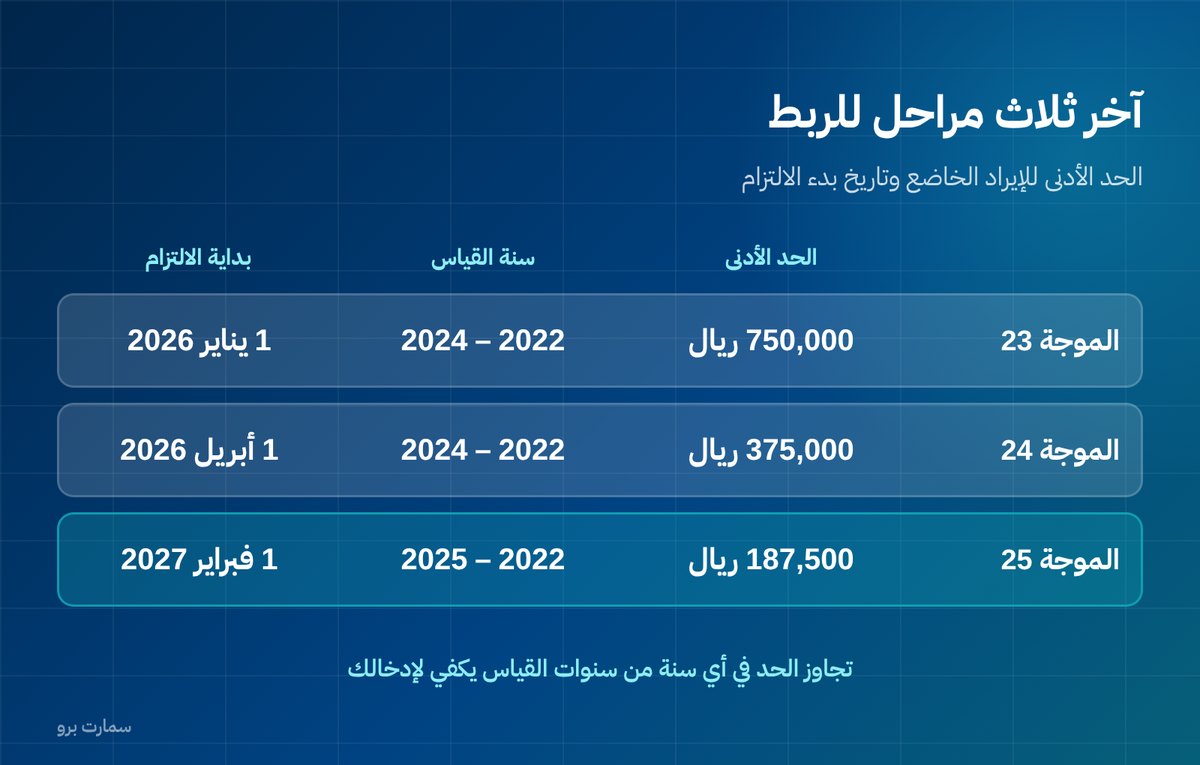
| 23 | More than 750,000 | 2022, 2023 or 2024 | 1 January 2026 |
| 24 | More than 375,000 | 2022, 2023 or 2024 | 1 April 2026 |
| 25 | More than 187,500 | 2022 to 2025 | 1 February 2027 |
This table is a guide only. The final reference is the official notification you receive and the decisions published by ZATCA.
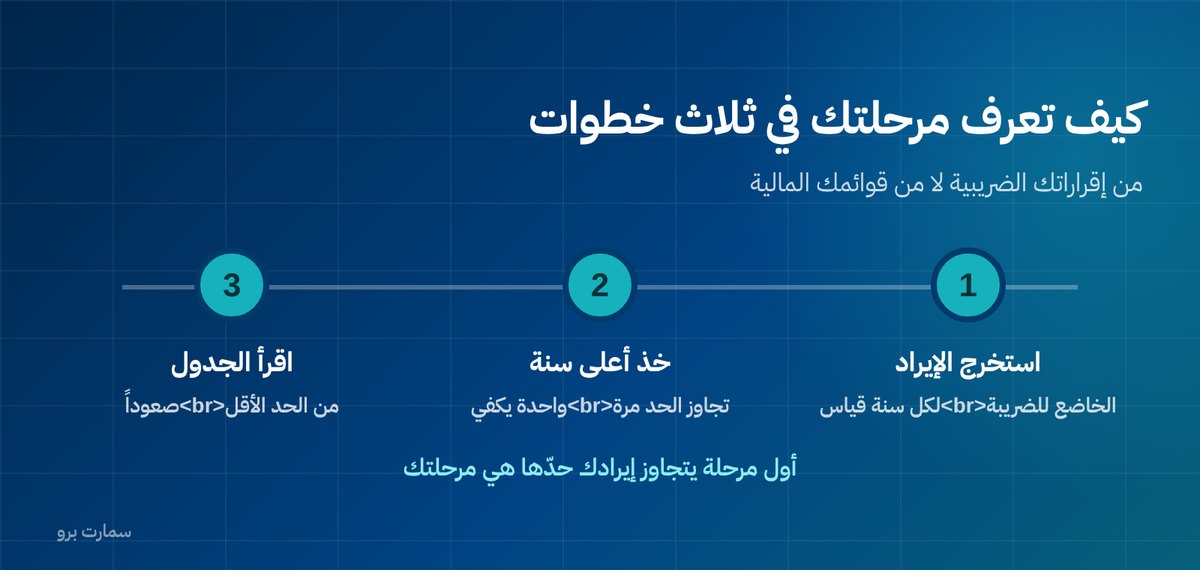
How do I find my integration wave in three steps?
- Pull your taxable revenue for each of the listed measurement years from your VAT returns, not your financial statements. The two figures can differ.
- Take the highest year. Exceeding the threshold in any of the listed years puts you in the wave, even if your revenue fell afterwards.
- Read the thresholds from the bottom of the table upwards. The first wave whose threshold your revenue exceeds is your wave, and its date is your deadline.
Which situations make the calculation confusing?
- Taxable revenue versus total sales: exempt and out-of-scope sales do not necessarily count in the same way. Check the breakdown in your VAT return, not the sales figure in your income statement.
- New businesses: if you had no revenue in the measurement years, you are outside the announced waves until a wave that covers you is announced or you receive a specific notification. That is no reason to delay preparing, because choosing a compliant system from the start costs less than switching later.
- Related entities: if you have more than one commercial registration (CR) or entity, each VAT-registered entity is measured separately, based on its own returns.
Why shouldn't I wait for ZATCA's notification?
ZATCA notifies businesses in scope well ahead of their date, but waiting for the notification before starting is a common mistake. The notification sets the deadline; it does not do the work. The real work runs on three parallel tracks:
- Technical: qualifying or replacing your system, obtaining the certificate, and testing.
- Data: customers' VAT numbers and national addresses.
- Procedural: who issues invoices, when to issue a standard tax invoice instead of a simplified one, and what happens on rejection or when the connection drops.
The data track is always the slowest, and it is the only one your software provider cannot do for you.
What happens if I miss my wave's date?
Missing the date is treated as a violation. Enforcement usually starts with a notice and a grace period to correct, then escalates with repeat offences. The commercial impact can come before the regulatory one: your business customers need a compliant invoice to claim input VAT, and a non-compliant invoice may be rejected, delaying your collections.
SmartPro handles ZATCA (Fatoora) Phase 2 e-invoicing, with Fatoora onboarding included at no extra cost, so you can focus on cleaning up your customer data.
Key takeaway: Your wave is the lowest threshold your taxable revenue exceeded in any measurement year, taken from your VAT returns. Start the data, technical and procedural work before ZATCA's notification arrives.
Read also
- Phase 2 e-invoicing: what integration means
- What does ERP cost in Saudi Arabia?
- Cash vs accrual accounting
To see Phase 2 e-invoicing working on your own data, start a SmartPro free trial or book a demo.
Frequently asked questions
How do I find my business's Fatoora integration wave?
Pull your taxable revenue from your VAT returns for the measurement years, take the highest year, then read the table from the lowest threshold upwards. The first wave whose threshold your revenue exceeds is your wave, and exceeding the threshold in any measurement year is enough to put you in it.
What is the threshold for Wave 25 and when does it start?
Wave 25 covers businesses whose taxable revenue exceeded SAR 187,500 in any year from 2022 to 2025. Their compliance obligation starts on 1 February 2027.
Does my obligation go away if my revenue falls later?
No. Exceeding the threshold in any measurement year puts you in the wave, and a later drop in revenue does not take you out of it. The obligation continues once it has started.
Should I wait for ZATCA's notification before preparing?
ZATCA notifies businesses in scope ahead of their date, but the notification only sets the deadline; it does not do the work. Cleaning up customer data and qualifying your system take weeks to months, so starting after the notification leaves very little time.