
Operating Segments: When Must You Disclose Them and How Are They Identified?
How operating segments are identified under IFRS 8, who the chief operating decision maker is, and how the 10% and 75% thresholds work.
Author:سامي الحيدري
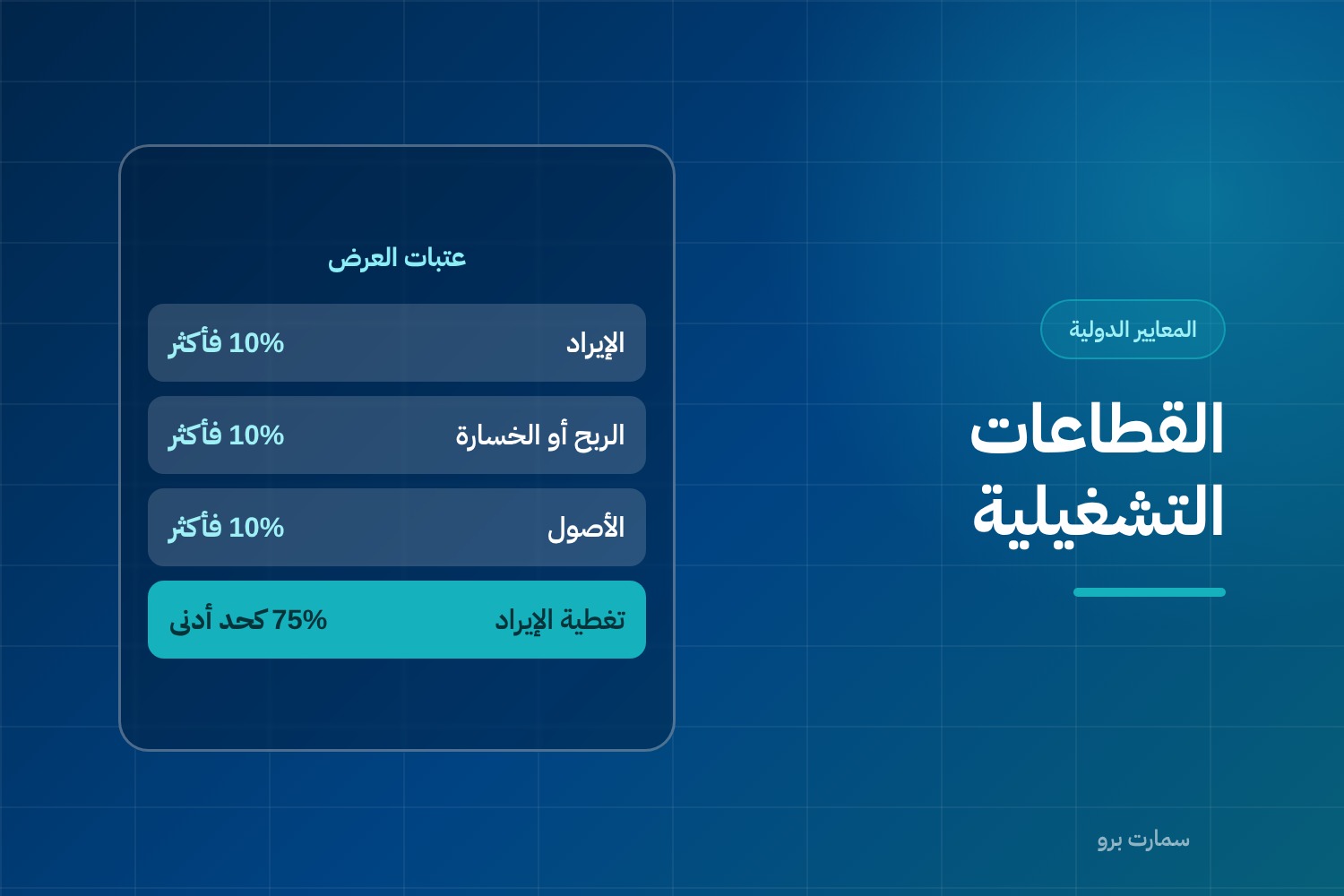
A business that sells in three different sectors but shows a single revenue figure hides what readers need most: where profit is made and where it is drained. IFRS 8 addresses this by requiring listed entities to disclose their operating segments.
Its core principle is that an entity should disclose information that enables readers to evaluate the nature and financial effects of the business activities in which it engages and the economic environments in which it operates. This principle governs both how segments are identified and what their disclosures contain.
Who does the standard apply to?
It applies to entities whose debt or equity instruments are traded in a public market, or that file their financial statements with a regulator for the purpose of issuing instruments in a public market.
There is an important rule for entities outside the scope: an entity that is not required to apply the standard and chooses to present information that does not comply with it must not describe that information as "segment information". It is either full compliance or a different label.
Who is the chief operating decision maker?
The definition of an operating segment revolves around this concept. An operating segment is a component that:
- Engages in business activities from which it earns revenues and incurs expenses.
- Has its operating results regularly reviewed by the chief operating decision maker to allocate resources and assess performance.
- Has discrete financial information available.
The chief operating decision maker is a function, not a job title, and is often the chief executive officer or the chief operating officer. In practice, this means your reported segments must match the way your business is actually managed, not a split you create for reporting purposes.
Corporate headquarters and some functional departments are not operating segments, and neither are post-employment benefit plans.
When can segments be aggregated?
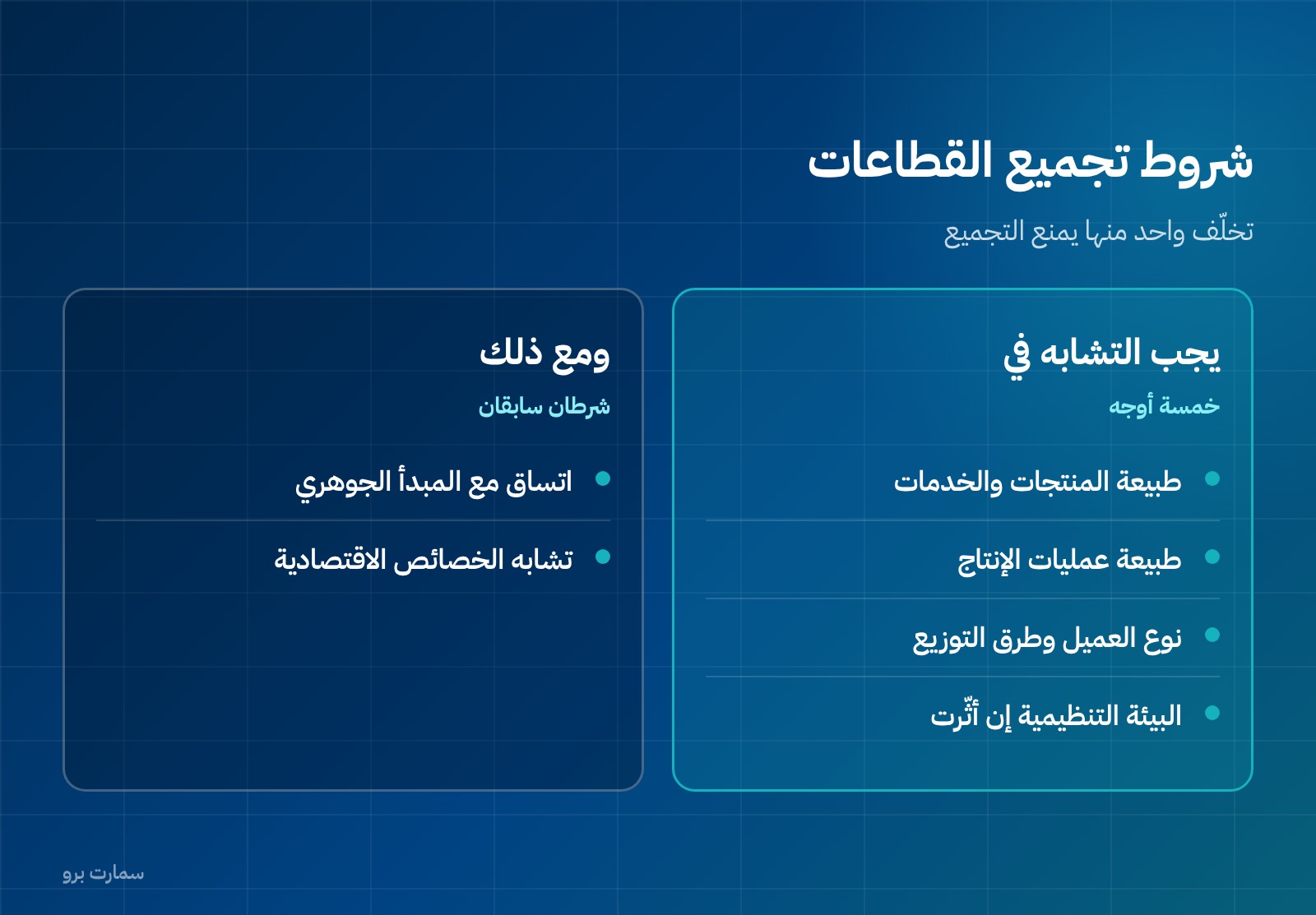
Two or more segments may be aggregated only if aggregation is consistent with the core principle, the segments have similar economic characteristics, and they are similar in each of the following:
- The nature of the products and services.
- The nature of the production processes.
- The type or class of customer.
- The methods used to distribute products or provide services.
- The nature of the regulatory environment, where relevant.
Failing any one of these prevents aggregation.
What are the quantitative thresholds for reporting operating segments?
| Test | Threshold |
|---|---|
| Reported revenue (including inter-segment) | 10% or more of the combined revenue of all segments |
| Absolute amount of profit or loss | 10% or more of the greater of the combined profit of all profitable segments and the combined loss of all loss-making segments |
| Assets | 10% or more of the combined assets of all segments |
Meeting any one of these makes the segment reportable.
Then comes the 75% test: additional segments are reported until the reportable segments cover at least 75% of the entity's external revenue. The rest are combined in an "all other segments" category. The standard also points to a practical limit on the number of segments, to be considered once disclosures exceed ten segments.
How are segment amounts measured?
Amounts are presented as reported to the chief operating decision maker, not as calculated under the accounting standards. If more than one measure of profit or loss is used, the one most consistent with the amounts in the financial statements is presented.
This management approach has a price: reconciliations are required between total segment revenue, profit or loss, assets and liabilities and the corresponding amounts in the entity's financial statements, with all material reconciling items identified and described.
What entity-wide disclosures are required?
These are required even if the entity has only one reportable segment:
- External revenue by product and service, or by group of similar products.
- External revenue and non-current assets split between the country of domicile and all foreign countries in total, with each material foreign country shown separately.
- Major customers: if revenue from a single external customer reaches 10% or more of the entity's revenue, the entity discloses that fact, the total revenue from each such customer and the segment reporting it. Entities under common control are treated as a single customer. The customer's identity does not need to be disclosed.
The major-customer disclosure is one of the most useful parts of the standard for investors, because it reveals concentration risk that no other figure shows.
What happens when the internal structure changes?
Segment information for prior periods is restated after a change in internal structure, unless the information is not available and the cost to develop it would be excessive. In that case, current-period information is presented on both the old and the new basis.
Worked example: applying the thresholds
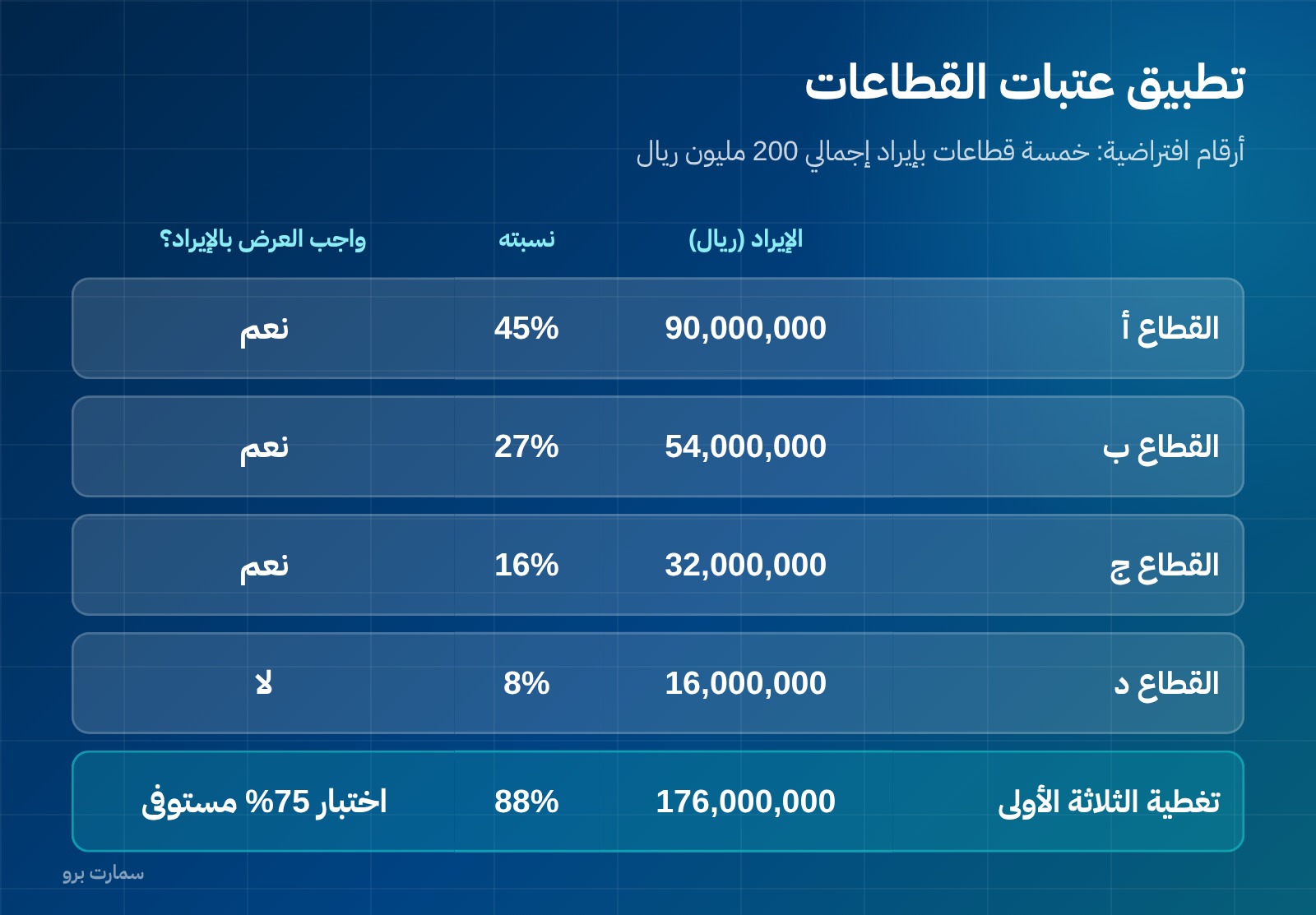
The figures below are hypothetical, to illustrate the method. An entity has five operating segments with total revenue of SAR 200,000,000:
| Segment | Revenue (SAR) | Share | Reportable? |
|---|---|---|---|
| A | 90,000,000 | 45% | Yes |
| B | 54,000,000 | 27% | Yes |
| C | 32,000,000 | 16% | Yes |
| D | 16,000,000 | 8% | Not under the revenue test |
| E | 8,000,000 | 4% | No |
The first three segments cover 88% of revenue, so the 75% test is met and segment D does not need to be added because of it. But the profit and asset tests still apply: if segment D held 12% of segment assets, it would become reportable under a separate test. Anyone who looks at revenue alone will miss segments that must be reported.
What must be disclosed for each segment?
For each reportable segment, the entity discloses a measure of profit or loss, and assets and liabilities if they are regularly reported to the chief operating decision maker. It also discloses, where they are included in that measure or regularly reviewed: external revenue and inter-segment revenue, interest revenue and expense, depreciation and amortisation, material items of income and expense, the share of profit of equity-accounted investees, income tax, and material non-cash items.
What does this mean for an unlisted business?
An unlisted business is not required to apply the standard. But its logic remains an excellent management tool: splitting results by the way the business is run, not by the chart of accounts. This is what cost centres do in a sound accounting system. A cost centre is a tag on each transaction that shows which branch, activity or department it belongs to. See the four families of financial ratios and how to build and read the income statement.
The standard has been effective since 1 January 2009, and its text is available on ifrs.org.
What is the official title adopted in Saudi Arabia?
The approved Arabic title of this standard is "IFRS 8: Operating Segments" (المعيار الدولي للتقرير المالي 8: القطاعات التشغيلية). SOCPA adopted it without any modification for application in the Kingdom.
Reference: Saudi Organization for Chartered and Professional Accountants (SOCPA), the document adopting IFRS for application in the Kingdom, updated on 04/07/1447 AH.
Key takeaway: A segment is reportable if it passes any one of the three 10% tests, and reportable segments must together cover at least 75% of external revenue. Segments must mirror how the business is actually managed, not how the chart of accounts is laid out.
To see how results by branch and activity look in SmartPro's finance and accounting system, start a free trial.
Article visuals
Frequently asked questions
What is an operating segment?
An operating segment is a component of an entity that engages in business activities from which it earns revenues and incurs expenses. Its operating results are regularly reviewed by the chief operating decision maker to allocate resources and assess performance, and discrete financial information about it is available.
Who is the chief operating decision maker?
The chief operating decision maker is a function, not a job title, and is often the chief executive officer or chief operating officer. Identifying this function matters because the segments an entity discloses must match the way the business is actually managed.
What are the quantitative thresholds for a reportable segment?
A segment is reportable if it meets any one of three tests: revenue of 10% or more of the combined revenue of all segments; an absolute profit or loss of 10% or more of the greater of total segment profits and total segment losses; or assets of 10% or more of total segment assets.
What is the 75% test?
Under IFRS 8, additional segments are reported until the reportable segments together cover at least 75% of the entity's external revenue. The remaining segments are combined in an "all other segments" category.
Must a major customer's identity be disclosed?
No. The entity discloses that a single external customer accounts for 10% or more of its revenue, the total revenue from that customer and the segment reporting it. The customer's identity does not need to be disclosed.