
Financial Instruments Disclosures: What IFRS 7 Requires
What IFRS 7 requires in financial instruments disclosures: credit, liquidity and market risk, the maturity analysis, and the sensitivity analysis.
Author:سامي الحيدري
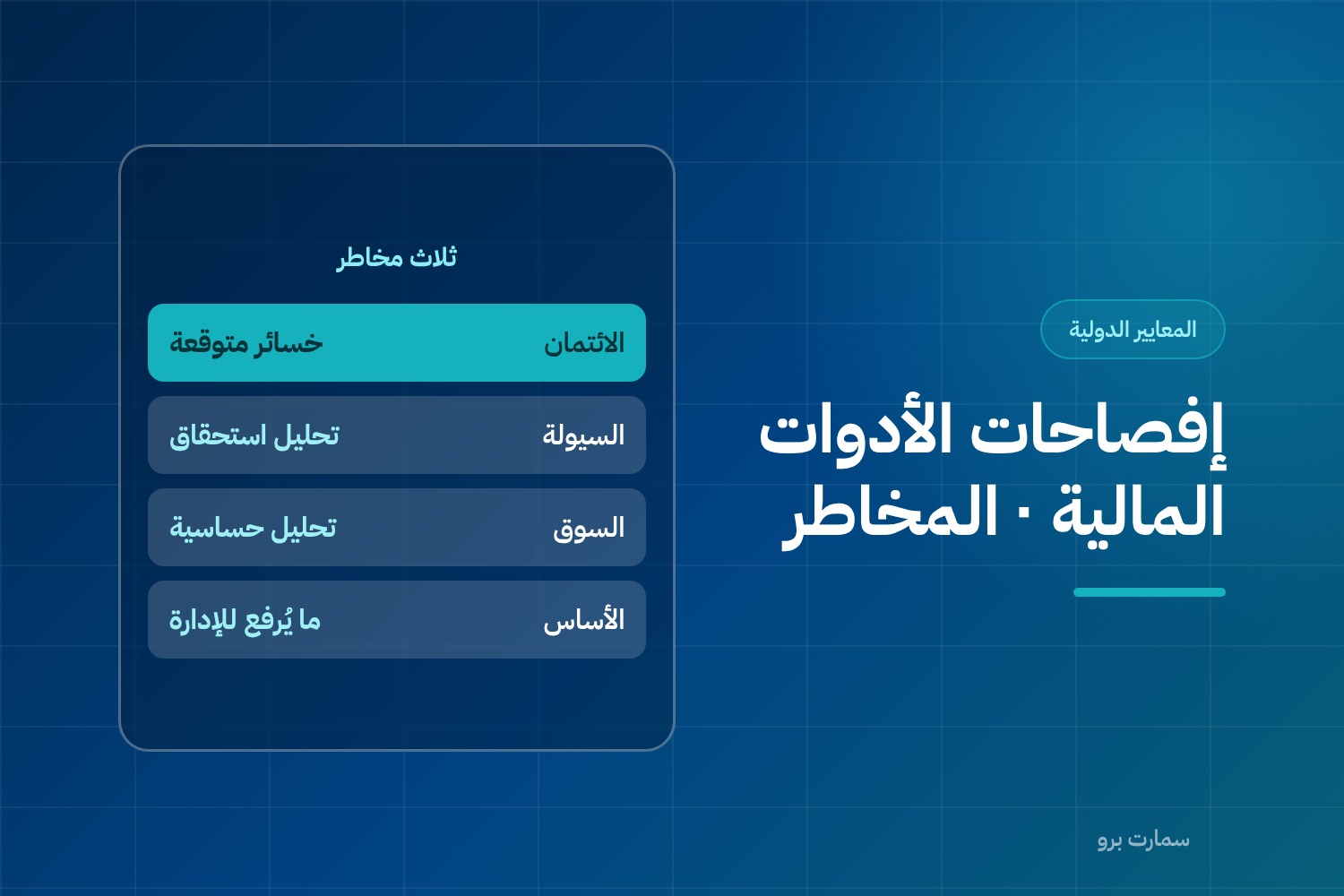
Financial statements show the amounts of your financial instruments, but not the risks inside them. IFRS 7 fills that gap by requiring financial instruments disclosures that let readers assess two things: how significant financial instruments are to the entity's position and performance, and the nature and extent of the risks they create and how those risks are managed.
IFRS 7 complements IAS 32, which covers presentation, and IFRS 9, which covers recognition and measurement. It applies to all entities, whether they hold few financial instruments or many.
Why do classes of instruments come first in financial instruments disclosures?
Before any disclosure, instruments must be grouped into classes suited to the nature of the information disclosed. The detail must be enough to allow reconciliation to the line items in the statement of financial position.
This is a procedural step many preparers skip. The result is notes that cannot be tied back to the balance sheet.
What must be disclosed about the financial position?
- Carrying amounts for each measurement category under IFRS 9.
- Assets and liabilities designated at fair value through profit or loss, with the maximum exposure to credit risk and the change in fair value attributable to credit risk.
- Reclassifications: their dates, an explanation of the business model, the amounts transferred, and the effective interest rate.
- Offsetting: gross amounts, amounts set off, net amounts, and rights of set-off under master netting arrangements.
- Collateral pledged and held.
- Defaults and breaches of the terms of loans payable.
One subtle point: the loss allowance for assets measured at fair value through other comprehensive income is disclosed in the notes. That is because the carrying amount on the balance sheet is not reduced by the loss allowance.
How are risk disclosures structured?
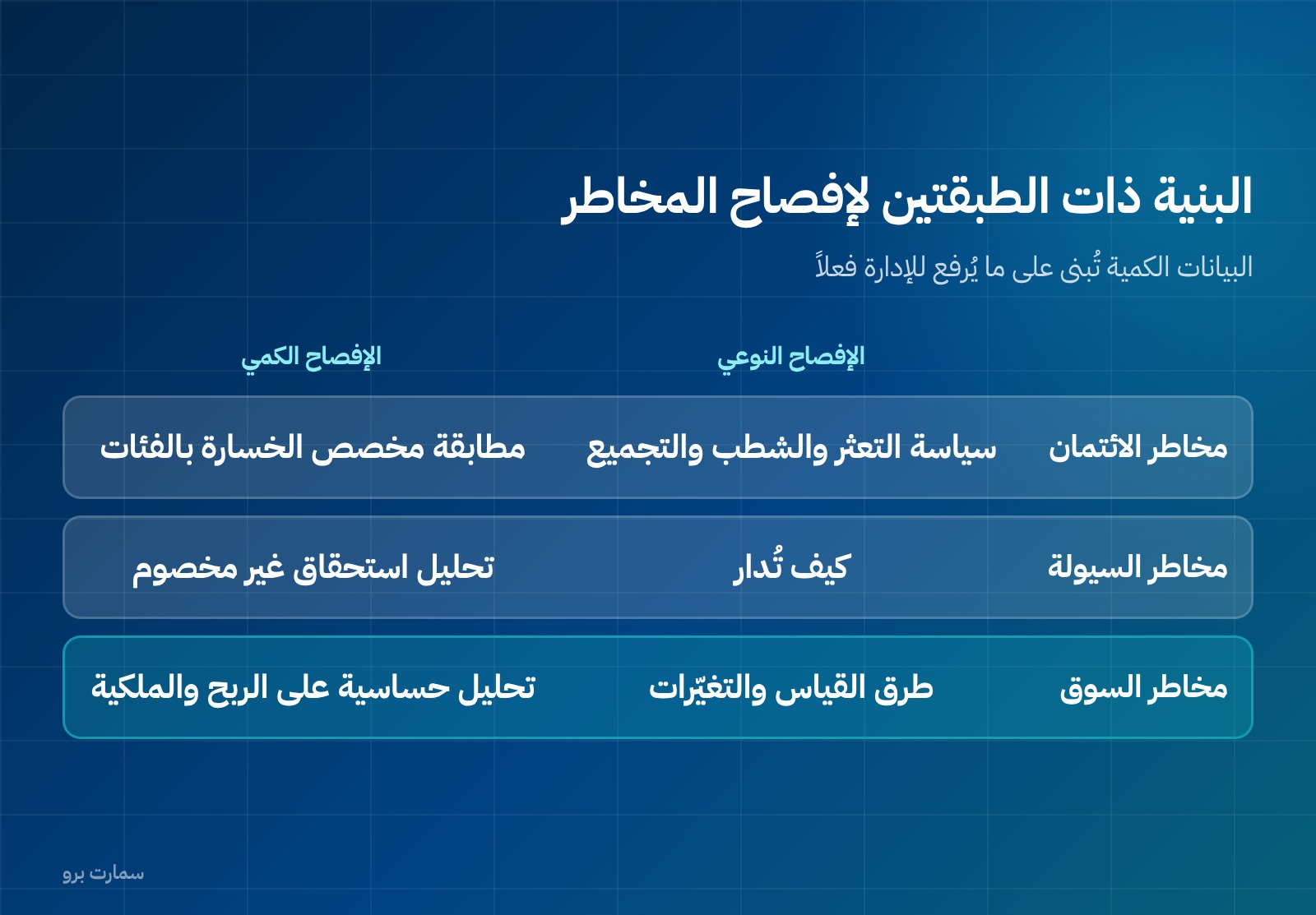
Each type of risk has two layers of disclosure:
| Layer | Content |
|---|---|
| Qualitative | Exposures and how they arise, risk management objectives, policies and processes, measurement methods, and changes from the previous period |
| Quantitative | Summary data on exposure based on the information provided internally to key management personnel, plus concentrations of risk |
The key phrase: the quantitative data is built on what is actually reported to management, not on a report produced specially for the notes. If period-end data does not represent the usual exposure, representative information must be provided.
What does IFRS 7 require for credit risk?
This is the heaviest section. Credit risk is the risk that a counterparty fails to pay what it owes. For instruments subject to the impairment requirements of IFRS 9 expected credit losses, disclose:
- Credit risk management practices: how a significant increase in credit risk is determined, the definition of default, grouping for collective measurement, criteria for treating an asset as credit-impaired, the write-off policy, and the treatment of modifications.
- Inputs, assumptions and techniques used to measure 12-month and lifetime expected credit losses, and how forward-looking information was incorporated.
- A reconciliation for each class of the loss allowance from opening to closing balance, split between the 12-month and lifetime categories.
- Collateral, including the maximum exposure without taking collateral into account.
- Contractual amounts outstanding on assets written off that are still subject to enforcement activity.
- Gross carrying amounts by credit risk rating grade. A provision matrix is permitted for trade receivables and lease receivables.
What does IFRS 7 require for liquidity risk?
Liquidity risk is the risk of struggling to meet obligations on financial liabilities. The standard requires a maturity analysis of non-derivative financial liabilities, including issued financial guarantee contracts, showing the remaining contractual maturities.
A maturity analysis for derivative financial liabilities is added when their contractual maturities are essential to understanding the timing of cash flows. This is followed by a description of how the liquidity risk arising from both is managed.
The cash flows in the analysis are undiscounted. This runs against the instinct of many preparers.
What sensitivity analysis is required for market risk?
Market risk is the risk that fair values or cash flows change because of market prices, such as interest rates or exchange rates. A sensitivity analysis is required for each type of market risk, showing the effect of reasonably possible changes in the risk variable on profit or loss and on equity, with the methods, assumptions and any change from the previous period.
An entity that uses a technique reflecting interdependencies between variables, such as value at risk, may disclose that instead. It must then explain the method, main parameters, assumptions, objectives and limitations. If the analysis is not representative of the inherent risk, the entity must disclose that fact and the reason.
How are transfers of financial assets disclosed?
They are presented in a single note. The note covers transferred assets that were not derecognised and continuing involvement in assets that were derecognised: carrying amounts, fair values, maximum exposure to loss, cash outflows to repurchase, and a maturity analysis of the undiscounted outflows.
What is exempt?
Fair value disclosure is not required when the carrying amount is a reasonable approximation of fair value, such as short-term trade receivables and payables. It is also not required for lease liabilities.
This practical exemption saves mid-sized entities a great deal of work.
Where should a mid-sized business start?
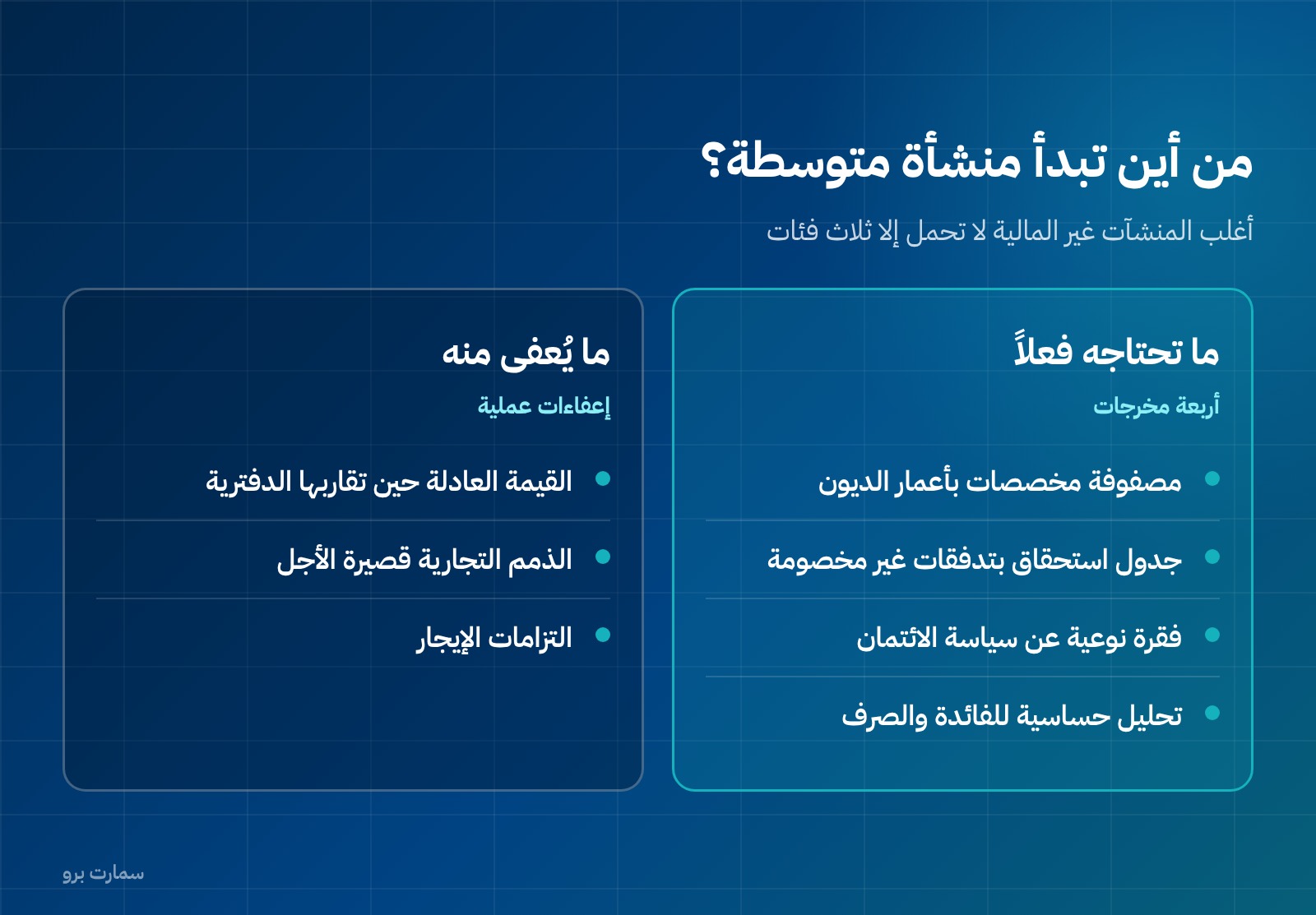
Reading the full standard can make a mid-sized business feel it is beyond its capacity. In practice, most non-financial entities hold only three classes: trade receivables, payables and bank loans. What they need narrows down to:
- A provision matrix for receivables by debt age, covering the credit risk disclosure.
- A maturity table for loans and payables, with undiscounted cash flows spread across time bands.
- A qualitative paragraph on credit policy, dealing limits and how collection is followed up.
- A sensitivity analysis for the interest rate on variable-rate loans, and for exchange rates if there are foreign-currency balances.
These four cover most of the requirement, and three of them can be produced automatically from a sound accounting system. In SmartPro, for example, every sale, receipt and payment becomes a journal entry automatically, so receivable and payable balances are ready for analysis through finance and accounting.
What is a common mistake in quantitative disclosure?
Many preparers build the quantitative disclosure on a report created specially for the auditor. The standard asks for something else: the summary data is built on information provided internally to key management personnel.
If management follows receivables through a monthly ageing report, that is the basis to disclose.
Which dates matter?
The standard originally became effective for periods beginning on or after 1 January 2007, not 2005 as many summaries state. Three packages of amendments carry an effective date of 1 January 2026, followed by amendments from IFRS 18 from 1 January 2027.
The official text is on ifrs.org. For where these disclosures sit among the other standards, see IFRS in Saudi Arabia: the complete guide.
What is the official name used in Saudi Arabia?
The approved Arabic name of the standard translates as "IFRS 7: Financial Instruments: Disclosures". SOCPA endorsed it with a significant Saudi modification: new paragraphs (numbered 42هـ أ to 42هـ هـ in the Arabic text) cover disclosures for Sharia-compliant financing forms: murabaha, tawarruq, sukuk, qard hasan, ijara, istisna and mudaraba.
So a Saudi entity that uses these financing forms has disclosures that do not exist in the original international text.
Reference: Saudi Organization for Chartered and Professional Accountants (SOCPA), the document endorsing IFRS for application in the Kingdom, updated on 1447/07/04 AH.
Key takeaway: IFRS 7 asks you to explain the risks behind your financial instruments, not just their amounts; for most mid-sized Saudi businesses that means a provision matrix, an undiscounted maturity table, a credit-policy paragraph and a sensitivity analysis, plus the SOCPA disclosures for Sharia-compliant financing.
To see how clean, connected accounting data makes these notes easier to prepare, start a free SmartPro trial.
Article visuals
Frequently asked questions
What is the purpose of financial instruments disclosures?
They allow readers of the financial statements to assess how significant financial instruments are to the entity's position and performance. They also show the nature and extent of the risks arising from those instruments during the period and at the reporting date, and how the entity manages those risks.
Does IFRS 7 apply to small businesses?
Yes, IFRS 7 applies to all entities, whether they hold few financial instruments or many. However, there are practical exemptions, such as not disclosing fair value when the carrying amount is a reasonable approximation of it.
What is required in the liquidity risk disclosure?
A maturity analysis of non-derivative financial liabilities showing remaining contractual maturities with undiscounted cash flows. A maturity analysis of derivatives is added when their maturities are essential to understanding cash flow timing, along with a description of how the risk is managed.
What sensitivity analysis does IFRS 7 require?
An analysis for each type of market risk showing the effect of reasonably possible changes in the risk variable on profit or loss and on equity. It must include the methods and assumptions used and any change from the previous period.
Is a provision matrix allowed under IFRS 7?
Yes. The standard permits a provision matrix to present gross carrying amounts by credit risk rating grade for trade receivables and lease receivables.