
Cash Flow Statement: Why Profit Doesn't Equal Cash
The three sections of the cash flow statement, the difference between the direct and indirect methods, why you can be profitable and still short of cash, and what changes with IFRS 18.
Author:سامي الحيدري
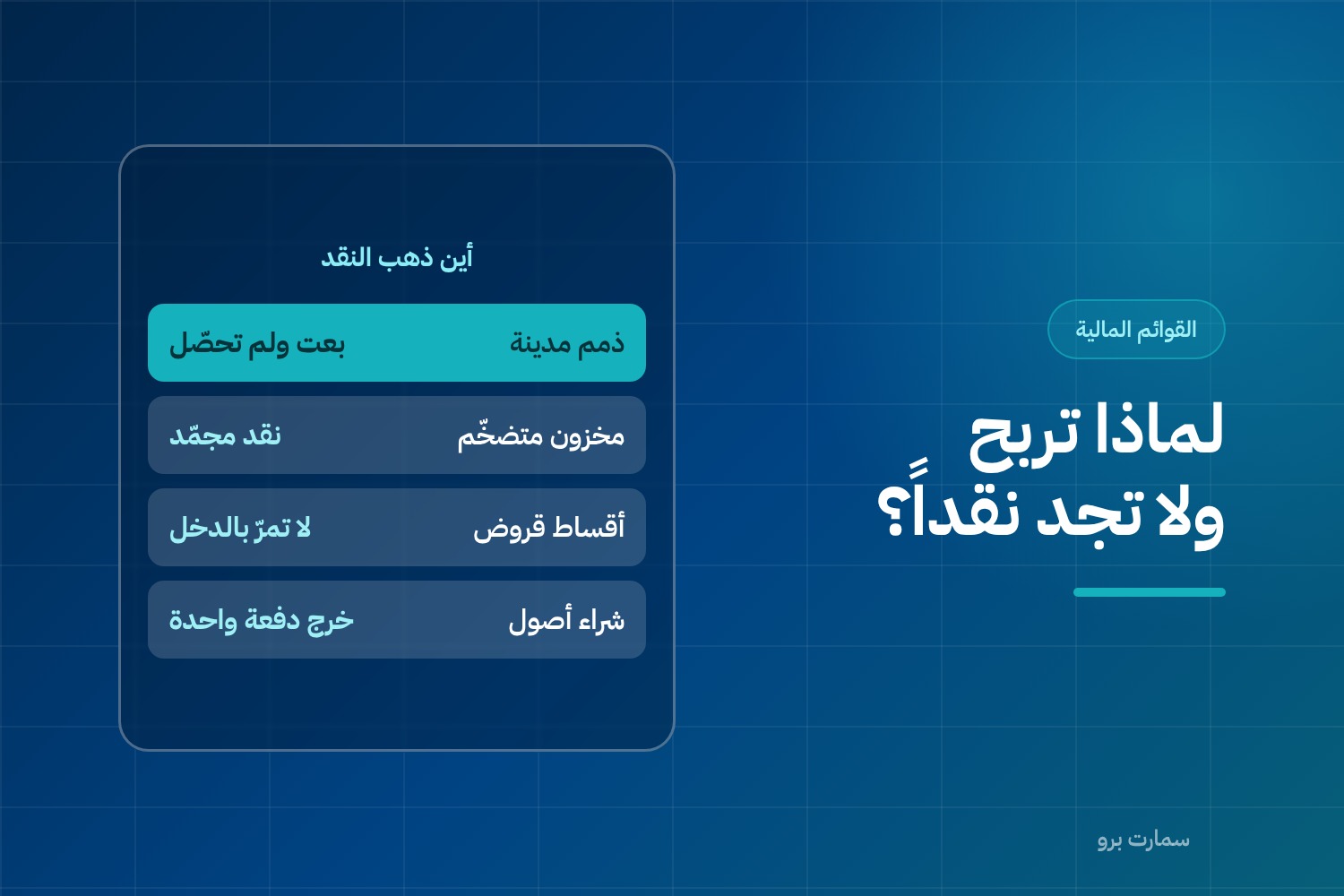
The question asked most often in profitable businesses is: "The numbers say we made a profit, so where is the cash?" The answer lies in the cash flow statement. Profit is an accounting figure built on the accrual basis: you recognise revenue on delivery, not on collection, and you charge depreciation without a single riyal leaving the account. The cash flow statement tracks cash alone: whether it came in or went out, where it came from and where it went.
What are the three sections of the cash flow statement?
Operating activities: the cash generated by your core business. This covers cash collected from customers, cash paid to suppliers and employees, and cash paid for zakat and tax. This is by far the most important section: a business that reports profits while its operating cash flow is persistently negative is living on financing, not on its own activity.
Investing activities: the purchase and sale of long-term assets such as equipment, property and investments. A negative flow here is not necessarily bad; it may mean you are investing in expansion.
Financing activities: movements with lenders and owners. This covers drawing down and repaying loans, capital increases, dividends, and the principal portion of lease payments.
The three sections together equal the change in cash and cash equivalents between the start and end of the period. That gives you a simple test: if they don't reconcile, the statement is wrong.
What is the difference between the direct and indirect methods?
The two methods differ in the operating section only, and the result is the same.
The direct method shows actual receipts and payments by category: collections from customers, payments to suppliers, payments to employees. It is clearer for the reader, but it needs classified cash data that may not be readily available.
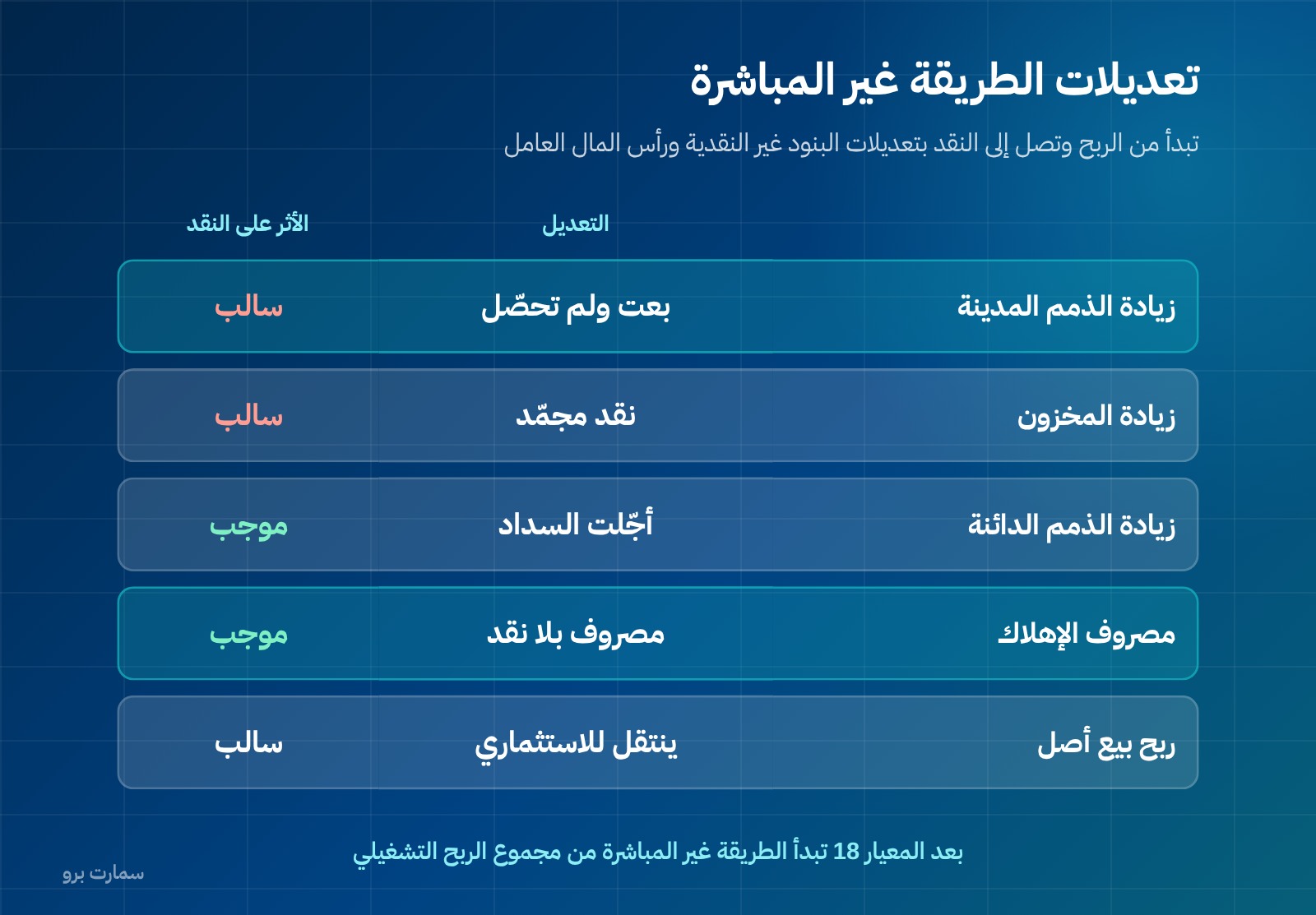
The indirect method starts from profit and adjusts it to arrive at cash. Non-cash expenses (depreciation, provisions) are added back, and changes in working capital (receivables, inventory, payables) are adjusted for. It is more common because it is derived directly from the books.
| Adjustment | Effect on cash |
|---|---|
| Increase in receivables | Negative (you sold but didn't collect) |
| Increase in inventory | Negative (you spent cash on stock) |
| Increase in payables | Positive (you deferred payment) |
| Depreciation expense | Positive (an expense with no cash outflow) |
| Gain on sale of an asset | Negative (moved to investing) |
What changed with IFRS 18?
The amendments that accompanied the adoption of IFRS 18 also reached IAS 7, the standard that governs this statement:
- Businesses using the indirect method must start calculating operating cash flows from total operating profit, not from any other figure.
- Most of the presentation choices for interest and dividends paid and received have been removed.
In practice, this means the cash flow statement is now tied to the structure of the new income statement, so you can't prepare one in isolation from the other. The changes apply to periods beginning on or after 1 January 2027, with early application permitted. For the details, see our article on IFRS 18 presentation and disclosure.
Why are you profitable but short of cash?
Five reasons explain the gap in most cases.
Customers who don't pay. Revenue was recognised on delivery, but the cash never arrived. Receivables growing faster than sales is the warning sign.
Bloated inventory. Every extra riyal sitting in the warehouse is a riyal that left your account and hasn't come back yet.
Loan repayments. The principal portion of an instalment never appears in the income statement, yet it leaves your cash.
Asset purchases. The asset is capitalised and depreciated over several years, but its price was paid out in one go.
Dividends and owner drawings. They don't pass through the income statement, and they come straight out of cash.
That is why a business that reads only its income statement sees only half the picture.
Which mistakes spoil the statement?
Treating the whole loan instalment as financing or the whole of it as operating. An instalment has two parts: the principal is financing, and the finance cost is presented according to the policy you follow. Mixing them distorts both sections.
Forgetting non-cash transactions. Buying an asset through financing, or converting debt into capital, doesn't pass through cash and isn't included in the body of the statement. It is still disclosed, because its effect on the business's structure is real.
Estimating changes in working capital. The difference between opening and closing receivables is taken directly from the two balance sheets, not estimated.
Not reconciling bank accounts before preparing it. Any unreconciled difference in the bank accounts shows up at the bottom of the statement as an unexplained gap.
How do you read a cash flow statement?
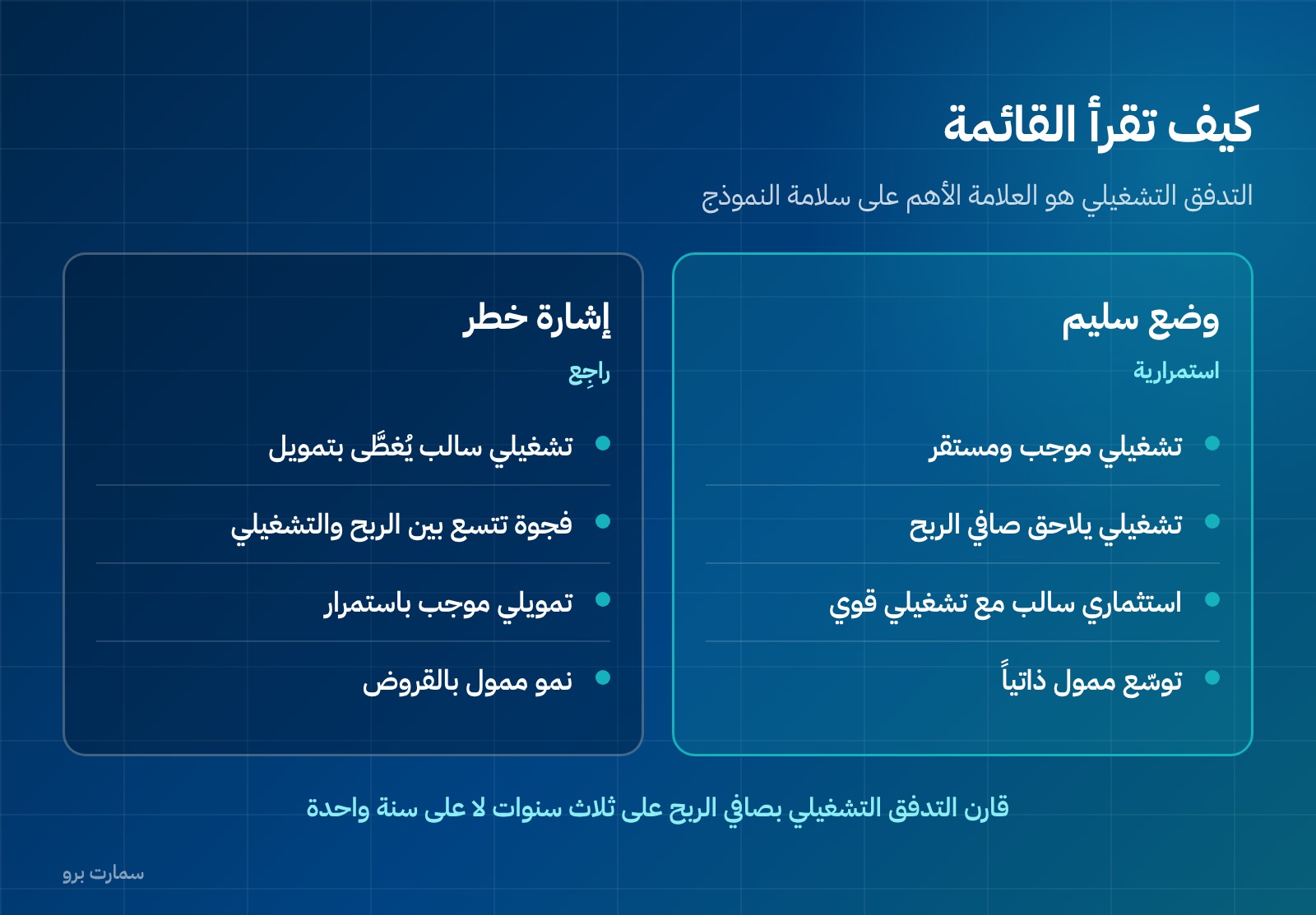
- Positive, stable operating cash flow is the most important sign of a healthy business model.
- Operating cash flow consistently below net profit means your profits are turning into receivables and inventory, not cash.
- Negative operating cash flow covered by financing is a situation that can't last long.
- Negative investing cash flow alongside strong operating cash flow is self-funded expansion, and the best position to be in.
- Persistently positive financing cash flow means growth is funded by loans and capital increases rather than by the business itself, which raises the risk with every cycle.
Comparing operating cash flow with net profit over three years reveals more than any single ratio. If operating cash flow keeps pace with profit, the model is sound. If the gap widens year after year, there is a problem in collections or inventory levels that needs fixing before it becomes a liquidity crisis.
Cash flow statement review checklist
- The three sections add up to the actual change in the cash balance.
- Bank balances are matched and reconciled before preparation.
- The principal portion of loan and lease instalments is classified as financing.
- Non-cash items are fully excluded from the operating section.
- Asset purchases are included under investing, not among expenses.
- Changes in working capital are taken from comparison with the previous period, not estimated.
- The figures are consistent with the income statement and the statement of financial position.
Where is the official reference?
The international standards as adopted in the Kingdom are published by the Saudi Organization for Chartered and Professional Accountants (SOCPA) on its website: socpa.org.sa. The full texts of the standards are available from the IFRS Foundation at ifrs.org.
Read also
- IFRS 18: presentation and disclosure
- Statement of financial position: what it says about your business
- Ready-made bank reconciliation Excel template
Key takeaway: Profit is measured on accruals, while the cash flow statement tracks only the cash that actually moved. Read operating cash flow alongside net profit to see whether your earnings are becoming cash.
To see how automatic journal entries and bank reconciliation in SmartPro Finance & Accounting keep your figures ready for this statement, start a free trial.
Article visuals
Frequently asked questions
What are the sections of the cash flow statement?
There are three. Operating activities cover the cash generated by the core business, investing activities cover the purchase and sale of long-term assets, and financing activities cover movements with lenders and owners. Together they equal the change in cash and cash equivalents between the start and end of the period.
What is the difference between the direct and indirect methods?
The difference is in the operating section only, and the result is the same. The direct method shows actual receipts and payments by category, while the indirect method starts from profit and adjusts it for non-cash expenses and changes in working capital. The indirect method is more common because it is derived directly from the books.
Why am I profitable but short of cash?
There are five recurring reasons. Customers haven't paid, so receivables have grown; bloated inventory has tied up cash; loan instalments include principal that never appears in the income statement; asset purchases were paid in one go but are depreciated over years; and dividends and drawings don't pass through the income statement at all.
What changed in the cash flow statement with IFRS 18?
The accompanying amendments to IAS 7 require businesses using the indirect method to start from total operating profit. They also removed most of the presentation choices for interest and dividends. As a result, the cash flow statement is now tied to the structure of the new income statement.