
The Equity Method: Associates and Joint Ventures
When the equity method applies to associates and joint ventures, how the 20% presumption works, and how losses, goodwill and impairment are treated.
Author:سامي الحيدري
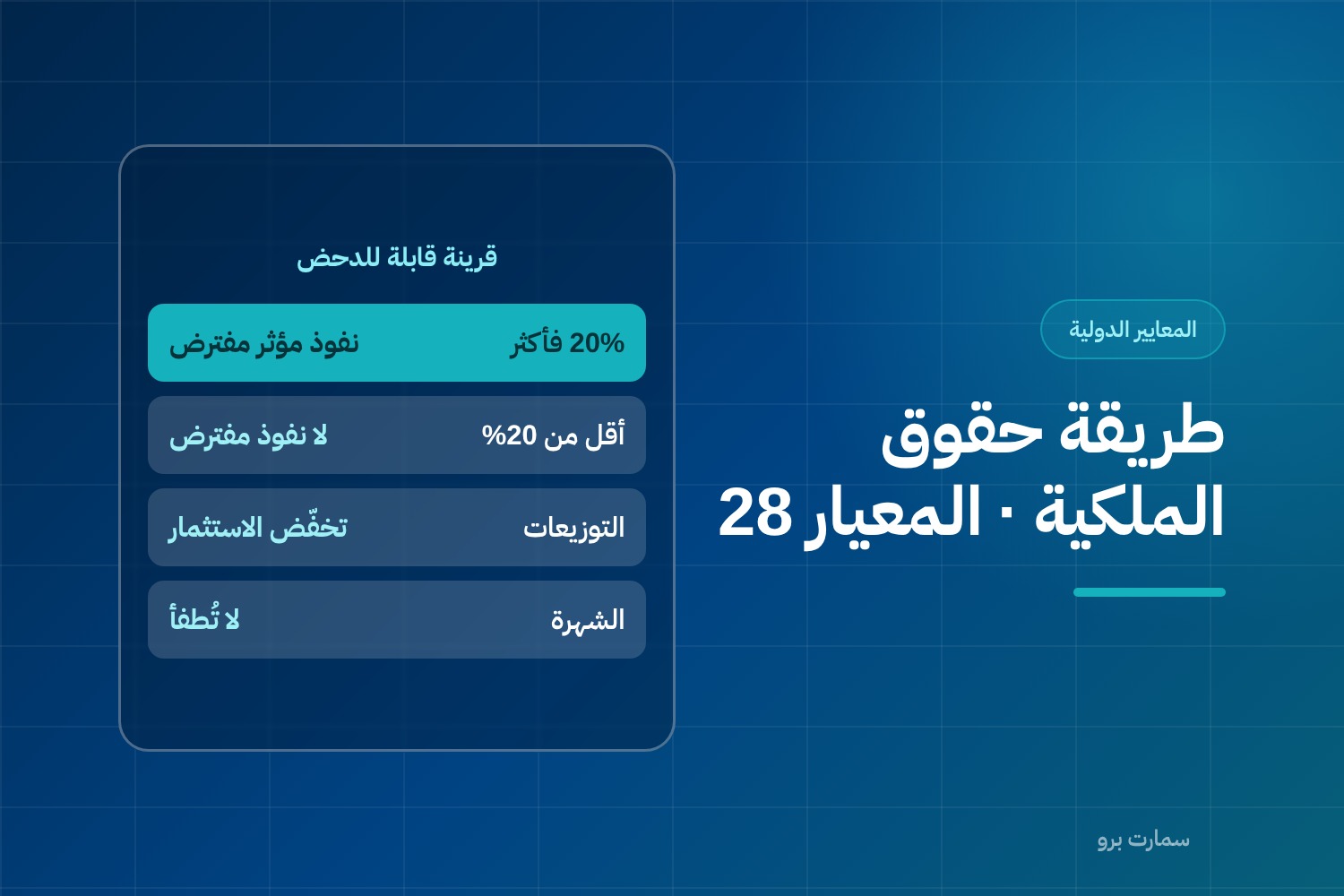
When you hold a stake in another company that you do not control but whose decisions you help shape, you should not treat it as an ordinary investment at fair value. You also should not consolidate it line by line. The correct treatment is the equity method, set out in IAS 28.
The standard covers two situations. An associate is an entity over which you have significant influence. A joint venture is an arrangement in which you share joint control and have rights to its net assets.
What is the 20% presumption?
Significant influence is the power to take part in the financial and operating policy decisions of the investee, without control or joint control. The standard sets two rebuttable presumptions:
- Holding 20% or more of the voting rights, directly or indirectly, is presumed to give significant influence, unless the contrary can be clearly demonstrated.
- Holding less than 20% is presumed not to give significant influence, unless the contrary can be clearly demonstrated.
The standard lists indicators that can rebut the presumption in either direction: representation on the board, participation in policy-making including decisions on distributions, material transactions between the two parties, interchange of managerial personnel, and provision of essential technical information. So an investor with 15%, a board seat and a say in dividend decisions may well have significant influence.
How does the equity method work?
The mechanics are simpler than they look:
- The investment is recognised at cost on acquisition.
- The carrying amount is increased or decreased by the investor's share of post-acquisition profit or loss.
- Distributions received reduce the carrying amount and are not recorded as income.
- The investor's share of the investee's other comprehensive income is recognised in other comprehensive income (OCI), the part of total income that sits outside profit or loss.
One point that is often missed: goodwill relating to an associate is included in the carrying amount of the investment and is not amortised. Any excess of the investor's share of the net fair value of identifiable assets and liabilities over the cost of the investment is recognised as income in the period of acquisition.
Which reporting date and accounting policies should you use?
You use the most recent financial statements of the associate. If its reporting date differs from yours, it prepares statements as at your date unless that is impracticable, and adjustments are made for significant events in the intervening period. In any case, the gap must not exceed three months. Uniform accounting policies are applied to like transactions in similar circumstances.
When do you stop recognising losses?
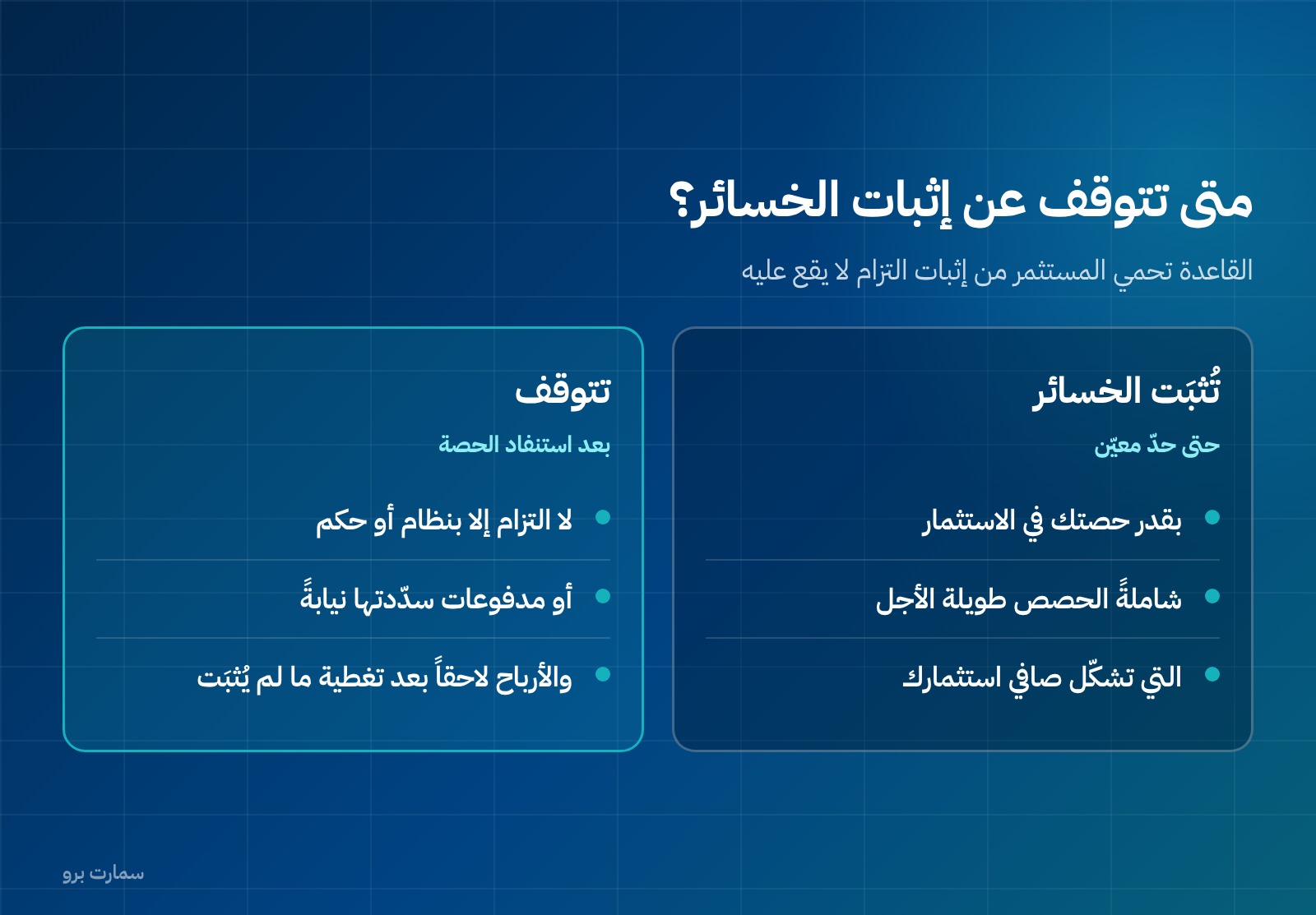
This is a heavy practical point. Once your share of the associate's losses equals or exceeds your interest in it, including long-term interests that in substance form part of your net investment, you stop recognising further losses.
A liability is recognised only to the extent of your legal or constructive obligations, or payments you have made on the associate's behalf. If the associate later returns to profit, you resume recognising profits only after they equal the losses not recognised.
How are transactions with the associate treated?
Gains and losses from upstream and downstream transactions involving assets that do not constitute a business are recognised only to the extent of unrelated investors' interests. So if you sell an asset to an associate in which you hold 30%, you eliminate 30% of the profit. If a downstream transaction shows a reduction in net realisable value or an impairment loss, however, the loss is recognised in full. Transactions involving a business are recognised in full.
When is an equity-method investment impaired?
After applying the equity method, you assess whether there is objective evidence of impairment. Two subtle points:
- The disappearance of an active market, a credit rating downgrade or a decline in fair value is not, on its own, evidence of impairment.
- But a significant or prolonged decline in the fair value of an equity investment below its cost is objective evidence.
The entire carrying amount of the investment is tested as a single asset under IAS 36 on asset impairment. Goodwill is not tested separately, and impairment losses are not allocated to it.
Is there an exemption for investment funds?
Venture capital organisations, mutual funds, unit trusts and similar entities may elect to measure their investments in associates and joint ventures at fair value through profit or loss under IFRS 9. The election is made separately for each investment at initial recognition.
What does the equity method look like in practice?
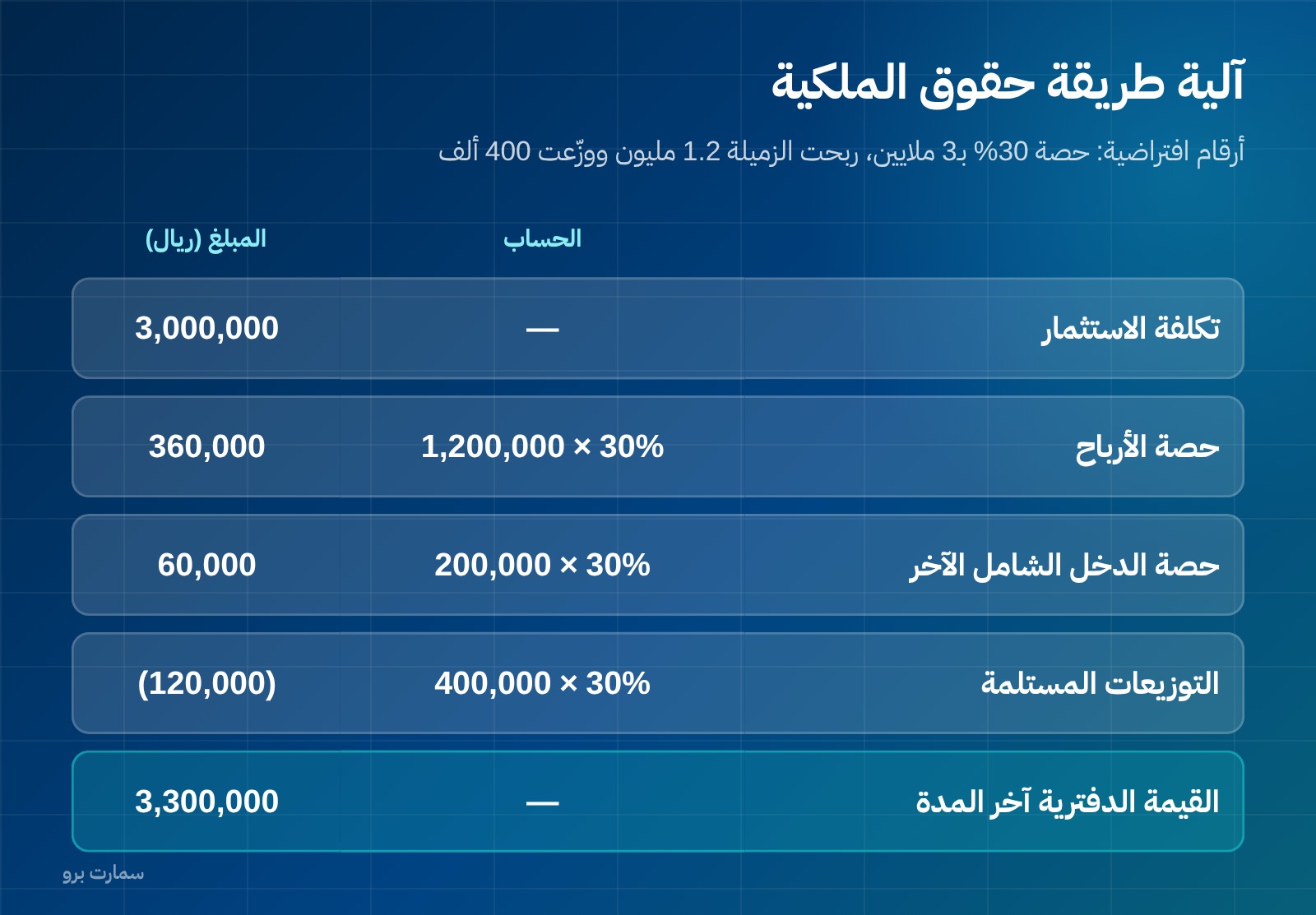
The figures below are hypothetical and only illustrate the method. An investor buys 30% of an associate for SAR 3,000,000. In year one the associate earns a profit of SAR 1,200,000, distributes SAR 400,000 and records a gain of SAR 200,000 in other comprehensive income:
| Item | Amount (SAR) |
|---|---|
| Cost of investment | 3,000,000 |
| Share of profit (30% × 1,200,000) | 360,000 |
| Share of OCI (30% × 200,000) | 60,000 |
| Distributions received (30% × 400,000) | (120,000) |
| Closing carrying amount | 3,300,000 |
Note that SAR 360,000 went through the income statement and SAR 60,000 through other comprehensive income, while the distributions never touched the income statement at all.
What does this mean for your accounting system?
The equity method needs regular data from the investee, not from your own books: its results, its other comprehensive income, and its accounting policies so you can align them. Without an arrangement that gets its statements to you well before your close, you will close the year on an estimate and adjust it later. It is therefore advisable to fix an agreed delivery date in the shareholders' agreement itself.
Which amendments are pending or deferred?
The amendments on the "Sale or Contribution of Assets between an Investor and its Associate or Joint Venture" still have no effective date and have been deferred indefinitely since December 2015, even though many references treat them as effective. Separately, amendments to the fair value option in this standard were issued in June 2026. They apply when an entity first applies IFRS 18 on presentation and disclosure****, which is effective for periods beginning on or after 1 January 2027.
The official text is on ifrs.org.
What is the official name used in Saudi Arabia?
The approved Arabic title of this standard is «المعيار الدولي للمحاسبة 28: الاستثمارات في المنشآت الزميلة والمشروعات المشتركة» (IAS 28: Investments in Associates and Joint Ventures). The Saudi Organization for Chartered and Professional Accountants (SOCPA) endorsed it without any modification for application in the Kingdom.
Source: Saudi Organization for Chartered and Professional Accountants, the document endorsing IFRS for application in the Kingdom, updated on 1447/07/04 AH.
Key takeaway: Under the equity method, the investment starts at cost, grows or shrinks with your share of the investee's results and OCI, and falls with distributions. Goodwill stays inside the carrying amount, and the whole investment is tested for impairment as one asset.
To see how SmartPro's connected accounting keeps your entries and statements ready for close, start a free trial.
Article visuals
Frequently asked questions
When is the equity method applied?
It applies when an investor has joint control of, or significant influence over, an entity, meaning the entity is a joint venture or an associate. There are limited exemptions for investment funds and some subsidiaries.
What does the 20% presumption mean?
Holding 20% or more of the voting rights is presumed to give significant influence, and holding less than 20% is presumed not to. Both presumptions can be rebutted by indicators such as board representation and participation in policy-making.
How are dividends treated under the equity method?
Dividends reduce the carrying amount of the investment and are not recorded as income in the income statement. This is because the investor's share of the investee's profit was already recognised when it was earned.
When does an investor stop recognising its share of losses?
When its share of losses equals or exceeds its interest in the investment, including long-term interests that form part of the net investment. A liability is recognised only to the extent of legal or constructive obligations.
Is goodwill relating to an associate amortised?
No. It is included in the carrying amount of the investment and is not amortised. The whole investment is tested for impairment as a single asset, without testing goodwill separately.