
Disclosure of Interests in Other Entities
What IFRS 12 requires you to disclose about your interests in subsidiaries, joint arrangements, associates and structured entities.
Author:سامي الحيدري
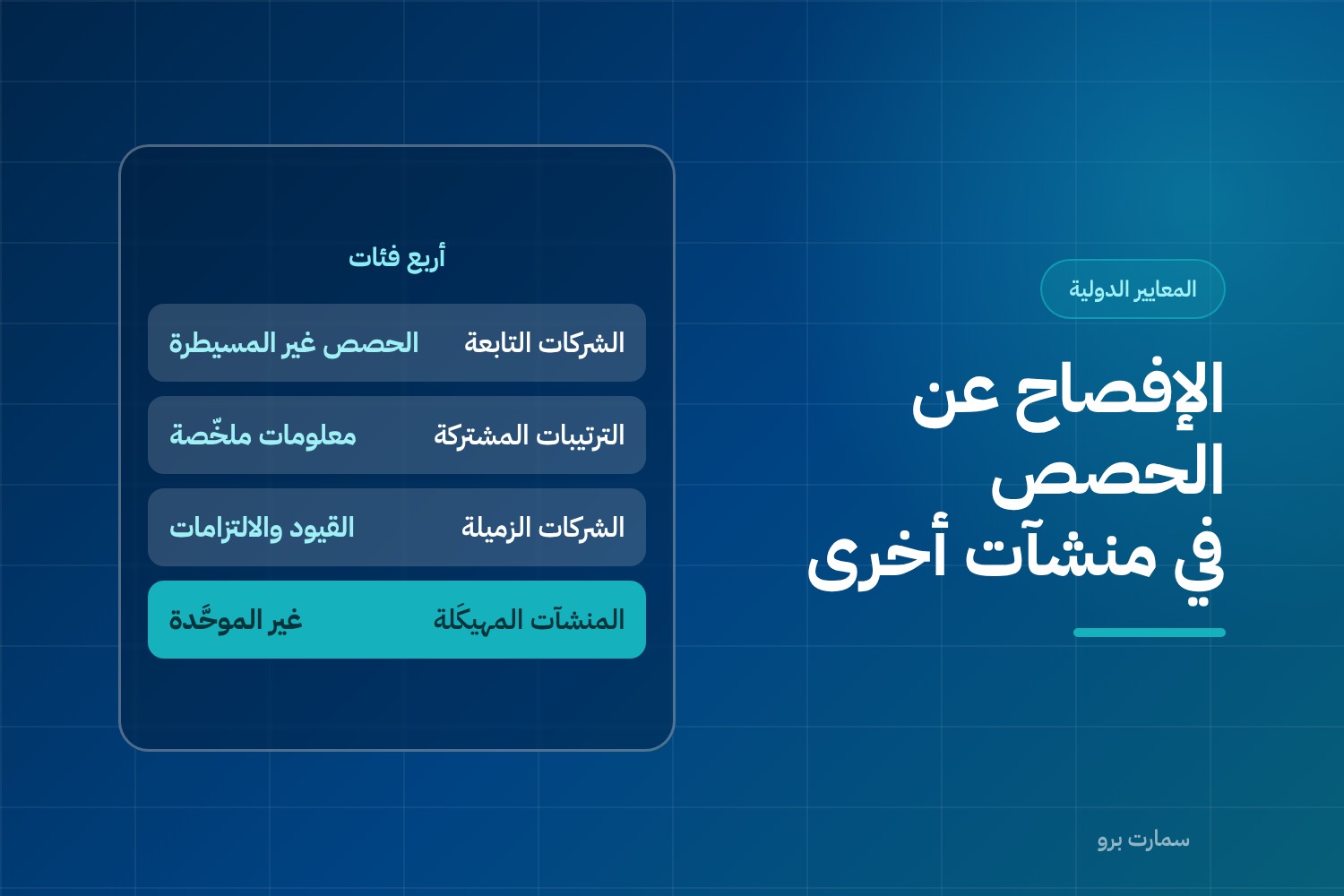
Consolidated financial statements present a group as if it were a single entity, and in doing so they hide information readers need: who owns what, where the risks sit, and what restricts the movement of money inside the group. IFRS 12 was issued to bring all disclosure of interests in other entities together in one place.
Its objective is to let readers evaluate two things: the nature of the interests and the risks associated with them, and their effects on financial position, financial performance and cash flows.
What is the scope of IFRS 12?
It applies to an entity that has an interest in:
- Subsidiaries.
- Joint arrangements, meaning joint operations or joint ventures.
- Associates.
- Unconsolidated structured entities.
It also covers interests classified as held for sale or as discontinued operations.
One of its main exclusions is separate financial statements prepared under IAS 27, with two exceptions: an entity that prepares only separate financial statements must still give the disclosures on unconsolidated structured entities, and an investment entity that measures all its subsidiaries at fair value through profit or loss must present the investment entity disclosures.
Which significant judgements and assumptions must be disclosed?
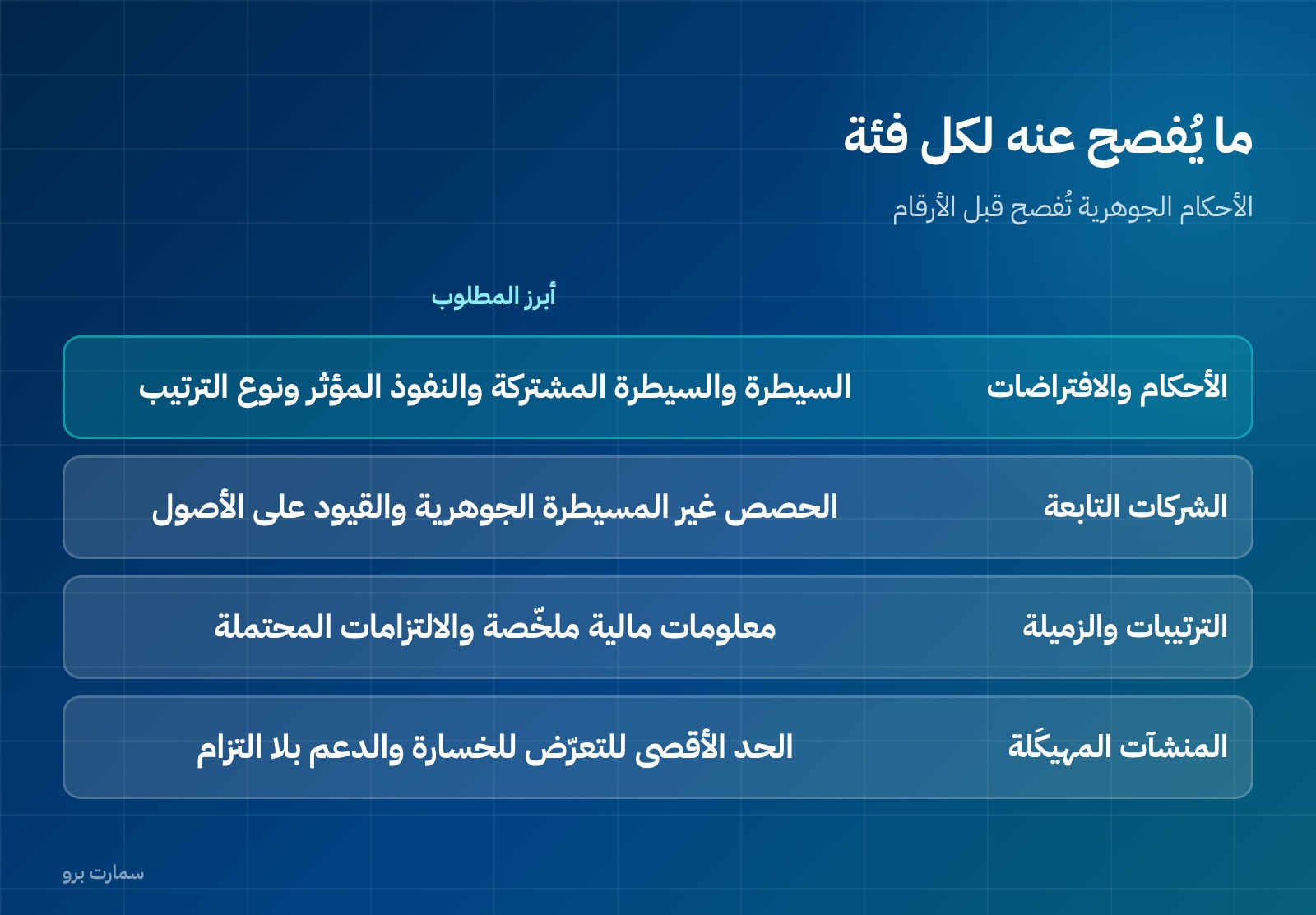
The first requirement is not numbers but judgements. You disclose the judgements and assumptions made in determining:
- That the entity has control of another entity.
- That it has joint control of an arrangement or significant influence over an entity.
- The type of joint arrangement, joint operation or joint venture, when the arrangement is structured through a separate vehicle.
- That it meets the definition of an investment entity, plus any change in that status and the reasons for it.
This disclosure is what allows readers to judge the quality of the classification itself, not only its outcome.
What must be disclosed about interests in subsidiaries?
| Item | Requirement |
|---|---|
| Composition of the group | A description of the group structure |
| Material non-controlling interests | For each subsidiary: name, principal place of business, ownership and voting percentages held by non-controlling interests, profit or loss allocated to them, accumulated balance, and summarised financial information |
| Significant restrictions | On the entity's ability to access or use group assets and settle group liabilities |
| Consolidated structured entities | The nature and extent of risks, including contractual arrangements to provide financial support |
| Change in ownership without loss of control | Its effects on equity attributable to owners of the parent |
| Loss of control | The gain or loss, its components, and the line item in which it is recognised |
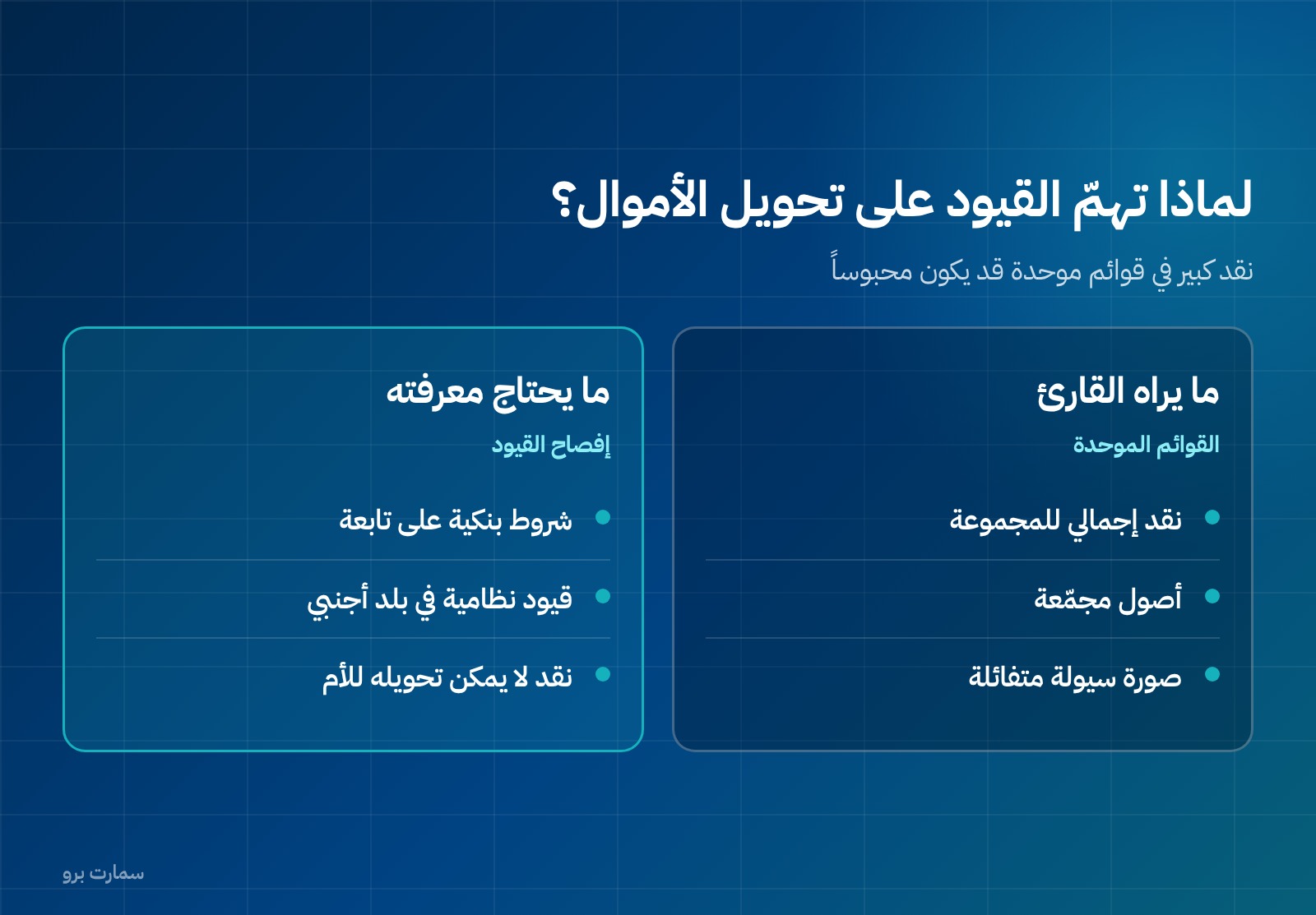
The significant restrictions disclosure is one of the most useful in practice: an investor who sees a large cash balance in the consolidated statements needs to know whether part of it is trapped in a subsidiary and cannot be transferred.
What does an investment entity disclose about its unconsolidated subsidiaries?
It discloses the name of each unconsolidated subsidiary, its principal place of business and the ownership and voting percentages held, any significant restrictions on transferring funds, and any financial or other support provided without a contractual obligation, including any current intentions to provide such support.
That last item is unusual: the standard requires disclosure of an intention that has not yet become an obligation, because it carries real risk for the entity.
What is disclosed for joint arrangements and associates?
For each material joint arrangement or associate, you disclose its name, the nature of the relationship, its principal place of business and the proportion of the interest held, the accounting method applied, and summarised financial information. For immaterial arrangements and associates, you disclose the carrying amount and your share of results in aggregate.
You also disclose any significant restrictions on the ability of joint ventures and associates to transfer funds to the investor, any contingent liabilities relating to them, and any unrecognised share of losses once the investor has stopped recognising them.
What about unconsolidated structured entities?
This category is the reason the standard exists in its current form. You disclose the nature and extent of the interest and the nature of the associated risks, including the carrying amounts of recognised assets and liabilities, the line items in which they appear, the maximum exposure to loss, and any financial support provided without a contractual obligation.
The governing principle: what falls outside consolidation does not fall outside disclosure if the entity remains exposed to its risks.
Why were these disclosures combined into one standard?
Before IFRS 12, disclosures about interests were spread across the standards on consolidation and associates. Bringing them together achieved two things: consistent coverage, and the recognition of unconsolidated structured entities as a separate category that deserves disclosure, the very category whose concealment financial crises showed to be dangerous.
What does this mean for a Saudi group?
Many Saudi groups own several companies under a holding company and prepare consolidated financial statements. The disclosures required here are not a formality:
- Material non-controlling interests require summarised financial information for each subsidiary with a material minority.
- Restrictions on transferring funds, such as bank covenants on a subsidiary or regulatory restrictions in a foreign country, should be tracked and documented throughout the year, not reconstructed at year-end close.
- Judgements in determining control need a written memo at every acquisition or change to a shareholders' agreement.
Building this information from an accounting system that holds the group structure and tags transactions between group companies is far easier than compiling it by hand each year. See consolidated financial statements and notes to the financial statements.
If these disclosures, together with those required by other standards, are not enough to meet the objective, any additional information needed must be disclosed. You must also consider the level of detail and aggregation so that useful information is not obscured by a mass of other detail.
The official text is available on ifrs.org.
What is the official title adopted in Saudi Arabia?
The approved Arabic title of this standard translates as "IFRS 12: Disclosure of Interests in Other Entities". The Saudi Organization for Chartered and Professional Accountants (SOCPA) endorsed it with a Saudi modification: zakat was added alongside income tax in the Appendix B paragraphs on summarised financial information, because zakat is an expense for Saudi companies.
Reference: Saudi Organization for Chartered and Professional Accountants, the document endorsing IFRS for application in the Kingdom, updated on 1447/07/04 AH.
Key takeaway: IFRS 12 asks a group to explain the judgements behind its classifications and to disclose the risks, restrictions and exposures that consolidation hides, including those in entities it does not consolidate.
To see how a connected accounting system with cost centres and financial statements can support group reporting, start a free SmartPro trial.
Article visuals
Frequently asked questions
What is the scope of IFRS 12?
IFRS 12 applies to an entity that has an interest in subsidiaries, joint arrangements, associates or unconsolidated structured entities. It also covers interests classified as held for sale or as discontinued operations.
What are the most important requirements of IFRS 12?
The standard requires disclosure of the significant judgements and assumptions made in determining control, joint control, significant influence and the type of joint arrangement. It also requires information about non-controlling interests, significant restrictions and the risks associated with interests in other entities.
Why does disclosing significant restrictions matter?
An investor who sees a large cash balance in the consolidated financial statements needs to know whether part of it is trapped in a subsidiary. Restriction disclosures show whether funds can actually move freely within the group.
Do IFRS 12 disclosures apply to separate financial statements?
Separate financial statements are generally excluded, with two exceptions. An entity that prepares only separate financial statements must still give the disclosures on unconsolidated structured entities, and an investment entity that measures all its subsidiaries at fair value must present the investment entity disclosures.
Must an intention to provide financial support be disclosed?
Yes, for an investment entity and its unconsolidated subsidiaries. It discloses support provided without a contractual obligation as well as any current intentions to provide it, because those intentions carry real risk for the entity.