
Maternity Leave in Saudi Labor Law: 12 Weeks, Six of Them Mandatory After Birth
Twelve weeks on full pay, six of them mandatory after childbirth, with the rest distributed from as early as four weeks before the expected delivery date. Plus what happens when the birth is late.
Author:سامي الحيدري
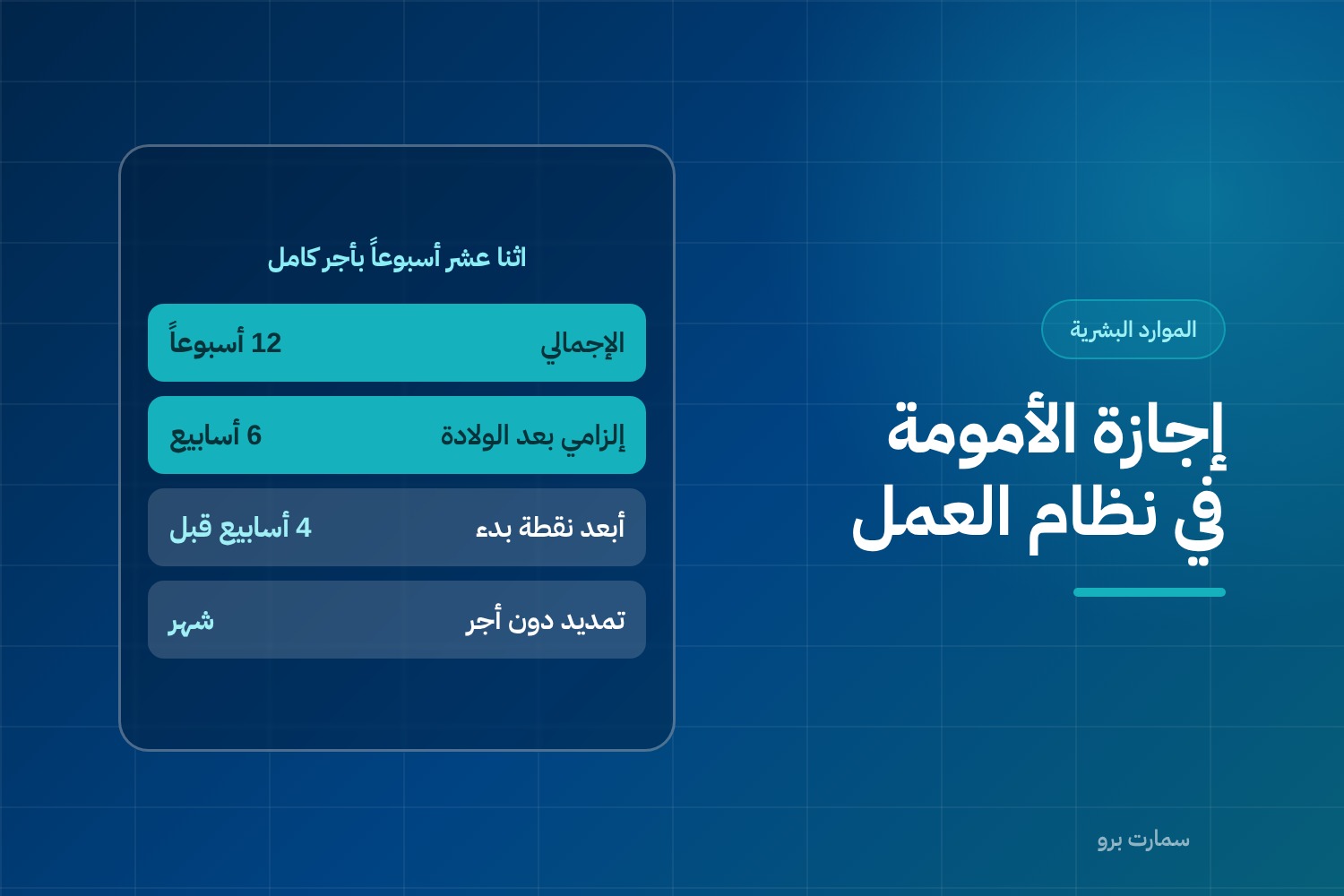
Maternity leave in Saudi labor law is twelve weeks on full pay, of which the six weeks after childbirth are mandatory. The worker distributes the remaining weeks as she chooses, starting as early as four weeks before the expected delivery date, supported by an approved medical report.
This wording, as set out in the Labor Law amendments FAQ guide issued by the Ministry of Human Resources and Social Development (HRSD), turns the leave from a single block into a period that can be distributed, with a fixed core that cannot be touched. That is exactly what needs to be set up correctly in your attendance and payroll system.
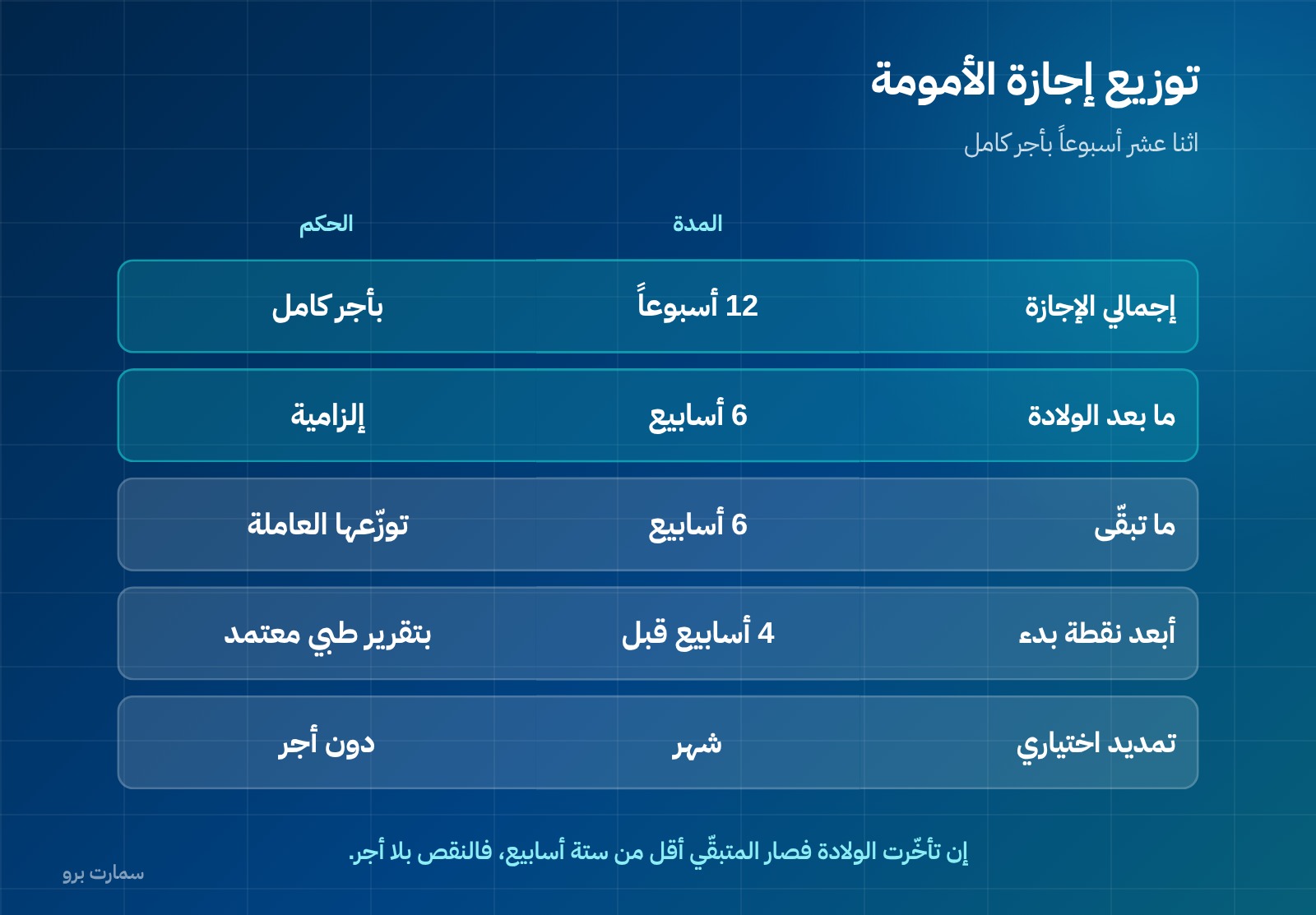
How maternity leave in Saudi labor law is distributed
| Part | Duration | Rule |
|---|---|---|
| Total leave | 12 weeks | Full pay |
| After childbirth | 6 weeks | Mandatory; cannot be swapped or postponed |
| Remainder | 6 weeks | Distributed by the worker |
| Earliest possible start | 4 weeks before the expected delivery date | With an approved medical report |
| Optional extension | One additional month | Unpaid |
So a worker may start her leave four weeks before the expected date, leaving her eight weeks after the birth. Or she may work until the birth and take all twelve weeks afterwards. Either way, the six weeks immediately after childbirth are mandatory.
When does part of the leave become unpaid?
One clause deserves a careful read: if the birth is later than the expected date and the leave remaining is less than six weeks, the shortfall is unpaid.
An example shows the effect. A worker starts her leave four weeks before the expected date, and the birth comes two weeks late. Six weeks of leave have been used before the birth, leaving six weeks, exactly the mandatory period. Had the birth been three weeks late, five weeks would remain, and the missing week is made up without pay because the six weeks after birth are mandatory.
This means the start date is not a purely administrative decision. Starting early carries the risk that paid weeks are used up before the expected date if the birth is late. Explain this to the worker before her start date is approved, not after.
What other paid special leave applies?
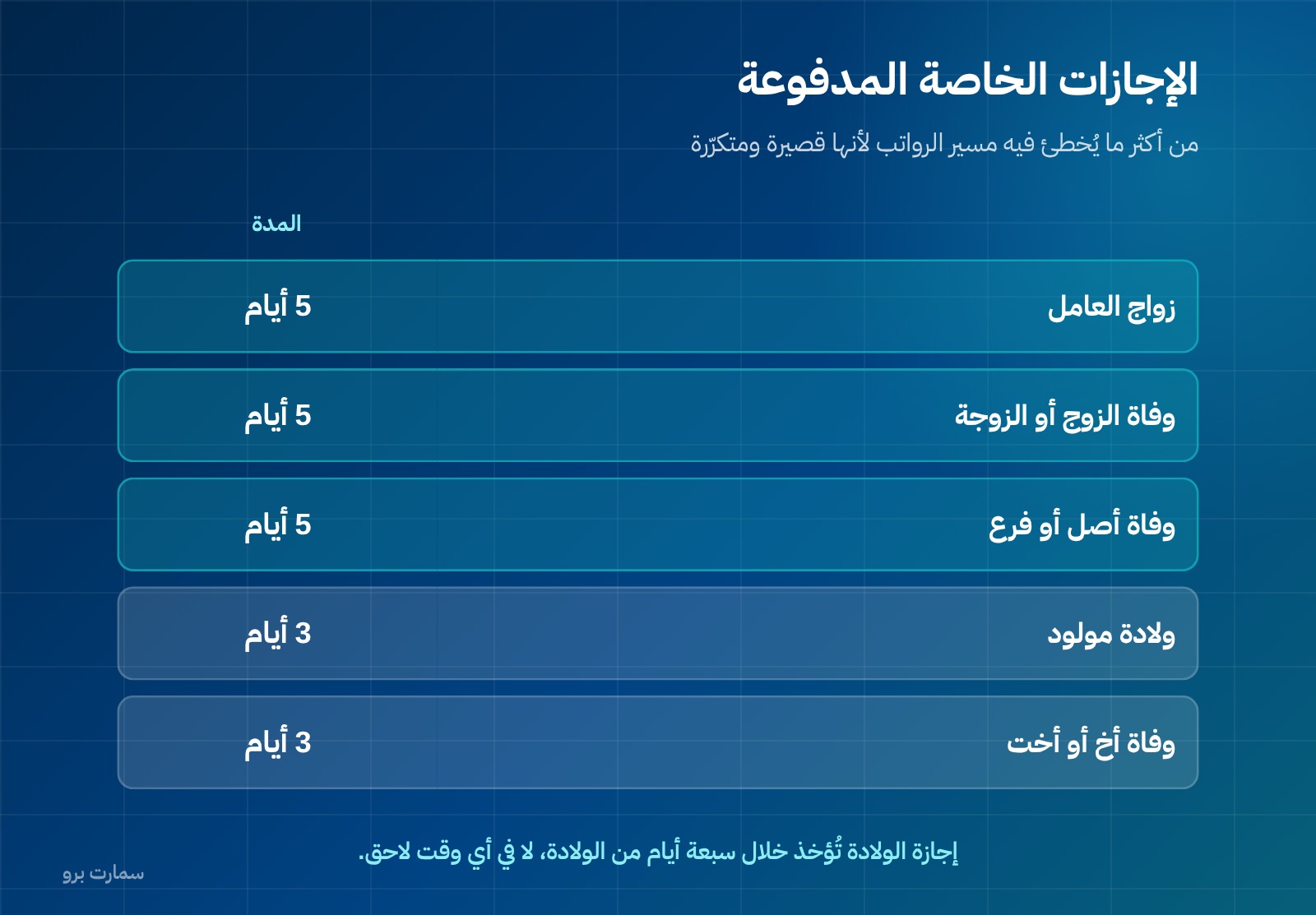
The amendments also set out paid special leave, which is among the items payroll most often gets wrong because it is short and recurring:
- Five days: the worker's marriage, the death of a spouse, or the death of an ascendant or descendant.
- Three days: the birth of a child, or the death of a brother or sister.
A father's leave for the birth of a child must be taken within seven days of the birth, not at any later point. Leave taken a month later does not count as birth leave.
One point of wording needs precision: ascendant or descendant means parents, grandparents, children and grandchildren. Leave for a brother or sister is three days, not five. Mixing up the two numbers is common.
How do overtime and compensatory leave connect to this?
Alongside the leave amendments, another clause that directly affects payroll was clarified: overtime pay is the basic hourly wage plus fifty percent, and it may be replaced with paid compensatory leave with the worker's consent.
This option is newly clear, and it has an accounting effect that is often overlooked. An overtime hour exchanged for leave does not disappear from the books; it changes from a cash expense into a liability that stays open until the leave is used. Recording the swap as a cancellation of the amount owed understates payroll expense and loses track of a balance the business still owes.
The safer approach is to give compensatory leave its own balance in the system, like the annual leave balance, increasing when overtime is exchanged and decreasing when the leave is taken. The detail of calculating an overtime hour is in overtime calculation.
What changed for annual leave?
In the same context, annual leave is no less than 21 days, rising to at least 30 days after five continuous years with the same employer, and it is paid in advance.
The condition of continuous service with the same employer is what sets the date of the move from 21 to 30 days. A break restarts the count, so an employee who resigned and came back starts again at 21 days, not 30, unless their contract says otherwise. Paid in advance means the wage for the leave period is paid before the leave, not with the salary of the month in which it falls. This changes when the money is paid, not how much, and it needs to be set up in the payroll cycle.
How does maternity leave affect payroll and attendance?
Maternity leave is on full pay, but full needs a definition in your system:
- What is paid? The full wage. Allowances paid for actual attendance, such as a daily transport allowance or a meal allowance, need a written decision in the company policy, because their nature differs from the basic wage.
- Social insurance (GOSI) contributions continue for the leave period, since it counts as service, not a break. The contributory wage is calculated as in normal months; details are in the GOSI contributory wage.
- Annual leave keeps accruing during maternity leave, because it is a period of service. Balance calculation is covered in annual leave balance.
- The additional unpaid month is handled differently in the system: it is a period of service without pay, so payment stops and the period is not counted in some wage-based entitlements.
- End-of-service benefit is calculated on the last wage, so for a worker returning from maternity leave the last wage is her normal wage, not an average.
Anyone managing this on a manual spreadsheet tends to get item four wrong, because the unpaid month needs handling in two places: payment and service period. The safer approach is for the leave type to be a field in the system that carries its own rule, as described in the payroll run guide.
What should your internal policy checklist cover?
| Item | What must be written down |
|---|---|
| Start date | How it is approved, and who verifies the medical report |
| Late birth | That any shortfall below the mandatory six weeks is unpaid |
| Allowances | Which are paid during the leave and which are not |
| Additional month | How it is requested, and when it is decided |
| Return | The return date, and any nursing arrangement if one exists |
Whatever is not written down under these items ends up being settled case by case by custom, and custom is no basis for calculating a wage.
The Labor Law texts in force are on the Bureau of Experts at the Council of Ministers website, and the FAQ guide is on the Ministry of Human Resources and Social Development website. This article is a general explanation, not legal advice, and special medical cases should be reviewed against their own reports.
Key takeaway: Maternity leave is 12 weeks on full pay with six mandatory weeks after birth, so an early start plus a late birth can leave an unpaid shortfall. Define allowances, the unpaid extra month and leave balances in writing and in your system before the first case arrives.
To see how leave types, balances and payroll rules work together in one place, explore SmartPro Human Resources or start a free trial.
Article visuals
Frequently asked questions
How long is maternity leave under Saudi labor law?
Twelve weeks on full pay, of which the six weeks after birth are mandatory. The employee distributes the remainder as she chooses, starting as early as four weeks before the expected date of birth with an approved medical report. She may also request one additional month without pay.
What happens if the birth is later than the expected date?
If the birth is late and the remaining leave falls below six weeks, the shortfall is unpaid. The six weeks following the birth are mandatory in every case, so any part of them completed after the paid period runs out is unpaid.
Do social insurance (GOSI) contributions continue during maternity leave?
Yes. Maternity leave counts as service, not a break, so social insurance contributions continue and the contributory wage is calculated as in ordinary months. Annual leave also continues to accrue during the leave period.
What other paid special leave does Saudi labor law provide?
Five days for the employee's marriage, the death of a spouse, or the death of an ascendant or descendant, and three days for the birth of a child or the death of a brother or sister. A father's paternity leave must be taken within seven days of the birth, not at any later time.
Are allowances paid during maternity leave?
The wage is paid in full. Allowances paid in return for actual attendance, such as a daily transport allowance or a meal allowance, need a written decision in the company's policy because their nature differs from the basic wage. Whatever is not written down is settled by custom, and custom is not a sound basis for calculating pay.