
Overtime Calculation in Saudi Arabia: The Formula and Special Cases
Overtime calculation rests on the hourly wage plus fifty percent of basic pay. Covers standard working hours, Ramadan, Fridays and public holidays, and the common double-pay mistake.
سامي الحيدري
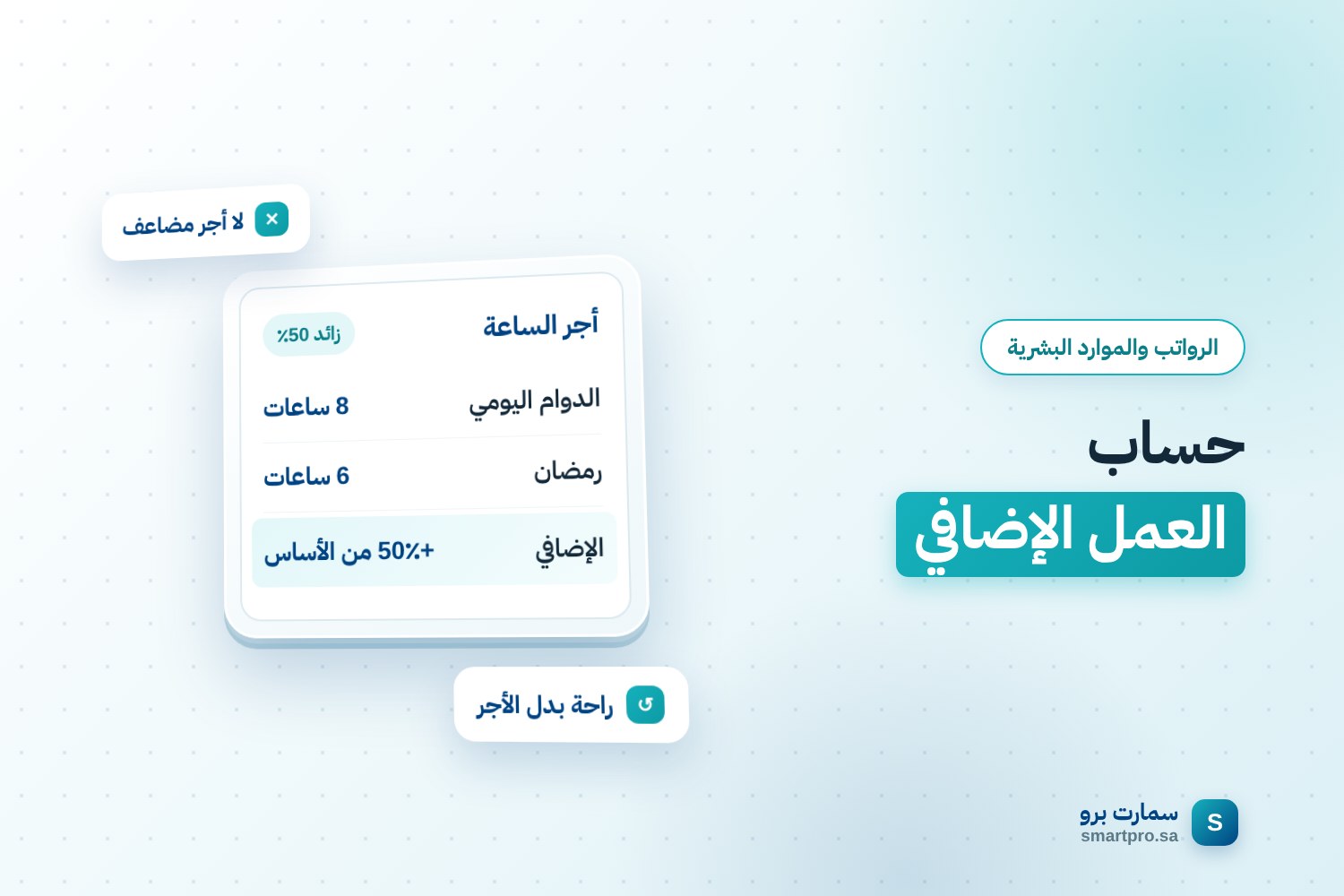
Overtime calculation in Saudi Arabia is simpler than most people think. Businesses still get it wrong because they mix up the basic-wage rule with the total-wage rule, and sometimes assume a "double pay" rate that does not exist in the law.
There is one rule: overtime hourly pay = hourly wage + fifty percent of the basic wage. The percentage is the same in every case: on normal working days, on the weekly rest day, and on Eid and public holidays.
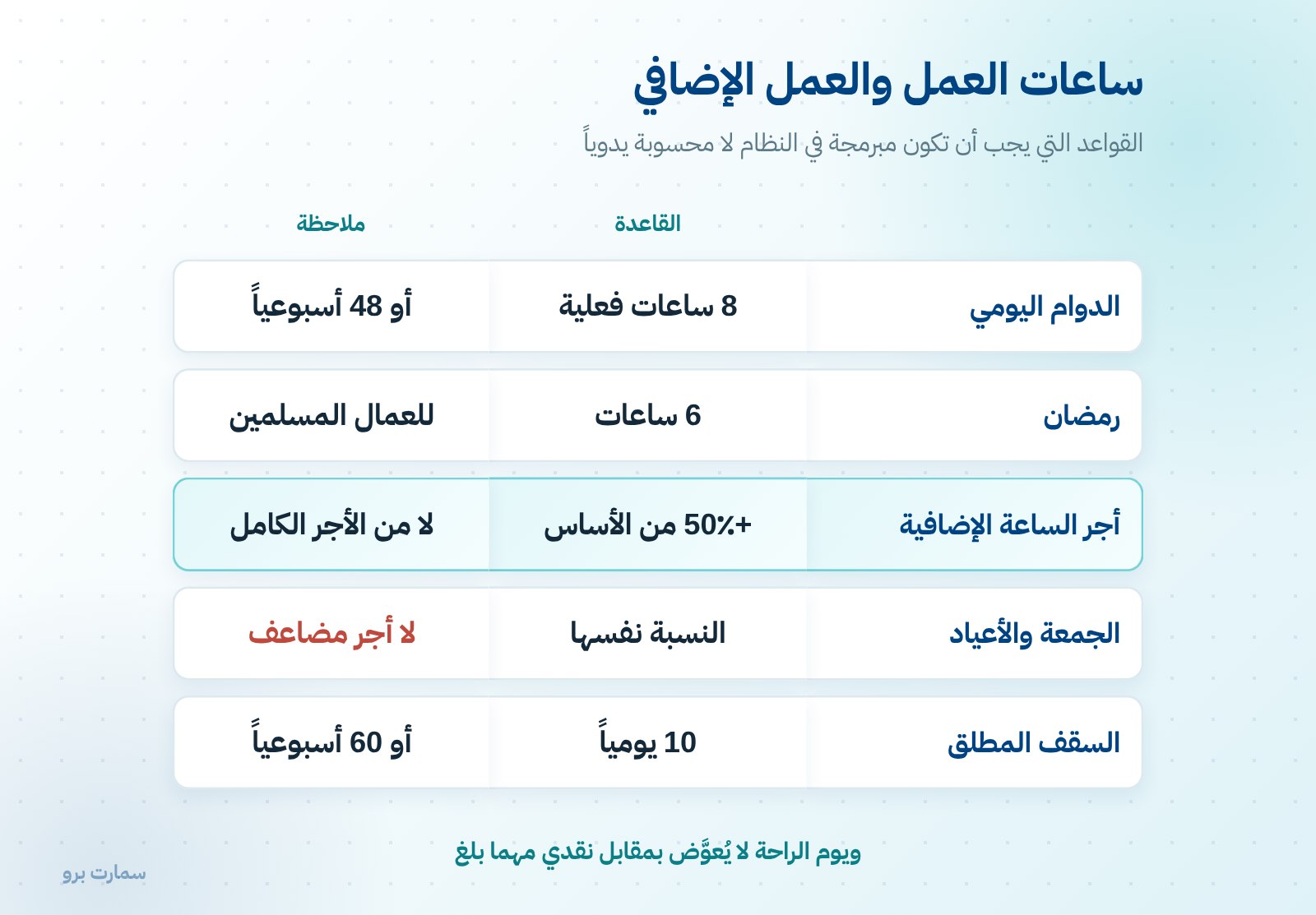
Overtime calculation: the key numbers
| Item | Rule |
|---|---|
| Daily working hours | 8 actual hours |
| Weekly working hours | 48 hours |
| Ramadan, for Muslim workers | 6 hours a day / 36 a week |
| Overtime hourly pay | Hourly wage + 50% of the basic wage |
| Absolute cap in exceptional cases | 10 hours a day / 60 a week |
| Weekly rest day | Friday, at least 24 consecutive hours, fully paid |
How do you work out the hourly wage?
Divide the monthly wage by the number of monthly working hours. At forty-eight hours a week, the usual monthly estimate is about two hundred and eight hours, and it varies with how working days are spread across the month in your business.
What matters is that the method is fixed and written down in your work regulations, not calculated one way this month and another way next month.
A worked example
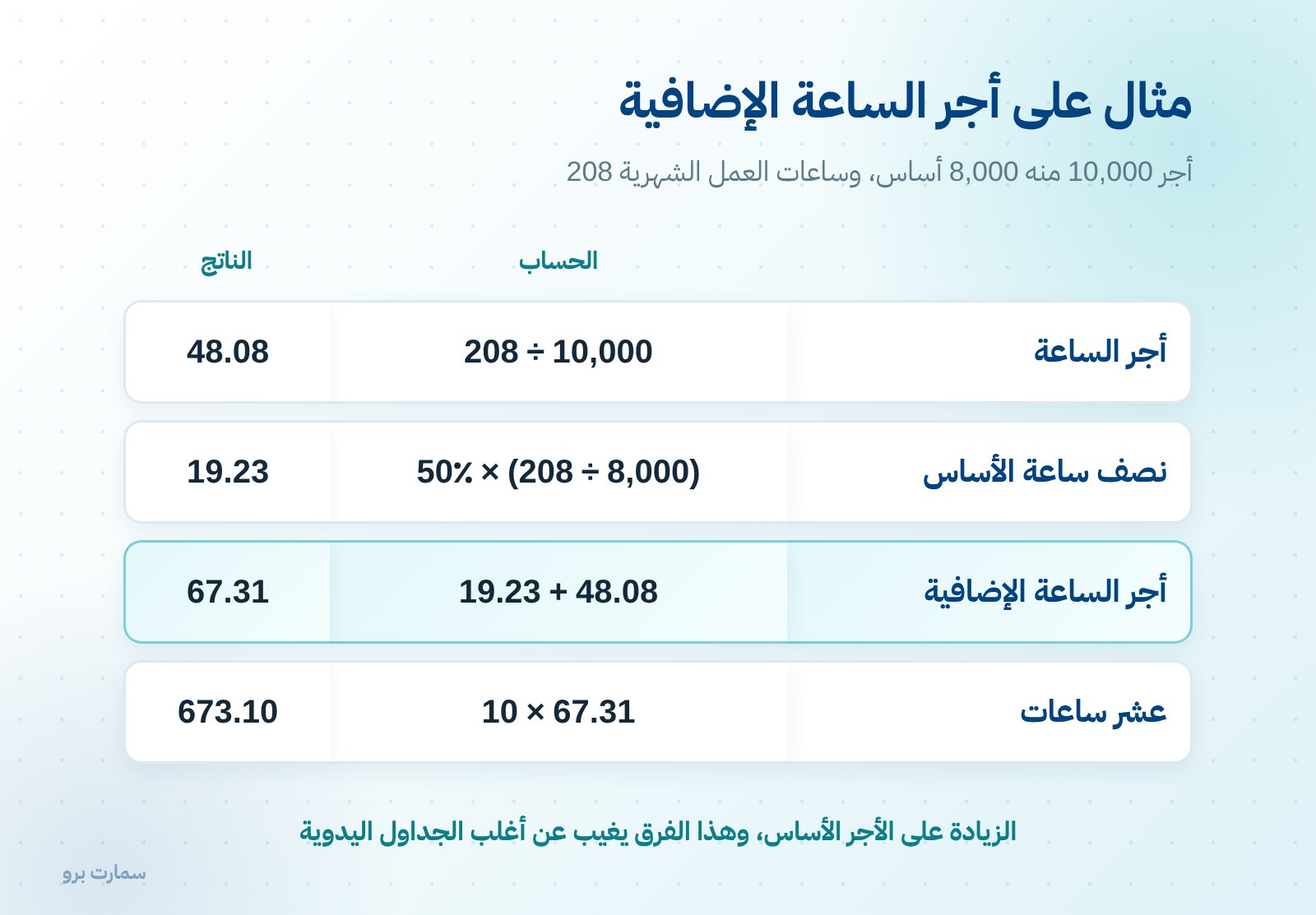
An employee has a basic wage of SAR 8,000 and regular allowances of SAR 2,000, so the wage is SAR 10,000. Assume 208 working hours a month:
| Step | Calculation | Result |
|---|---|---|
| Hourly wage | 10,000 ÷ 208 | 48.08 |
| Half an hour of basic wage | (8,000 ÷ 208) × 50% | 19.23 |
| Overtime hourly pay | 48.08 + 19.23 | 67.31 |
| Ten overtime hours | 67.31 × 10 | SAR 673.10 |
Note that the fifty percent premium is calculated on the basic wage, not the full wage. Many manual spreadsheets miss this difference and produce a figure higher or lower than what is actually owed.
Fridays and Eid: is there double pay?
This is one of the most widely repeated and most mistaken beliefs. The law does not provide for double pay on Fridays or on Eid.
What it does provide:
- Friday is the weekly rest day for all workers, and another day may be substituted after notifying the labour office. It is fully paid, lasts no less than twenty-four consecutive hours, and cannot be replaced with a cash payment.
- All hours worked on Eid and public holidays count as overtime, calculated at the same rate.
So work on a Friday enters the overtime calculation because it exceeds the weekly hours, not because of a special rate. The result is the same: 150%, not 200%.
The most important practical point: the rest day cannot be bought. A business that pays an employee to work every Friday instead of granting a weekly rest day breaks the law, even if it pays more.
Ramadan: who gets the reduced hours?
Working hours in Ramadan are six hours a day or thirty-six a week, and they apply to Muslim workers.
Anything beyond that is overtime, calculated with the same rule. The common mistake is keeping an eight-hour shift in Ramadan without treating the extra two hours as overtime.
Can you give time off instead of overtime pay?
An employer may grant the employee paid rest days instead of overtime pay, with the employee's consent.
This is a useful option for seasonal businesses whose peak is concentrated in a few weeks. But consent is a condition and cannot be imposed. It is best documented in writing, and the earned rest balance should be tracked the same way as annual leave. See annual leave balance.
What is the maximum that can never be exceeded?
Even in the exceptional cases where the law allows working hours to be extended, they may not exceed ten hours a day or sixty a week.
This is an absolute cap. It cannot be waived with the employee's agreement or in exchange for higher pay.
Who approves overtime hours?
The gap between hours recorded on the fingerprint device and hours approved for payment is what protects a business from overtime creep. An employee staying on site is not necessarily overtime that was requested.
The sound sequence is:
- A prior request from the direct manager.
- Approval after the work is done.
- Entry into the payroll run.
Without this chain, overtime becomes an open-ended cost. Details are in attendance and how it links to payroll.
What are the most common overtime mistakes?
- Calculating the premium on the full wage instead of the basic wage.
- Assuming double pay on Fridays or Eid.
- Paying cash in place of the rest day instead of actually granting it.
- Keeping an eight-hour Ramadan shift without counting the extra hours.
- Paying straight from fingerprint records without manager approval.
How is overtime recorded in the accounts?
Overtime is a variable item in the payroll run. It is recorded under salaries expense in the period in which it was earned, not the period in which it was paid, if the two differ.
In businesses that allocate costs to cost centres or projects, overtime must carry the code of the cost centre or project that caused it, otherwise profitability will look misleading. See the payroll journal entry. SmartPro's Human Resources system handles attendance and payroll and is connected to accounting.
Where is the official reference?
Working hours, overtime rules and the weekly rest day are set out in the Labour Law published by the Ministry of Human Resources and Social Development, which is the reference in case of any disagreement.
Key takeaway: Overtime is always the hourly wage plus 50% of the basic wage, on normal days, Fridays and holidays alike; there is no double rate, and the weekly rest day cannot be replaced with cash.
Read also
- Annual leave balance: carry-over and cash-out
- Attendance and how it links to payroll
- Payroll run: how to prepare it step by step
To see attendance, overtime approval and payroll working together, start a free trial or book a demo.
Frequently asked questions
How is overtime hourly pay calculated in Saudi Arabia?
It is the hourly wage plus fifty percent of the basic wage. The hourly wage is found by dividing the monthly wage by monthly working hours, and then half the value of one hour of basic wage is added. The premium is calculated on the basic wage, not the full wage.
Is work on a Friday paid at double rate?
No. The law does not provide for double pay on Fridays or on Eid. Friday is a fully paid weekly rest day of at least twenty-four consecutive hours that cannot be replaced with cash, and work on it enters the overtime calculation at fifty percent like any other overtime.
What are working hours in Ramadan?
Six hours a day or thirty-six a week, and they apply to Muslim workers. Anything beyond that is calculated as overtime using the same rule. Keeping an eight-hour shift in Ramadan without counting the extra hours is a common mistake.
Can overtime be compensated with time off?
Yes, paid rest days may be granted instead of overtime pay with the employee's consent. Consent is a condition and cannot be imposed, and it is best documented in writing, with the earned rest balance tracked the same way as annual leave.