
Notice Period in Saudi Labour Law: Durations and Compensation
The notice period is no longer the same for both sides. Here are the current durations, when no notice is required at all, and how compensation for not observing it is calculated, with worked figures.
سامي الحيدري
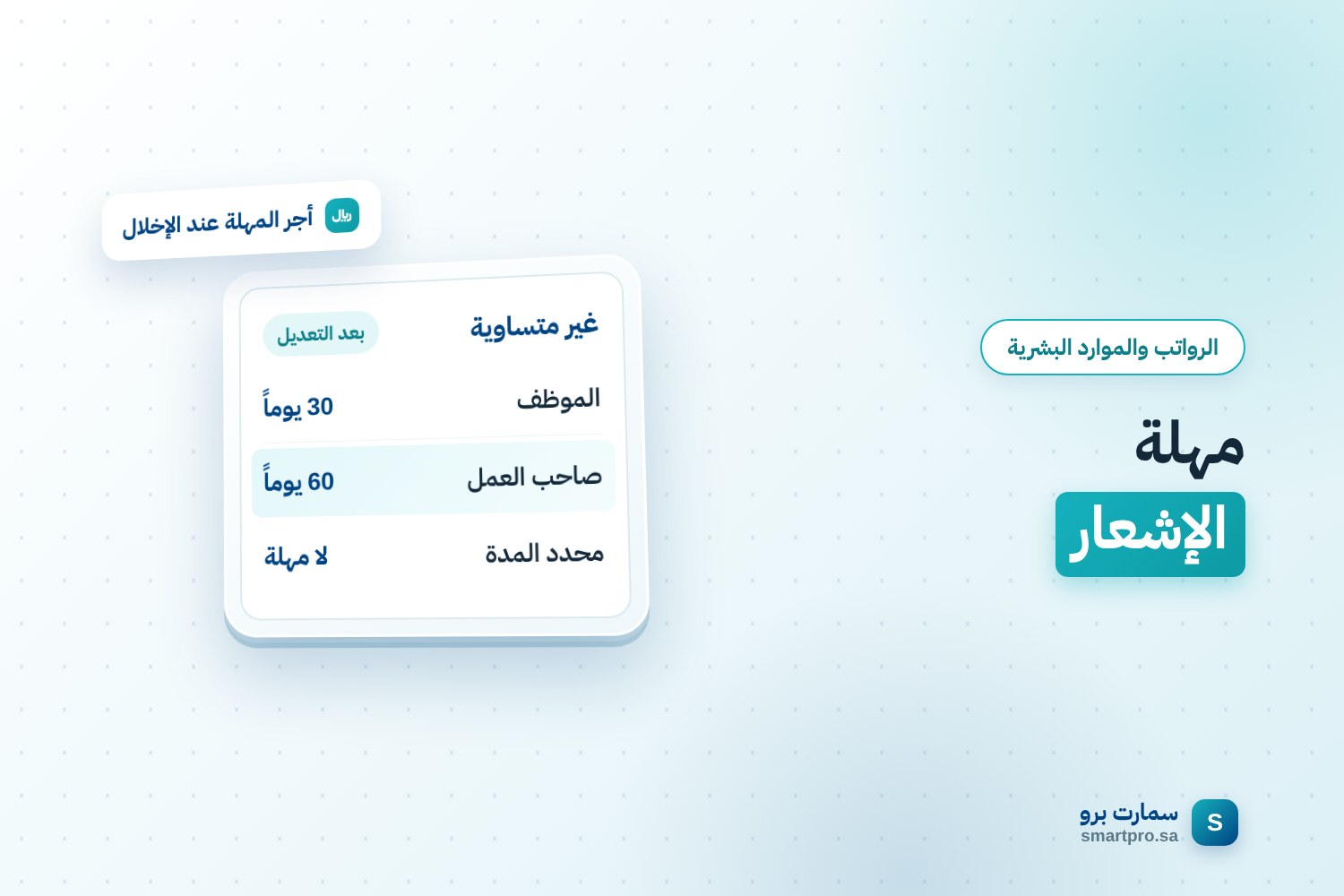
The notice period under Saudi Labour Law is no longer equal for both parties. After the latest amendments, for monthly-paid staff on open-ended (indefinite-term) contracts, the employer must give sixty days and the employee must give thirty days.
This is a material change for contracts and internal work regulations. Many templates still in use today specify sixty days for both sides, which now asks more of the employee than the law requires.
What is the current notice period?
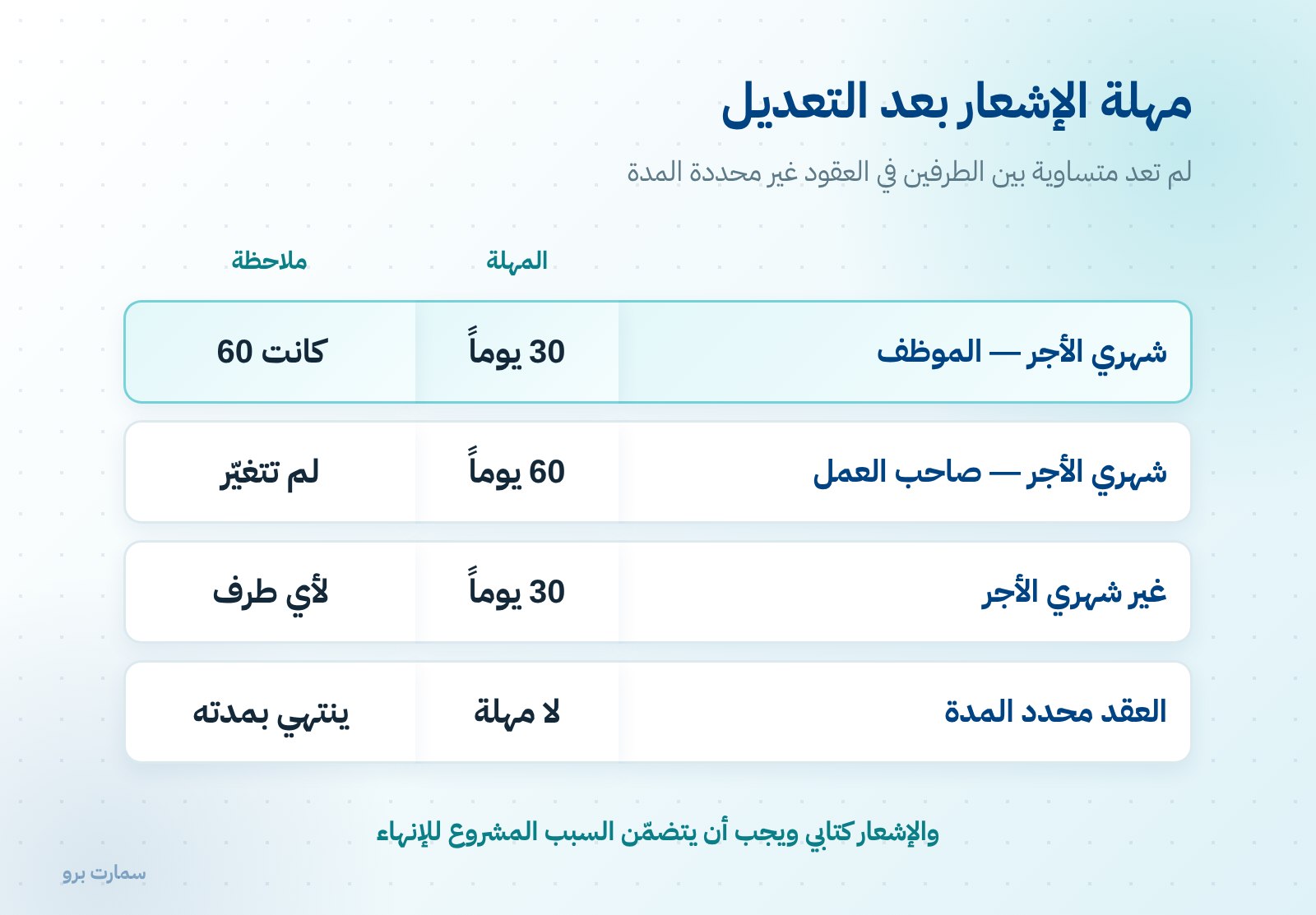
| Situation | Notice period |
|---|---|
| Monthly-paid, employee ends the contract | At least 30 days |
| Monthly-paid, employer ends the contract | At least 60 days |
| Not monthly-paid, either party | At least 30 days |
| Fixed-term contract | No notice: it ends when its term expires |
Notice must be given in writing and must state the legitimate reason for termination. A verbal notice, or one without a written reason, is incomplete.
What is the compensation for not observing the notice period?
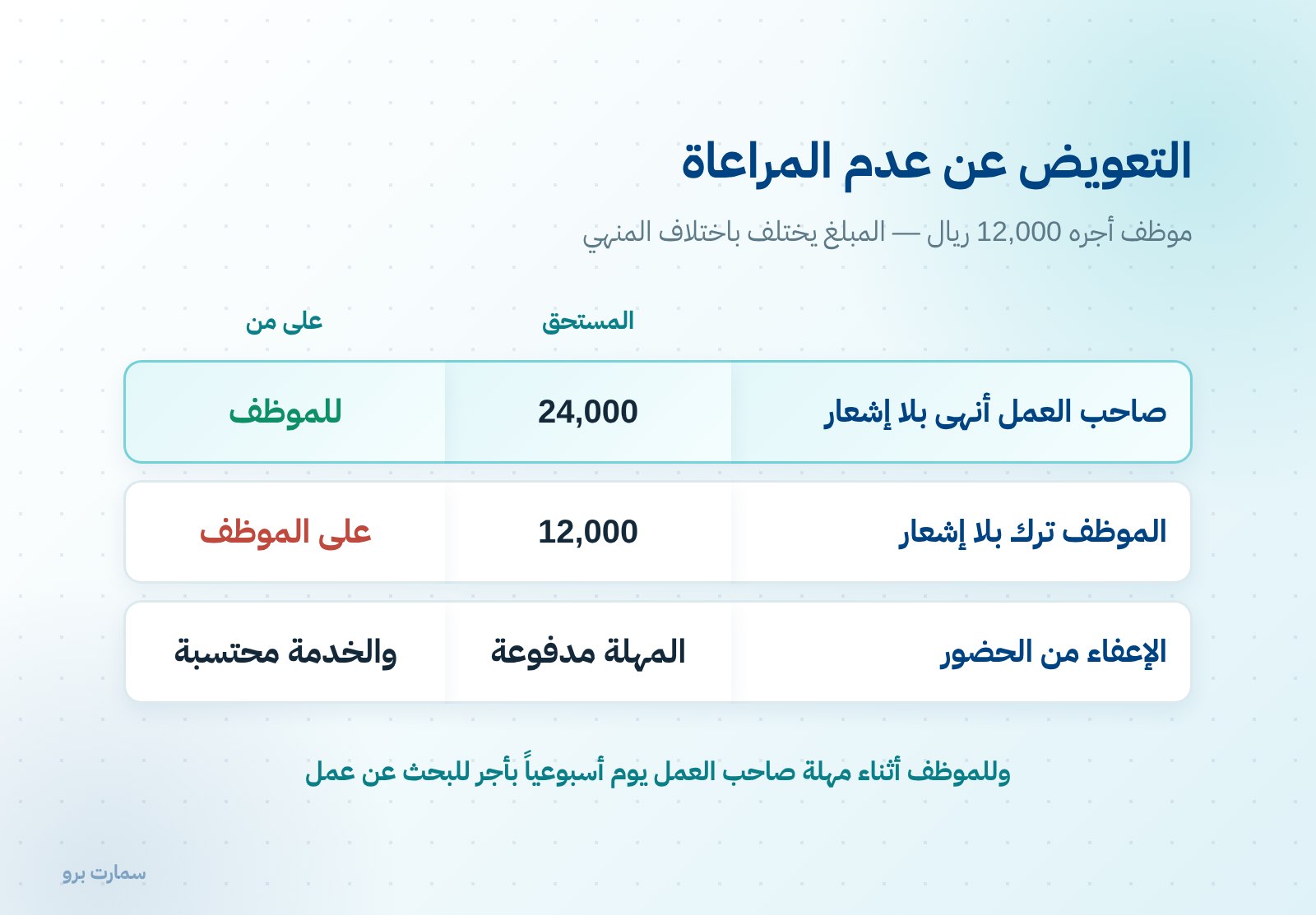
Whichever party fails to observe the notice period must pay the other party an amount equal to the employee's wage for the notice period, unless they have agreed otherwise.
Example: An employee earns SAR 12,000 a month, and the employer ends the contract without notice. The employee is owed for the notice period: 12,000 × 2 = SAR 24,000, because the employer's notice period is sixty days.
The other way round: An employee on the same wage leaves without notice. The employee owes SAR 12,000, because their notice period is thirty days. This is usually deducted from the final settlement.
Note the asymmetry: the two parties do not pay the same amount, because their notice periods are not the same.
Can an employee look for work during the notice period?
If the employer ended the contract, the employee is entitled during the notice period to one full day a week or eight hours a week to look for another job, on full pay, provided they inform the employer a day in advance.
The employer may excuse the employee from attending altogether. In that case the service period still counts and the notice period is still paid. Releasing someone from attendance is not an early end to the employment relationship.
This is where many businesses go wrong: sending an employee home as soon as they receive notice does not cancel the notice pay and does not stop their end-of-service award from accruing.
When is no notice required at all?
Fixed-term contracts
A fixed-term contract is one with a stated end date. It ends when its term expires, with no notice needed. If both parties keep performing it after that date, it is treated as renewed.
Ending it before its term expires without a legitimate reason is a different matter. That is not handled through a notice period but through compensation for the remaining term.
Dismissal cases set out in the law
The law allows termination without notice or end-of-service award in specific cases listed exhaustively, provided the employee is given the chance to present their side. The details are in calculating the end-of-service award.
Justified departure by the employee
The employee may leave without notice and keep all their rights if the fault lies with the employer, such as a breach of a fundamental obligation or an assault on the employee. See end-of-service award on resignation.
How is compensation for unlawful termination calculated?
The notice period is one thing, and compensation for unlawful dismissal is another. Both can apply at the same time.
If a contract is ended without a legitimate reason, the affected party is entitled to compensation as agreed in the contract. If there is no agreement:
- Open-ended contract: fifteen days' wages for each year of service.
- Fixed-term contract: wages for the remaining term of the contract.
- A minimum of two months' wages in both cases.
This compensation is separate from the end-of-service award and from notice pay. It does not replace either of them.
How do resignation and the notice period interact?
The law now includes provisions on the resignation procedure. A resignation is deemed accepted once thirty days pass without a response, and the employer may defer acceptance for up to sixty days with written reasons.
The practical question the text does not settle explicitly: do the resignation-acceptance period and the notice period run in parallel or one after the other? The safer course for a business is to address this explicitly in its internal regulations and contracts rather than leave it to interpretation in a dispute.
Five practical points
- Review your contract templates: the employee's notice period is now thirty days, not sixty.
- Write the legitimate reason into the notice itself; leaving it out weakens your position.
- Do not take the employee off the payroll when you release them from attendance; the notice period is paid and service still counts.
- Separate the items in the settlement: notice pay, the end-of-service award and compensation are three independent items.
- Keep the signed notice with its date of receipt, because that date starts every period.
How does notice pay affect the books?
Notice pay is a salaries expense in the period it relates to. If it is paid as a lump sum for a future period, the safer approach is to charge it to the period it covers rather than to the month it was paid.
Any amount deducted from an employee for not observing the notice period reduces what they are owed in the final settlement and appears as a negative line on the settlement statement. See the final settlement.
What about notice during the probation period?
The probation period has its own rules. Either party may end the contract during it, and no end-of-service award is due if the contract ends within it. The right to terminate cannot be reserved for one party only.
Sick leave, annual leave and official holidays are not counted within the probation period, so probation is extended by the same number of days.
The common mistake here is a contract clause that gives only the employer the right to terminate during probation. Such a clause is not valid.
Where is the official reference?
Notice periods and the rules on compensation for termination are set out in the Labour Law published by the Ministry of Human Resources and Social Development. It is the reference in any conflict with what a contract or internal regulation says.
Read also
- The final settlement: what is paid and when
- End-of-service award on resignation
- Calculating the end-of-service award: the formula with examples
Key takeaway: For monthly-paid staff on open-ended contracts, the employer owes 60 days' notice and the employee 30, and missing it costs the wage for that period. Keep notice pay, the end-of-service award and unlawful-termination compensation as three separate items.
To keep employee files, payroll and settlements in one place, see SmartPro Human Resources or start a free trial.
Frequently asked questions
How long is the notice period under Saudi Labour Law?
For monthly-paid staff on open-ended contracts, the notice period is at least thirty days when the employee ends the contract and at least sixty days when the employer does. For employees who are not paid monthly, it is thirty days from either party. A fixed-term contract ends when its term expires, with no notice required.
What is the compensation for not observing the notice period?
The party that fails to give notice pays an amount equal to the employee's wage for the notice period, unless agreed otherwise. An employer who ends the contract of an employee earning SAR 12,000 a month without notice pays SAR 24,000. An employee on the same wage who leaves without notice has SAR 12,000 deducted.
Can an employee look for work during the notice period?
Yes, if the employer ended the contract. The employee gets one full day a week or eight hours a week on full pay to look for work, after informing the employer a day in advance. The employer may excuse the employee from attending, but the service period still counts and the notice period remains paid.
Is compensation for unlawful dismissal the same as notice pay?
No, they are two separate items that can both apply. Compensation for unlawful termination follows the contract; if there is no agreement, it is fifteen days' wages for each year of service on an open-ended contract, or wages for the remaining term on a fixed-term contract. In both cases the minimum is two months' wages.