
Real Estate Transaction Tax in Saudi Arabia: 5%, and Who Pays It?
The new Real Estate Transaction Tax Law has applied since April 2025. The rate is 5%, the seller is the one legally liable, and exempt transactions must still be registered before the title transfer.
Author:سامي الحيدري
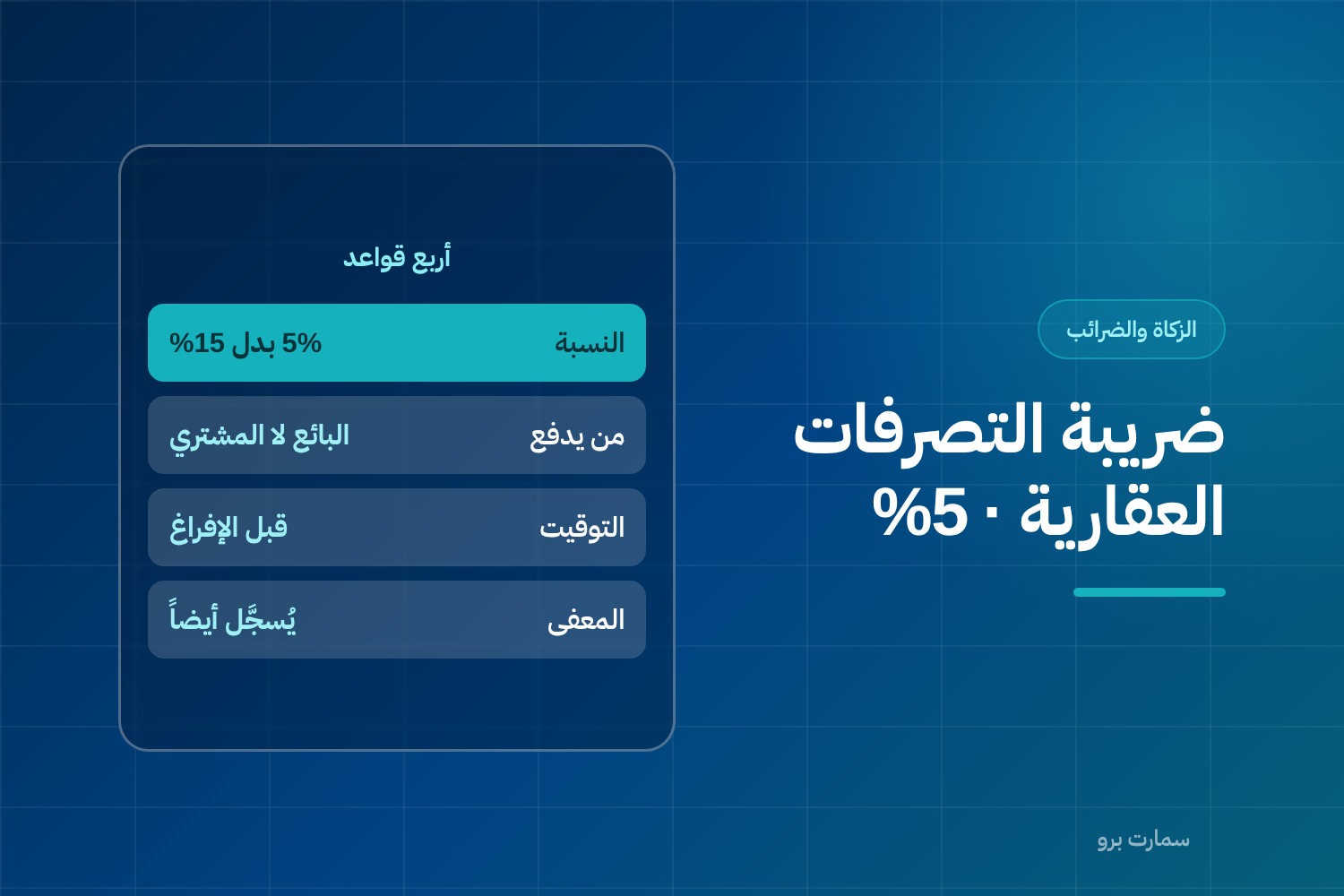
Selling property in Saudi Arabia is not subject to 15% VAT. It is subject instead to the Real Estate Transaction Tax (RETT) at 5%, which the seller is legally required to pay to ZATCA before or at the title transfer. That ten-point gap is the first thing anyone buying, selling or accounting for a property deal needs to know.
What changed in April 2025?
The tax itself is not new; it was introduced in October 2020 by royal order. What is new is that it now has its own standalone law:
- The Real Estate Transaction Tax Law was issued by Royal Decree M/84 dated 19/03/1446 AH.
- It took effect on 10 April 2025.
- Its new Implementing Regulations were issued by ZATCA Board Resolution No. 01-03-25 dated 24 March 2025.
- The old regulations issued in 2020 were suspended from the same date.
So if you are relying on an explanation published before April 2025, you are relying on a text that no longer applies.
What counts as a "real estate transaction"?
The scope is wider than an ordinary sale:
| Transaction | Subject to RETT? |
|---|---|
| Sale and similar transfers of ownership | Yes |
| Bequest (will) | Yes |
| Finance lease | Yes |
| Lease ending in ownership (ijarah muntahia bittamleek) | Yes |
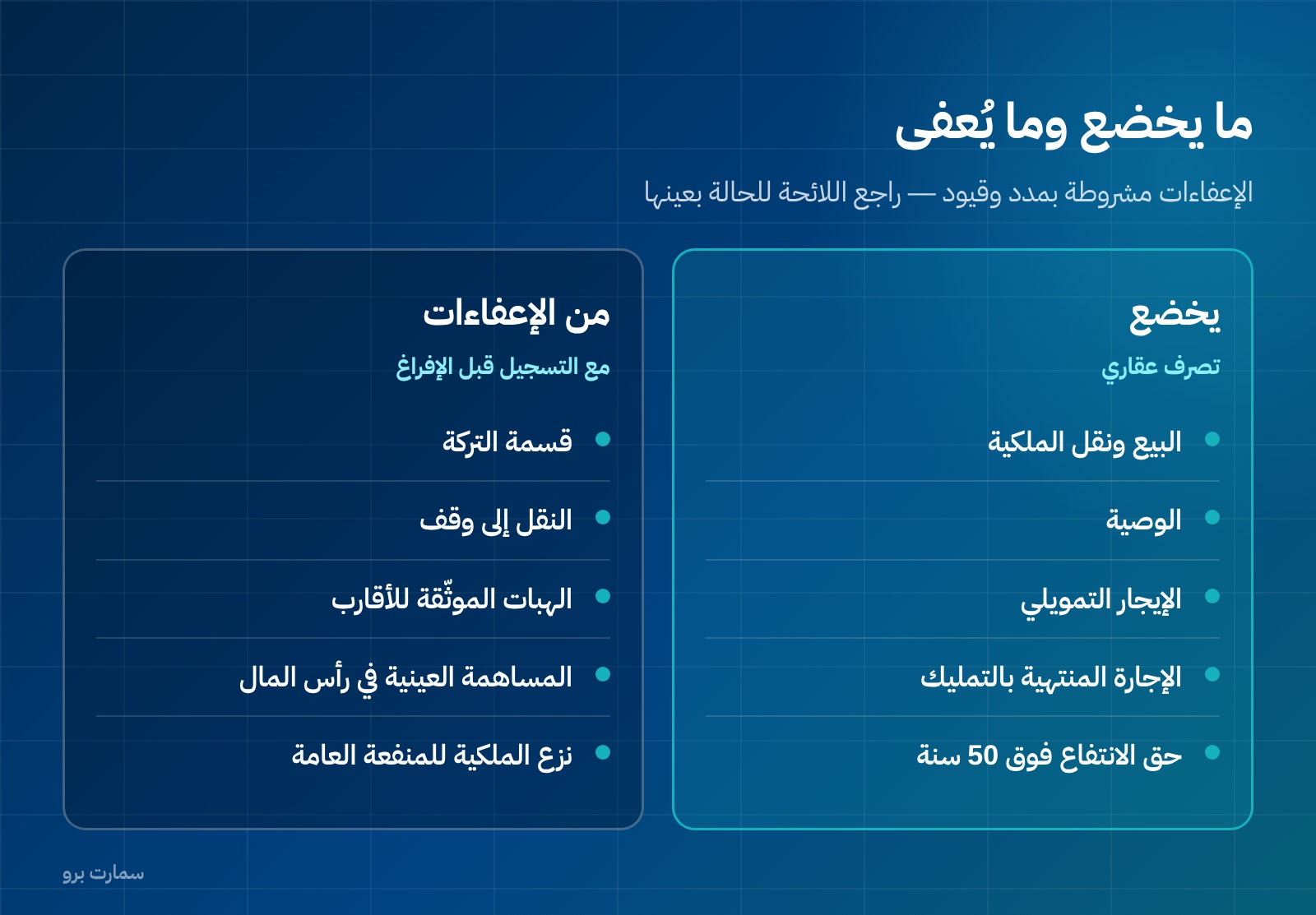
| Usufruct right lasting more than 50 years | Yes |
Note the last one: a long-term usufruct contract (a right to use and benefit from a property owned by someone else) may be treated as a transfer of ownership even if it is not called a sale.
Who pays the real estate transaction tax?
This is where most mistakes happen. The disposer, meaning the seller, is legally required to pay the tax to ZATCA. The buyer becomes jointly liable only if ZATCA proves the buyer caused the non-payment.
In practice, the parties sometimes agree that the buyer will bear the tax. That is a private agreement between them and does not change the legal liability at all: ZATCA pursues the seller.
When must it be paid?
The tax is paid before or at the transfer of ownership, known in Saudi Arabia as ifragh (the formal transfer of the title deed). Not afterwards, and not in later instalments.
Here is a rule many people miss: exempt transactions must also be registered with ZATCA before the transfer. An exemption does not mean skipping the procedure; it means registering the transaction and proving the reason for the exemption. If you do not register, you will not be able to complete the transfer at all.
Which transactions are exempt?
The new regulations list a long set of exempt transactions. The most notable include:
- Division of an estate among heirs.
- Transfer without consideration to a waqf (endowment), whether public, private or joint.
- Transfer to government entities, public institutions and public-benefit bodies.
- Expropriation for public benefit and temporary seizure.
- Documented gifts between spouses or relatives up to the third degree, with a three-year restriction on disposing of the property again.
- Transfer under a documented Sharia-compliant will.
- Temporary transfer of property as security for financing.
- Transactions that were subject to VAT and fully paid before documentation.
- Contributing property in kind to a company's capital, on condition it is held for five years.
- Transfer from an individual to a company or fund they wholly own.
- Mergers and acquisitions between legal persons, subject to conditions.
- Transfers between entities under full common ownership.
- Transfer to a developer licensed for off-plan sales, with a ninety-day licensing window.
- Cancellation of a documented sale by mutual consent within ninety days.
- Forced sale by order of a bankruptcy court.
⚠️ An important caution: most of these exemptions are subject to time limits and conditions — three years, five years, ninety days. The list in the regulations is longer and more precise than any article can summarise. Do not base a decision on this list alone; check the text of the regulations and the detailed guide for your specific case.
What is the late payment penalty?
Under the new law: 2% of the unpaid tax for each month or part of a month, capped at 50% of the unpaid tax. For transactions before 10 April 2025, the penalty was 5% per month.
How do you account for it?
The tax is not an operating expense separate from the deal:
- For the seller: it forms part of the costs of disposal and is deducted when calculating the gain or loss on disposal.
- For a buyer who bears it by agreement: it is capitalised as part of the property's acquisition cost, because it is directly attributable to bringing the asset to the condition needed for its use. See property, plant and equipment and investment property classification and measurement.
Because property sales are exempt from VAT, the input VAT (the VAT a business pays on its own purchases and normally reclaims) related to them may not be deductible. This is a material difference from a zero-rated supply. See the difference between exempt and zero-rated supplies.
Worked example: VAT vs RETT
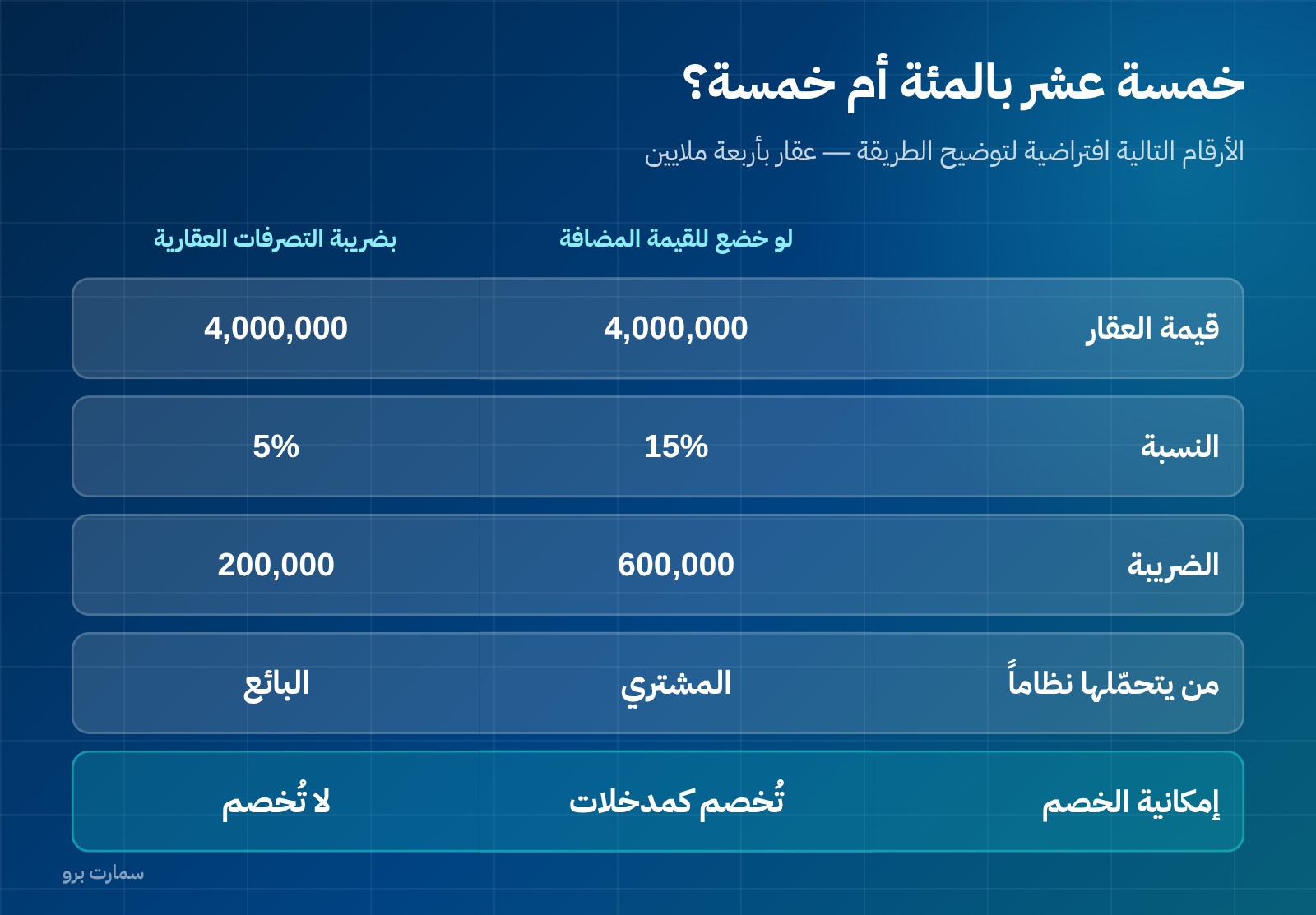
The figures below are hypothetical, to illustrate the method. A commercial property worth SAR 4,000,000:
| Item | If subject to VAT | Under real estate transaction tax |
|---|---|---|
| Property value | 4,000,000 | 4,000,000 |
| Rate | 15% | 5% |
| Tax | 600,000 | 200,000 |
| Who bears it legally | Buyer pays it to the seller | Seller pays it to ZATCA |
| Deductibility | Deductible as input tax | Not deductible |
The difference in amount is SAR 400,000, but the more important difference is in the last row: input VAT was recoverable for those entitled to it, whereas real estate transaction tax is a final cost.
What do you need in your books?
Set up three things from the start: a separate account for real estate transaction tax in your chart of accounts, a link between each deal and the transaction number registered with ZATCA, and the proof of payment or proof of exemption kept in the property file. The transfer cannot happen without it, and any later review will ask for it.
In SmartPro's Finance & Accounting you can create a dedicated account for this tax and attach supporting documents to each entry, and the Real Estate solution keeps properties, owners and contracts in one place.
Reference: Zakat, Tax and Customs Authority (ZATCA) — the Real Estate Transaction Tax Law and its Implementing Regulations.
Key takeaway: Property sales in Saudi Arabia carry 5% real estate transaction tax, not 15% VAT; the seller is legally liable and must pay, or register an exemption, before the title transfer.
To keep property deals, tax accounts and supporting documents organised in one system, start a free SmartPro trial.
Article visuals
Frequently asked questions
What is the real estate transaction tax rate in Saudi Arabia?
It is 5% of the property's value, provided the value is not lower than the fair market value on the transaction date. It replaces the 15% VAT, from which property sales are exempt.
Who is required to pay it, the seller or the buyer?
The seller (the disposer) is legally required to pay it to ZATCA. The buyer becomes jointly liable only if ZATCA proves the buyer caused the non-payment. Any agreement between the parties does not change the legal liability.
When is real estate transaction tax paid?
It is paid before or at the transfer of ownership (the title-deed transfer, or ifragh). Exempt transactions must also be registered with ZATCA before the transfer, because an exemption does not mean skipping the procedure.
What changed in the 2025 law?
A standalone law was issued by Royal Decree M/84 and took effect on 10 April 2025, with new Implementing Regulations issued by ZATCA Board resolution in March 2025. The old regulations issued in 2020 were suspended.
What is the penalty for late payment?
Under the new law, the penalty is 2% of the unpaid tax for each month or part of a month, capped at 50% of the unpaid tax.