
Property, Plant and Equipment: Recognition, Measurement and Depreciation
When to capitalise spending and when to expense it, what goes into the cost of fixed assets, the measurement models after recognition, and how components, depreciation and disposal work.
Author:سامي الحيدري
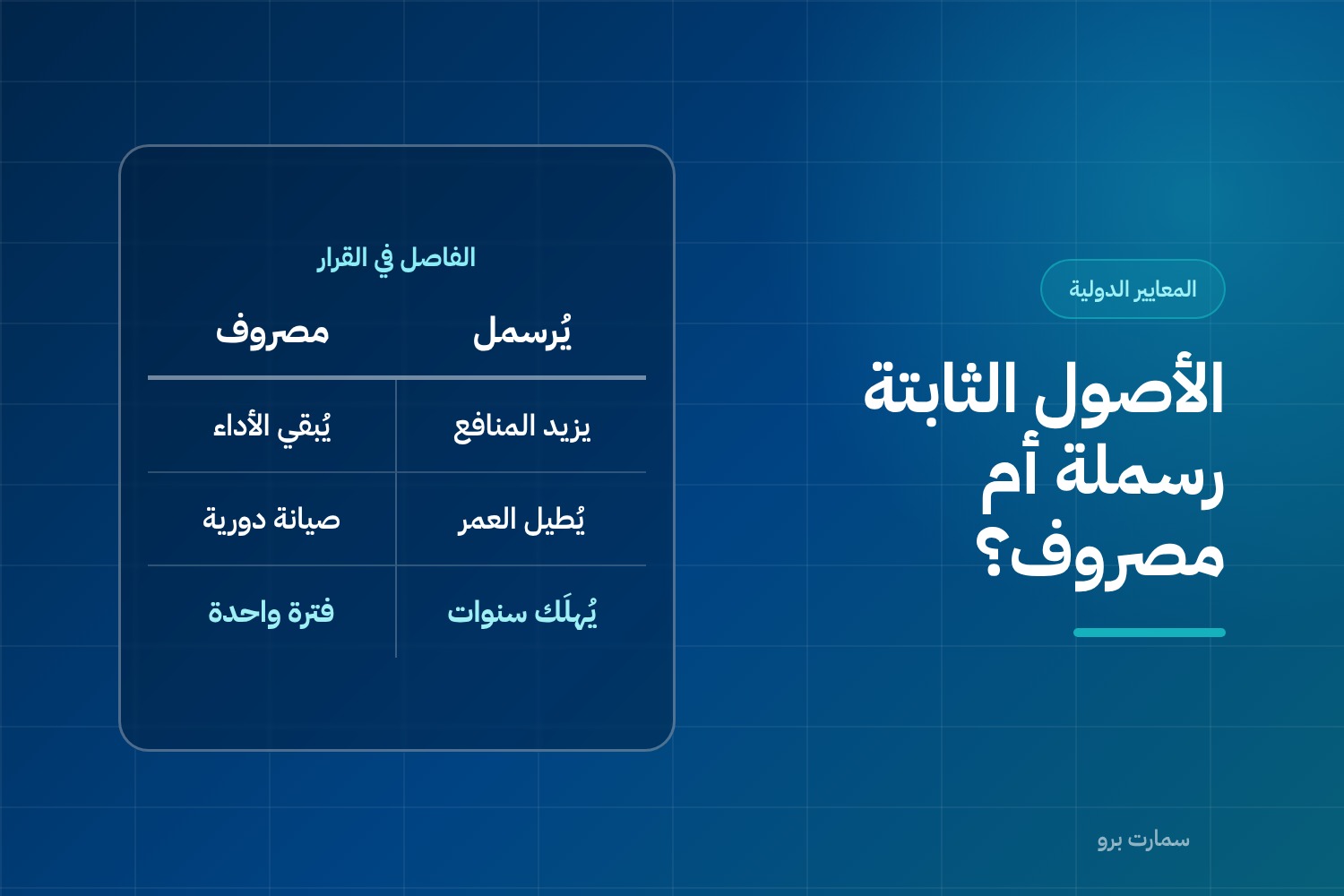
One decision comes up in every business, and it is usually settled by habit rather than by the rules: should this spending be capitalised as an asset or charged as an expense? The answer changes the year's profit, the value of fixed assets on your balance sheet, your zakat deduction and your tax depreciation. IAS 16 sets the rules that decide it.
When are fixed assets recognised?
An item of property, plant and equipment is recognised as an asset when two conditions are met:
- It is probable that future economic benefits from it will flow to the business.
- Its cost can be measured reliably.
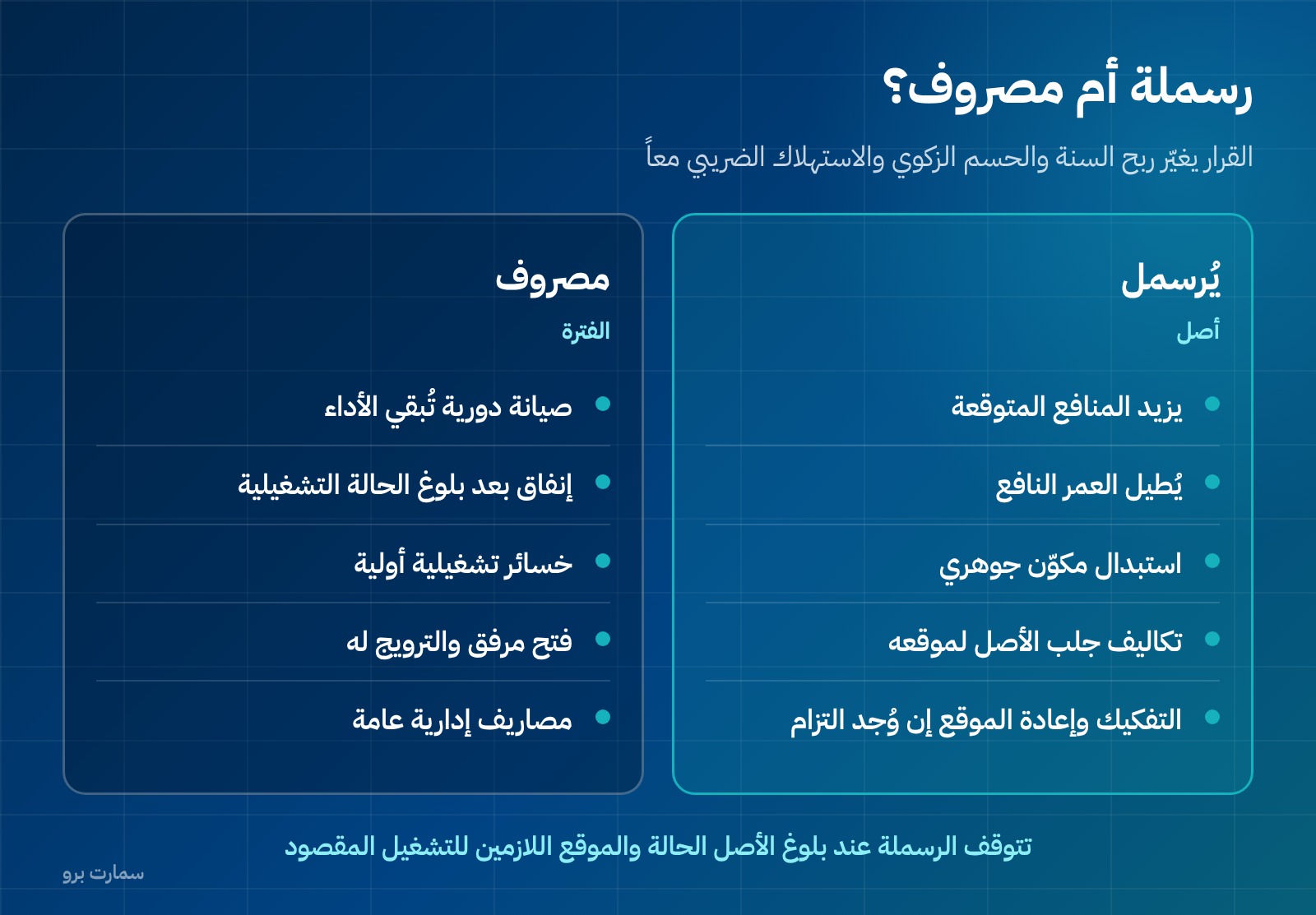
These two conditions apply to initial spending and to later spending alike. Routine maintenance that keeps an asset performing as expected is an expense. A replacement or improvement that increases the expected benefits or extends the useful life is capitalised.
What goes into the cost of an asset?
| Included | Not included |
|---|---|
| Purchase price after discounts, plus non-refundable duties | Costs of opening a new facility and promoting it |
| Costs directly attributable to bringing the asset to its location and working condition | General administrative costs |
| Site preparation, installation, testing, freight and handling | Initial operating losses before the asset reaches planned capacity |
| Directly attributable professional fees | Costs of reorganising or relocating operations |
| The initial estimate of dismantling and removal costs and site restoration | Spending after the asset has reached its intended operating condition |
The most important practical point: capitalisation stops when the asset reaches the location and condition needed for it to operate as management intends. It does not stop when the asset actually starts being used, nor when the last invoice is settled.
How are assets measured after recognition?
A business may choose one of two models for each class of assets:
Cost model: cost less accumulated depreciation and less accumulated impairment losses.
Revaluation model: fair value at the revaluation date less subsequent depreciation and impairment losses. Revaluations must be regular enough that the carrying amount does not differ materially from fair value, and the whole class must be revalued, not selected assets within it.
Most unlisted businesses choose the cost model for its simplicity. The choice is an accounting policy that is disclosed and applied consistently.
Depreciation: three decisions, not one
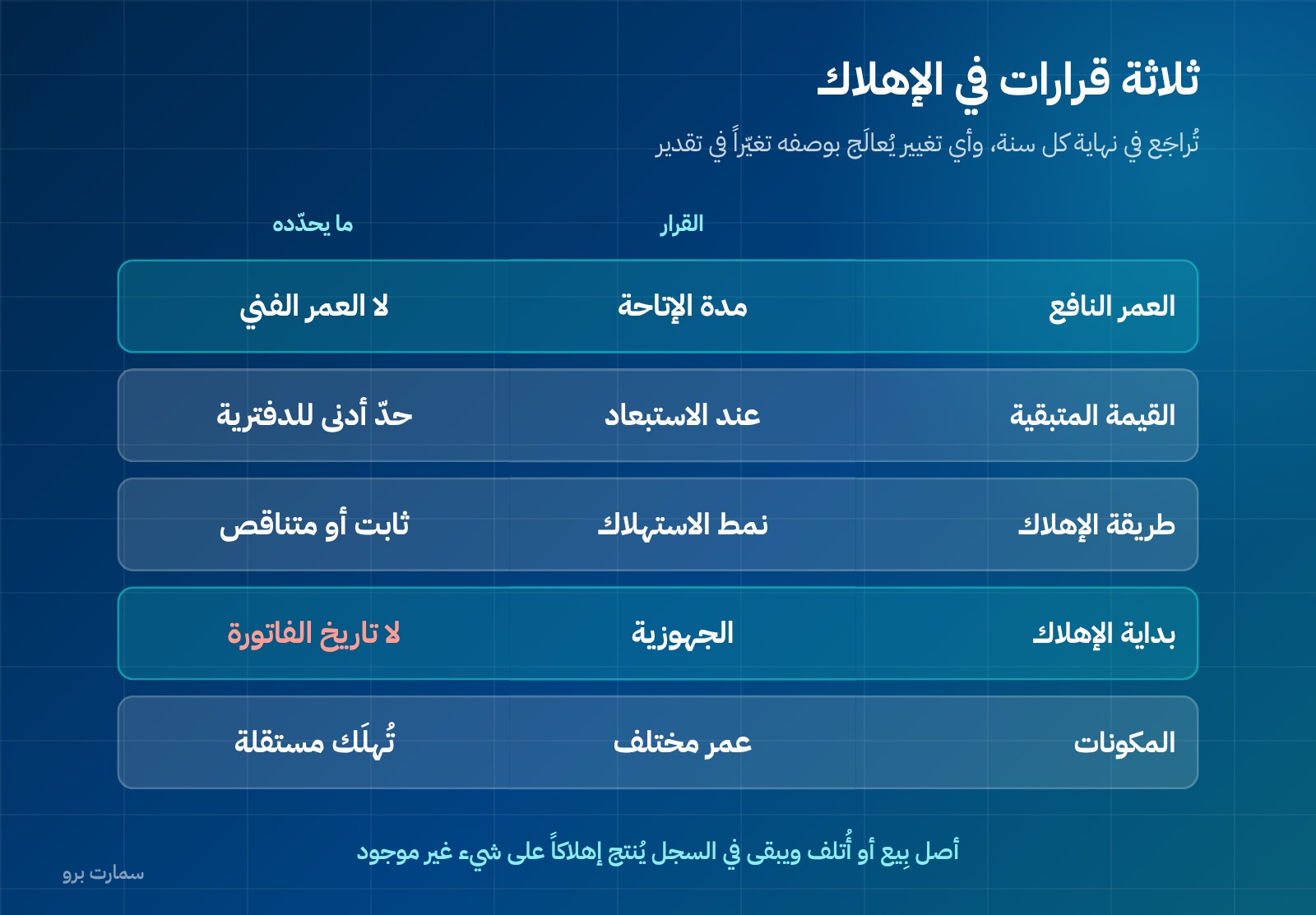
Useful life. The period over which the asset is expected to be available for use, not its technical life.
Residual value. The estimated amount that could be obtained on disposal at the end of the useful life. The net book value does not fall below it.
Depreciation method. It reflects the expected pattern in which the asset's benefits are consumed: straight-line, reducing balance or units of production.
Depreciation begins when the asset is available for its intended use, not from the invoice date or the payment date. It continues until disposal and does not stop simply because the asset is idle.
Component depreciation: if part of an asset has a significant cost and a different useful life (an engine, a lift in a building, or a structure versus its fit-out), each component is depreciated over its own life.
These three estimates are reviewed at least at the end of each year, and any change is treated as a change in accounting estimate, applied prospectively rather than retrospectively.
What about impairment?
Alongside depreciation, the business must assess at the end of each period whether there is any indication that an asset is impaired: a production line stopped, physical damage, a technological change that makes the asset less useful, or a significant decline in its expected performance. If there is an indication, the recoverable amount is estimated, and if it is below the carrying amount, the loss is recognised immediately.
The difference between depreciation and an impairment loss matters. Depreciation is a systematic allocation of cost over the useful life and happens without any triggering event. An impairment loss is an acknowledgement that the asset is no longer worth its carrying amount.
How is an asset disposed of?
An asset is derecognised when it is sold or when no future benefits are expected from it. The difference between the net disposal proceeds and the net book value is recognised as a gain or loss in the income statement, and is not presented as revenue.
The common mistake here: an asset is sold or scrapped but stays in the register. Depreciation keeps being charged on something that no longer exists, and it is deducted for zakat with a figure that has nothing behind it.
What is the tax, zakat and presentation impact?
Accounting depreciation differs from tax depreciation, which is calculated using asset groups and rates set by regulation. The difference recurs every year and needs two columns in the fixed asset register. The details are in accounting depreciation versus tax depreciation. The accounting figure is the one used when deducting fixed assets from the zakat base, as explained in calculating zakat.
With IFRS 18, effective for periods beginning on or after 1 January 2027, businesses that present expenses by function must disclose the depreciation and amortisation included in each operating line item. That requires your chart of accounts to carry a nature dimension alongside the function. The details are in IFRS 18.
Annual review checklist
- The capitalisation policy is written down and distinguishes maintenance from improvement.
- The asset register records each asset's ready-for-use date, not its invoice date.
- Components with different lives are separated and depreciated independently.
- Useful lives, residual values and methods have been reviewed this year.
- Disposed assets have been written off and the effect of disposal recorded.
- A physical count of assets has been carried out and reconciled with the register.
- Accumulated depreciation in the register matches its balance in the trial balance.
- Dismantling and site restoration costs, where there is an obligation, are included in cost.
Official reference
The international standards as endorsed in the Kingdom are published by the Saudi Organization for Chartered and Professional Accountants (SOCPA) on its website: socpa.org.sa. The texts of the standards are available from the IFRS Foundation at ifrs.org.
Read also
Key takeaway: Capitalise only spending that adds future benefits, stop capitalising and start depreciating when the asset is ready for its intended use, and keep the register in step with reality through annual reviews and physical counts.
To see how SmartPro's Finance & Accounting system handles your entries, start a free trial.
Article visuals
Frequently asked questions
When should spending on an asset be capitalised instead of expensed?
When it is probable that future economic benefits will flow from it and its cost can be measured reliably. Routine maintenance that keeps the asset performing as expected is an expense, while a replacement or improvement that increases the benefits or extends the useful life is capitalised.
When does capitalisation of costs stop?
When the asset reaches the location and condition needed for it to operate as management intends. Any spending after that point is expensed, and the cost excludes initial operating losses before the asset reaches planned capacity as well as the costs of opening and promoting a facility.
When does depreciation of an asset begin?
When the asset is available for its intended use, not from the invoice date or the payment date. It continues until disposal and does not stop just because the asset is temporarily idle.
What is component depreciation?
If part of an asset has a significant cost and a different useful life, such as an engine inside a machine or a lift inside a building, each component is depreciated over its own useful life. This replaces depreciating the asset as a single unit with an averaged life.