
Inventory Valuation: The Permitted Methods and How Each Affects Your Profit
What goes into inventory cost and what stays out, the difference between FIFO and weighted average, the net realisable value rule, and how your choice affects profit and zakat.
Author:سامي الحيدري
Inventory valuation is not a stock count. The count tells you the quantity; valuation decides the amount that quantity shows at in your statement of financial position and how much is charged to cost of sales. Two businesses with the same quantity and the same purchases can report different profits because each chose a different cost flow method. International Accounting Standard 2 (IAS 2) sets out what is permitted and what is not.
What is the governing rule?
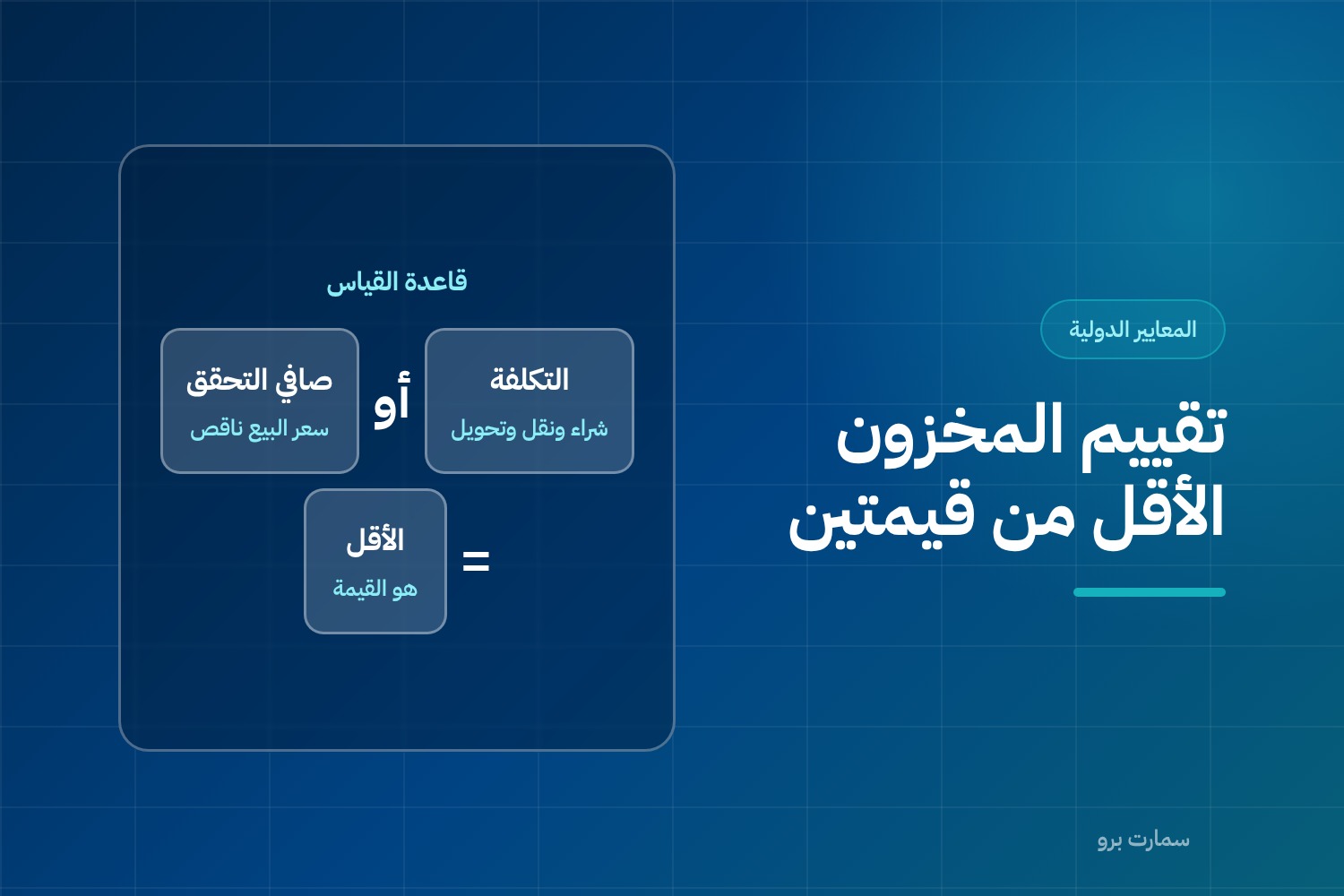
Inventory is measured at the lower of: cost, or net realisable value.
Net realisable value is the estimated selling price in the ordinary course of business, less the estimated costs of completion and the costs necessary to make the sale. In other words, inventory is never shown at more than you will actually recover from it.
What goes into the cost of inventory?
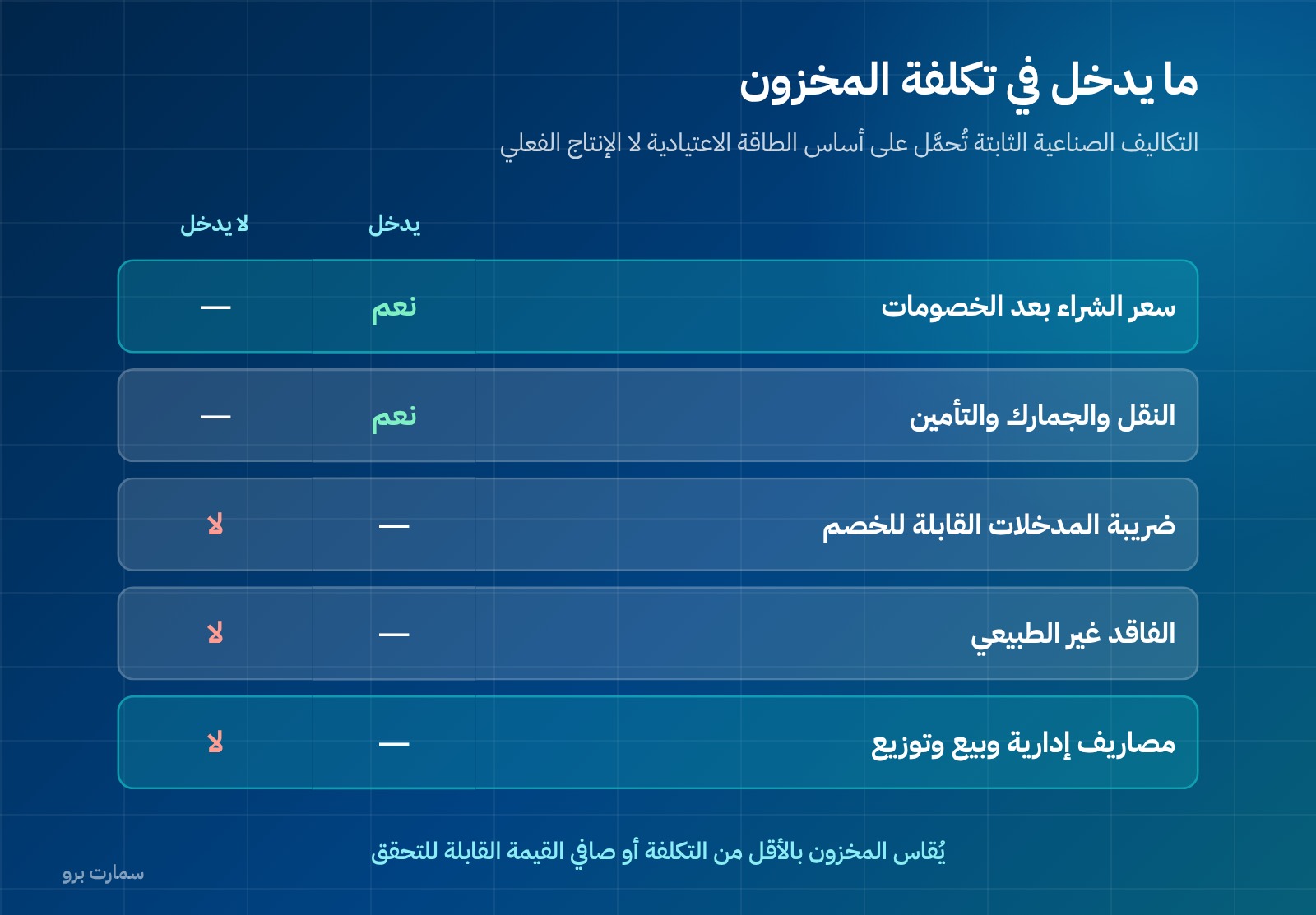
| Included | Excluded |
|---|---|
| Purchase price after trade discounts | Recoverable taxes, such as deductible input VAT |
| Customs duties and other non-recoverable charges | Abnormal waste and exceptional spoilage |
| Transport, handling and insurance up to arrival | Storage costs after production is complete (unless needed for a later production stage) |
| Conversion costs: direct labour and production overheads | General administrative overheads that do not help bring inventory to its present condition |
| Fixed production overheads based on normal capacity | Selling and distribution costs |
The point that is often missed: fixed production overheads are allocated on the basis of normal production capacity, not actual output. If you produce less than usual, the fewer units do not carry a bigger share; the difference is recognised as an expense in the period.
Which inventory valuation methods can you use?
Specific identification. Used for items that are not interchangeable and for special projects — a unique piece carrying its own cost. For these cases it is mandatory, not optional.
First in, first out (FIFO). Assumes the units bought first are sold first. Inventory on the balance sheet stays at the most recent costs, and cost of sales is charged with the oldest.
Weighted average. The average cost per unit is calculated after each purchase (or periodically) and applied to both sales and the remaining balance.
These two are the permitted methods for interchangeable items. The same method must be applied consistently to items of a similar nature and use.
An important note: the last in, first out (LIFO) method is not permitted under IAS 2.
How does the choice affect profit?
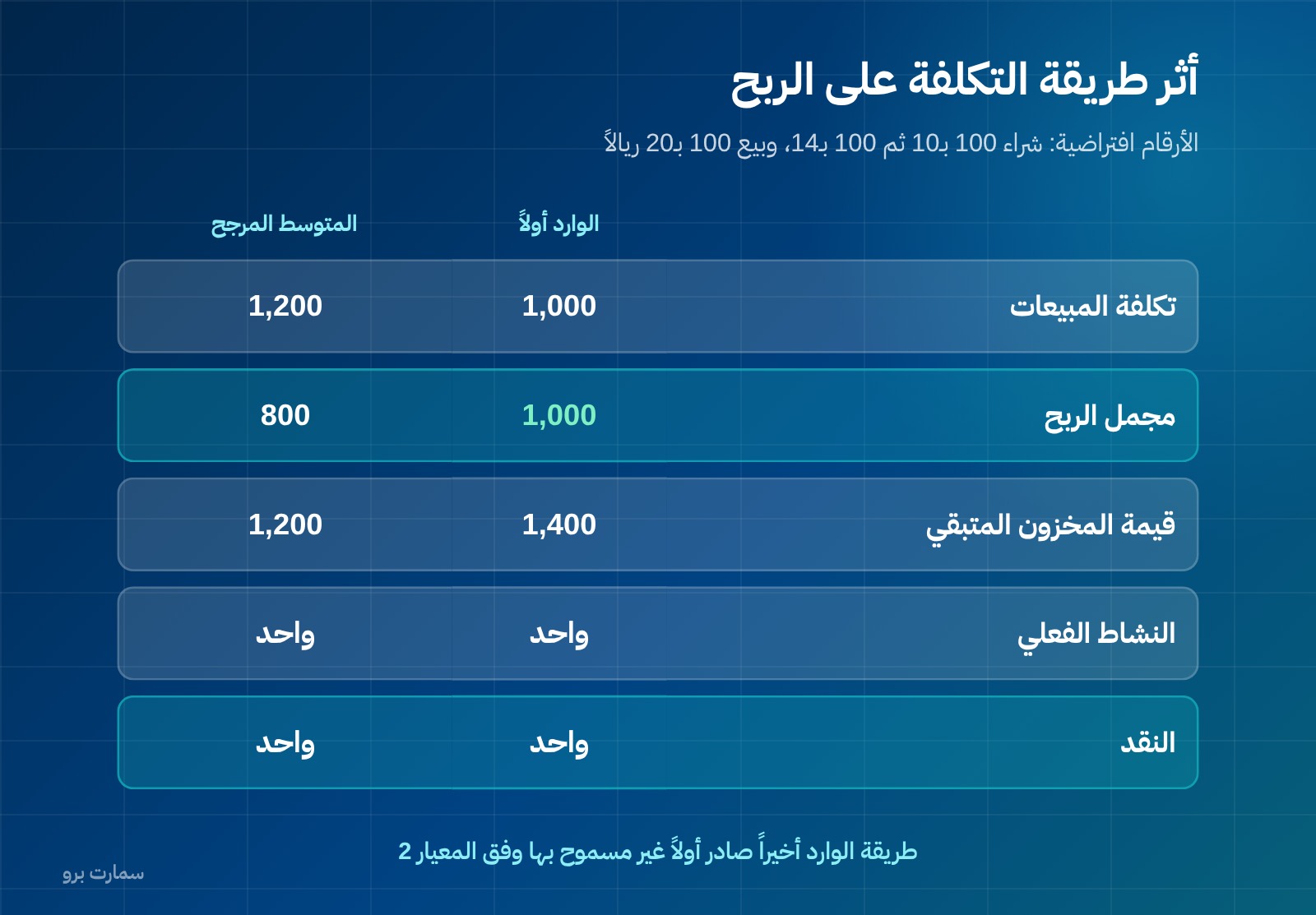
The following figures are hypothetical, to illustrate the method: you bought 100 units at SAR 10, then 100 units at SAR 14, and sold 100 units at SAR 20.
| Item | FIFO | Weighted average |
|---|---|---|
| Cost of sales | 1,000 | 1,200 |
| Gross profit | 1,000 | 800 |
| Value of remaining inventory | 1,400 | 1,200 |
Same activity, same cash, different profit. That is why you cannot switch methods from year to year in search of a better number; a change is treated as a change in accounting policy, with its own conditions and disclosures.
Periodic or perpetual inventory: which comes first?
Before choosing a cost method there is an earlier decision: how you track quantities in the first place.
The perpetual system updates each item's balance and cost of sales with every sale or purchase, giving you a book balance at any moment and making the difference against the physical count measurable and explainable.
The periodic system does not update cost with each movement; cost of sales is calculated at period end from the formula: opening inventory plus purchases minus closing inventory. Its problem is that any shortage or spoilage disappears inside cost of sales with no traceable effect.
The standard does not require either one, but a business that wants real control over differences needs the perpetual system, because the periodic system makes the difference invisible to begin with.
When do you write inventory down, and when is it reversed?
If net realisable value falls below cost — through damage, obsolescence or falling prices — inventory is written down to net realisable value and the difference is recognised as an expense in the period. The assessment is usually made item by item, not on total inventory.
If the circumstances behind the write-down later disappear and net realisable value rises, the earlier write-down is reversed up to the amount originally written down, so inventory never exceeds its original cost.
How does inventory affect zakat, tax and presentation?
Inventory is a material item in the financial position, and its value affects profit and the equity that enters the zakat calculation. Cost of sales also feeds into building the tax base explained in the income tax return.
With IFRS 18, effective for periods beginning on or after 1 January 2027, entities that present expenses by function must disclose in the notes the inventory write-downs included in each operating line item — a requirement that needs an extra dimension in the chart of accounts. Details are in IFRS 18 presentation and disclosure.
What should you check at period close?
- The cost flow method is defined and applied consistently to similar items.
- Inventory cost includes transport and customs, and excludes administrative expenses and abnormal waste.
- Fixed production overheads are allocated on the basis of normal capacity.
- Net realisable value has been calculated for slow-moving and damaged items.
- Write-downs are recognised item by item and documented.
- A physical count was carried out, reconciled to the books, and the differences explained.
- The inventory balance in the trial balance matches the detailed inventory report.
- Deductible input VAT is excluded from cost, in line with input VAT deduction.
Where is the official reference?
The international standards as endorsed in the Kingdom are published by the Saudi Organization for Chartered and Professional Accountants (SOCPA) on its website: socpa.org.sa, and the texts of the standards are available from the IFRS Foundation at ifrs.org.
Read also
Article visuals
Frequently asked questions
At what value is inventory measured?
At the lower of cost and net realisable value. Net realisable value is the estimated selling price in the ordinary course of business, less the costs of completion and the costs necessary to make the sale. Inventory is therefore never shown at more than will actually be recovered from it.
Which cost flow methods are permitted?
Specific identification for items that are not interchangeable, and first in, first out (FIFO) or weighted average for interchangeable items. The last in, first out (LIFO) method is not permitted under International Accounting Standard 2.
Are storage costs included in the cost of inventory?
Storage costs after production is complete are not included, unless they are necessary for a later production stage. General administrative overheads, selling and distribution costs, abnormal waste and recoverable taxes such as deductible input VAT are also excluded.
Can an inventory write-down be reversed?
Yes. If the circumstances behind the write-down disappear and net realisable value rises, the earlier write-down is reversed up to the amount originally written down. Inventory value therefore never exceeds its original cost.