
Income Tax Return in Saudi Arabia: Who Files It and How the Tax Base Is Built
The statutory income tax return deadline, who is required to file, how the tax base is built from your books, and the differences between accounting profit and taxable profit.
Author:سامي الحيدري

An income tax return is not a matter of copying net profit from the income statement onto a form. Accounting profit and the tax base are two different figures, and the gap between them is not an error: accounting standards and the tax law simply measure different things. Businesses that file by carrying over net profit as-is end up facing assessment differences later. This guide explains the statutory deadline, who must file, and how the tax base is actually built from your books.
What is the statutory deadline for the income tax return?
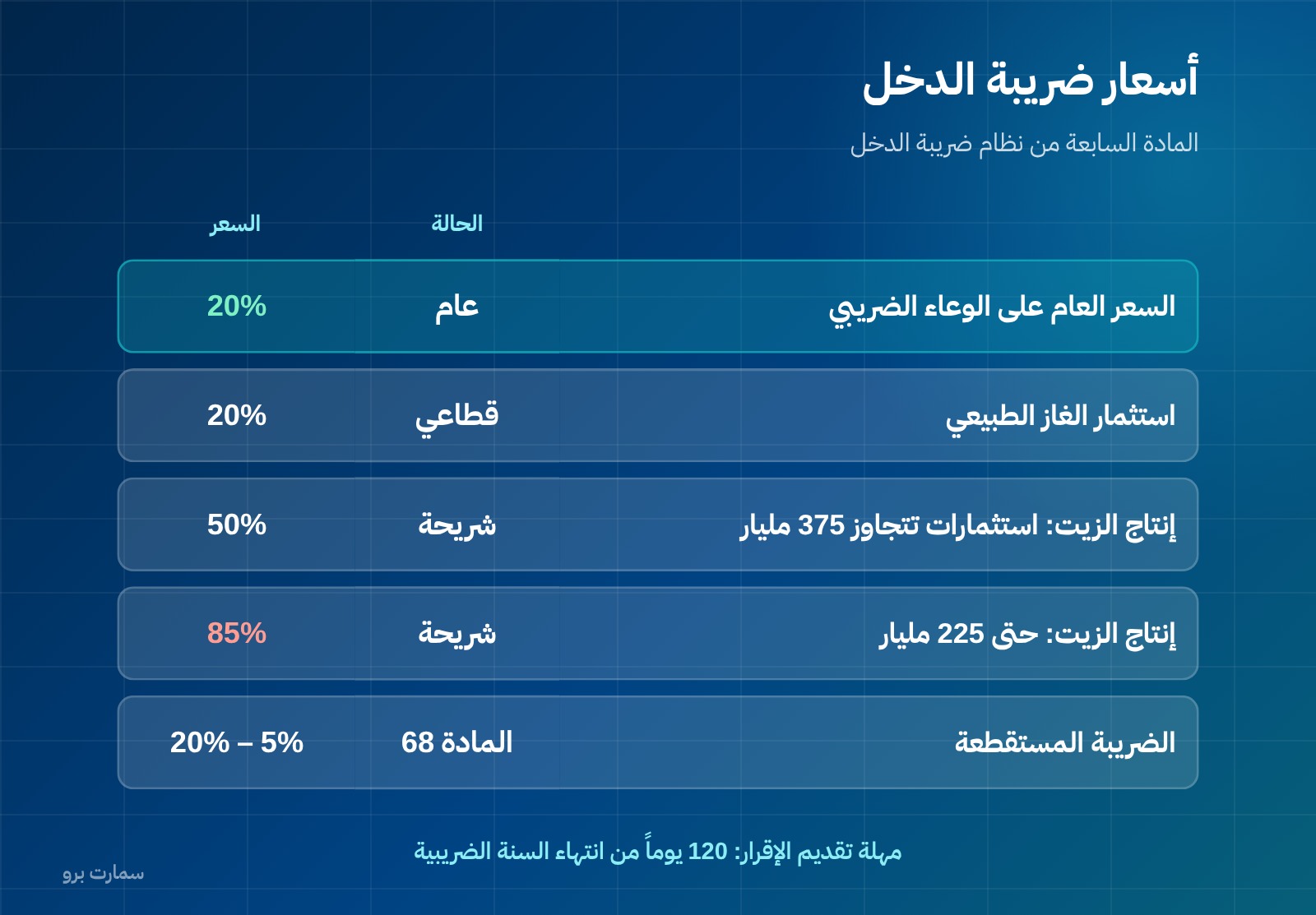
Article 60 of the Income Tax Law states in paragraph (b) that the tax return must be filed within one hundred and twenty days of the end of the tax year. Paragraph (a) ties payment of the tax due to filing the return on the approved form, and does not set a separate payment deadline.
In practice, a business whose financial year ends on 31 December must file by the end of the following April. That window looks generous, but it is not for a business that closes its books in March: it is left with only a few weeks for closing, review and filing together.
Who must file an income tax return?
Article 2 of the Law defines who is subject to tax. In general terms, they are:
- Resident capital companies, for the shares owned by non-Saudis, with exceptions relating to companies listed on the Saudi stock exchange.
- A resident non-Saudi natural person conducting business in the Kingdom.
- A non-resident conducting business through a permanent establishment in the Kingdom.
- A non-resident with taxable income from sources in the Kingdom without a permanent establishment. This is where the withholding mechanism explained in withholding tax in Saudi Arabia applies.
- Those engaged in natural gas investment or in the production of oil and hydrocarbons.
Article 6 defines the tax base for each category. A company owned by both Saudis and non-Saudis is subject to zakat and income tax together, in proportion to ownership; the details are in zakat vs income tax.
What are the income tax rates?
Article 7 sets the rates: 20% is the general rate on the tax base, and the same 20% applies to natural gas investment. Oil and hydrocarbon production has brackets that vary according to total capital investment in the Kingdom, from 50% for those whose investment exceeds SAR 375 billion, up to 85% for those whose investment does not exceed SAR 225 billion. Withholding tax is set by Article 68.
How do you get from accounting profit to the tax base?
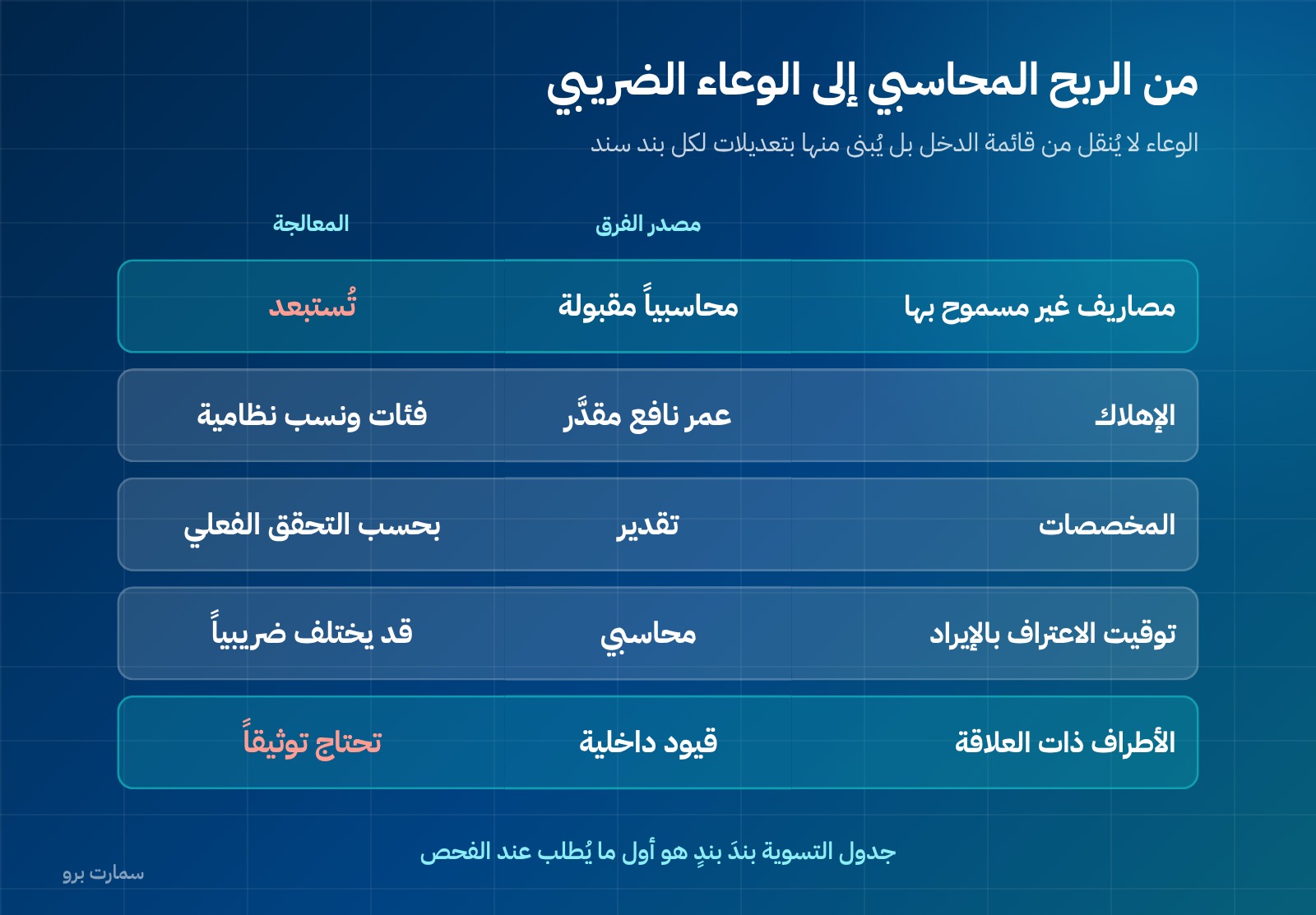
The tax base is not copied from the income statement; it is built from it through adjustments. The tax base is the amount the tax rate is applied to after those adjustments. The recurring sources of difference are:
Non-deductible expenses. An expense recognised in the accounts that is not accepted for tax purposes. Leaving it in the base lowers the tax in a way that is not acceptable and surfaces during an audit.
Depreciation differences. Accounting standards depreciate an asset over its estimated useful life, while the tax law sets fixed categories and rates. The difference recurs every year and needs a parallel schedule. Details are in accounting depreciation vs tax depreciation.
Provisions vs actual expenses. A provision is an accounting estimate, while the tax treatment usually looks at what has actually been realised. The doubtful debts provision and the end-of-service provision are among the most common sources of this difference; how to build the latter is explained in the end-of-service provision.
Timing of revenue recognition. Revenue recognised in the accounts before its conditions are met for tax purposes creates a reversing difference. The accounting basis itself is explained in cash vs accrual accounting.
Related-party transactions. Dealings with related parties need prices and documentation you can defend, not internal entries with agreed-upon figures. Rent paid to the company's own owner, management services between group companies, and partner loans without contracts are all items reviewed first.
Costs without complete documentation. An expense not supported by a compliant invoice is treated as non-deductible even if it is real and paid. That makes consistent documentation a tax matter, not just an administrative one, and it is the same reason input tax deductions get disallowed, as explained in input VAT deduction.
The practical result: you need a reconciliation schedule that moves from net accounting profit to the tax base line by line, with supporting evidence for every line. This schedule is the first thing requested in an audit.
What do your books need so the return comes out easily?
- Non-deductible expenses separated into their own accounts within the chart of accounts, not in an external spreadsheet prepared once a year.
- A fixed asset register with two depreciation columns: accounting and tax.
- A provisions register that separates amounts provided from amounts actually used during the year.
- A full year-end close with adjusting entries, following the accounting cycle and adjusting entries.
- A related-party file with its contracts and prices.
What should you check before filing the income tax return?
- The year is closed and all adjusting entries are recorded, with no pending entries.
- The trial balance balances and its figures match the financial statements.
- The reconciliation schedule from accounting profit to the tax base is prepared and every line has supporting evidence.
- Tax depreciation is calculated using the statutory categories and rates, not the accounting useful life.
- Non-deductible expenses are excluded and listed clearly in the schedule.
- Provisions are treated according to actual realisation, not according to when they were set up.
- Saudi and non-Saudi ownership shares are documented if the company is mixed.
- The tax year-end date is fixed and the 120-day deadline is calculated from it.
- Withholding tax remitted during the year is documented with its certificates.
A business that has these nine in place prepares its return in days. One that starts gathering documents after the year ends files a return built on estimates, and in this area estimates cost you later.
Where is the official reference?
The Income Tax Law and its Implementing Regulations are published by the Zakat, Tax and Customs Authority (ZATCA) on its website: zatca.gov.sa. The articles referred to (2, 6, 7, 17, 60, 68) are taken from the official text, and international double taxation avoidance agreements may change the treatment in non-resident cases.
Key takeaway: The income tax return is built, not copied: start from net accounting profit and reach the tax base through a documented, line-by-line reconciliation, then file within 120 days of the tax year-end.
Read also
To keep separate accounts, asset registers and a clean year-end close in one connected system, explore SmartPro Finance & Accounting or start a free trial.
Article visuals
Frequently asked questions
What is the deadline for filing the income tax return?
One hundred and twenty days from the end of the tax year, under Article 60 of the Income Tax Law. A business whose year ends on 31 December must file by the end of the following April. Payment of the tax due is tied to filing the return, and the text does not set a separate payment deadline.
Is the tax base the same as net accounting profit?
No. The tax base is built from accounting profit through adjustments: excluding non-deductible expenses, replacing accounting depreciation with tax depreciation using the statutory categories and rates, treating provisions according to actual realisation, and correcting the timing of revenue recognition. You need a reconciliation schedule in which every line has supporting evidence.
What is the general income tax rate?
20% of the tax base under Article 7, and the same 20% applies to natural gas investment. Oil and hydrocarbon production has brackets ranging from 50% to 85% depending on total capital investment in the Kingdom.
What is the first document requested in a tax audit?
The reconciliation schedule that moves from net accounting profit to the tax base line by line, with supporting evidence for each line. It is followed by the fixed asset register with its accounting and tax depreciation columns, and the provisions register that separates amounts provided from amounts actually used.