
Withholding Tax in Saudi Arabia: Rates, Deadlines and Journal Entries
A table of withholding tax rates for each payment type, the ten-day payment deadline, the late-payment penalty, and the correct journal entry when you pay a non-resident.
Author:سامي الحيدري
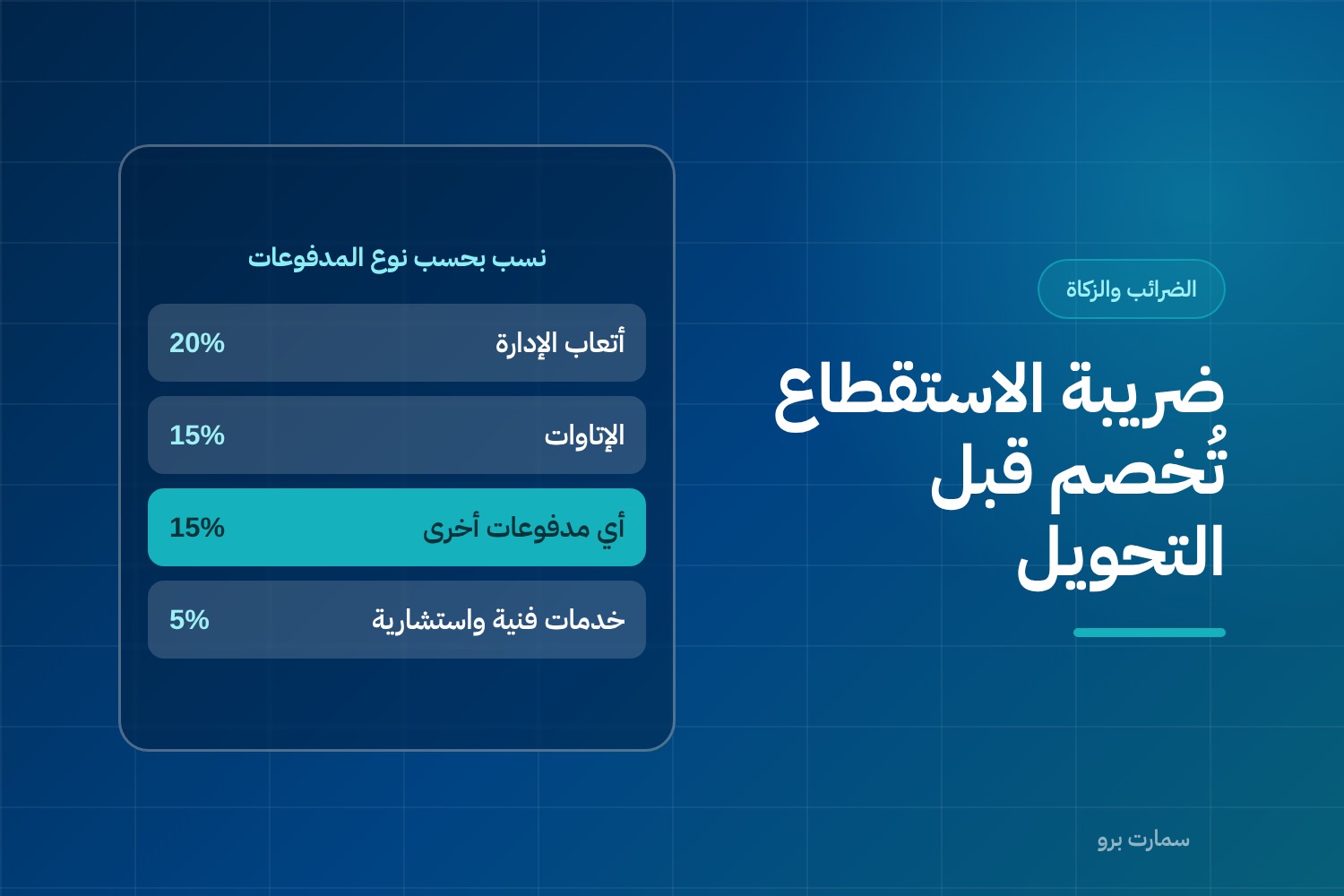
Withholding tax catches businesses off guard because the tax is not paid by the recipient. It comes out of the amount you transfer to them. Sign a SAR 100,000 consulting contract with a non-resident company, and you transfer SAR 95,000 and remit the rest to ZATCA. If the rate is not written into the contract, you transfer the full amount and pay the tax from your own funds. This guide covers the rates as set out in ZATCA's withholding tax guideline, the deadlines, and the correct journal entry.
When does withholding tax apply?
Withholding tax applies when a resident of the Kingdom, or the permanent establishment of a non-resident, pays a non-resident for income from a source in the Kingdom. The non-resident must have no permanent establishment in the Kingdom. In short, there are two parties: a payer in the Kingdom and a non-resident recipient.
Withholding is the mechanism for collecting tax from the non-resident. Article 2 of the Income Tax Law refers to this category of taxpayers. The difference between who is subject to zakat and who is subject to income tax is explained in zakat and income tax.
What are the withholding tax rates?
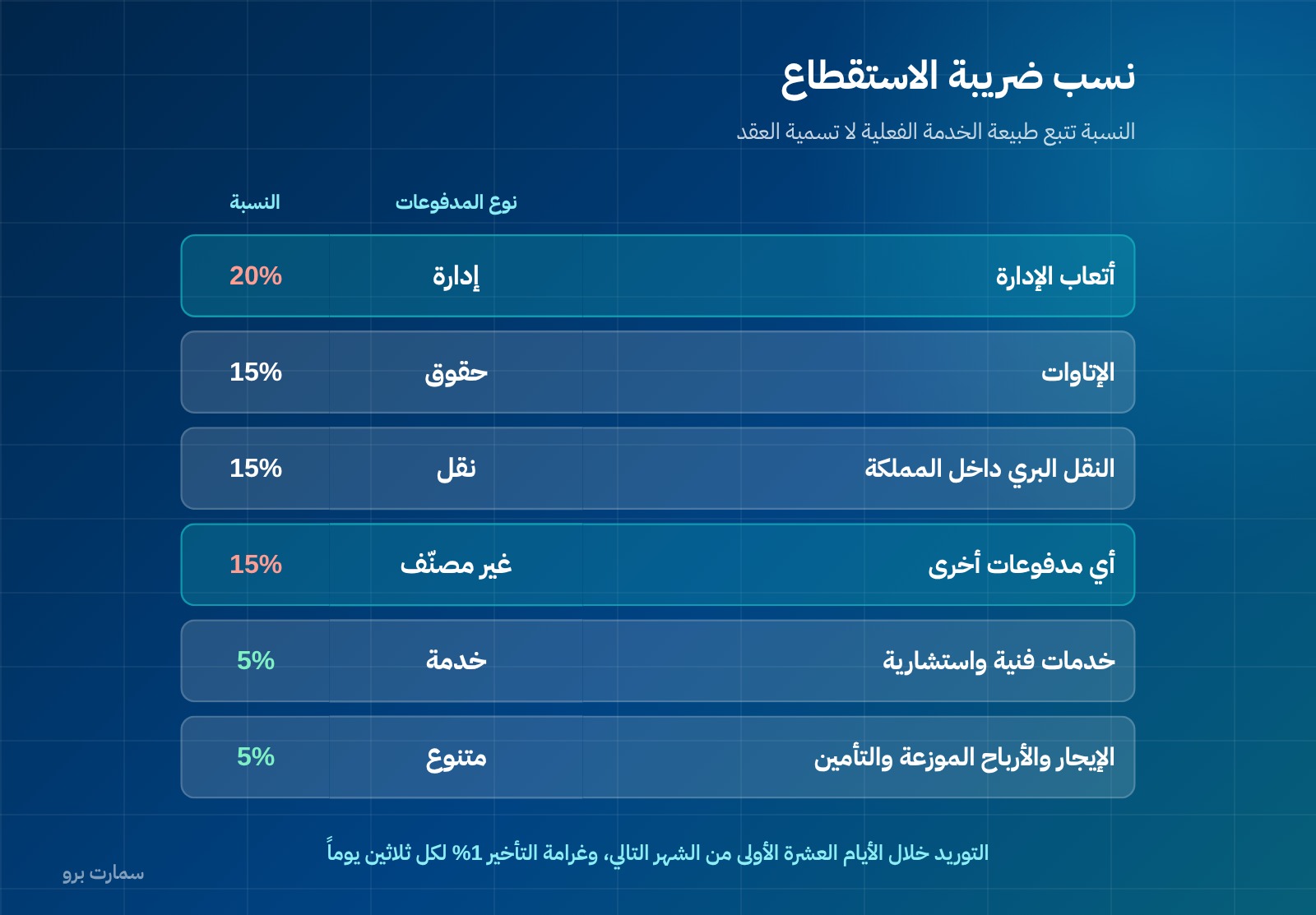
The rates as stated in the general withholding tax guideline:
| Payment type | Rate |
|---|---|
| Management fees | 20% |
| Royalties | 15% |
| Land transport within the Kingdom | 15% |
| Any other payments | 15% |
| Dividends | 5% |
| Rent | 5% |
| Loan returns (income from debt claims) | 5% |
| Insurance and reinsurance | 5% |
| Technical and consulting services | 5% |
| Air tickets, air freight or sea freight | 5% |
| International telephone services | 5% |
Three points in this table deserve a closer look.
"Any other payments" at 15% is the line that surprises people. Any payment to a non-resident that does not fall under a named category is subject to 15% withholding, not 5%. Misclassifying a payment does not exempt it. It means a higher rate.
The gap between 20% and 5% for services. Management fees are taxed at 20%, while technical and consulting services are taxed at 5%. What separates them is the actual nature of the service, not the contract's title. During an audit, the description of the service in the contract is what counts.
Telecom exceptions. The guideline excludes two cases from withholding:
- Amounts paid to a local telecom company for using an international carrier's network to route calls made by a subscriber inside the Kingdom.
- Amounts paid to international telecom companies for international roaming services.
When is withholding tax due, and what is the late penalty?
The deadline: withheld tax is paid within the first ten days of the month following the month in which the recipient was paid. A payment made on 20 January must be remitted by 10 February.
The penalty: 1% of the unpaid tax for every thirty days of delay.
This deadline is much shorter than many people expect, and it causes most of the penalties in this area. A payment goes out at the end of the month, and the remittance is forgotten until the annual return. The penalty starts running from the eleventh day, not from the end of the year.
What is the correct journal entry for withholding tax?
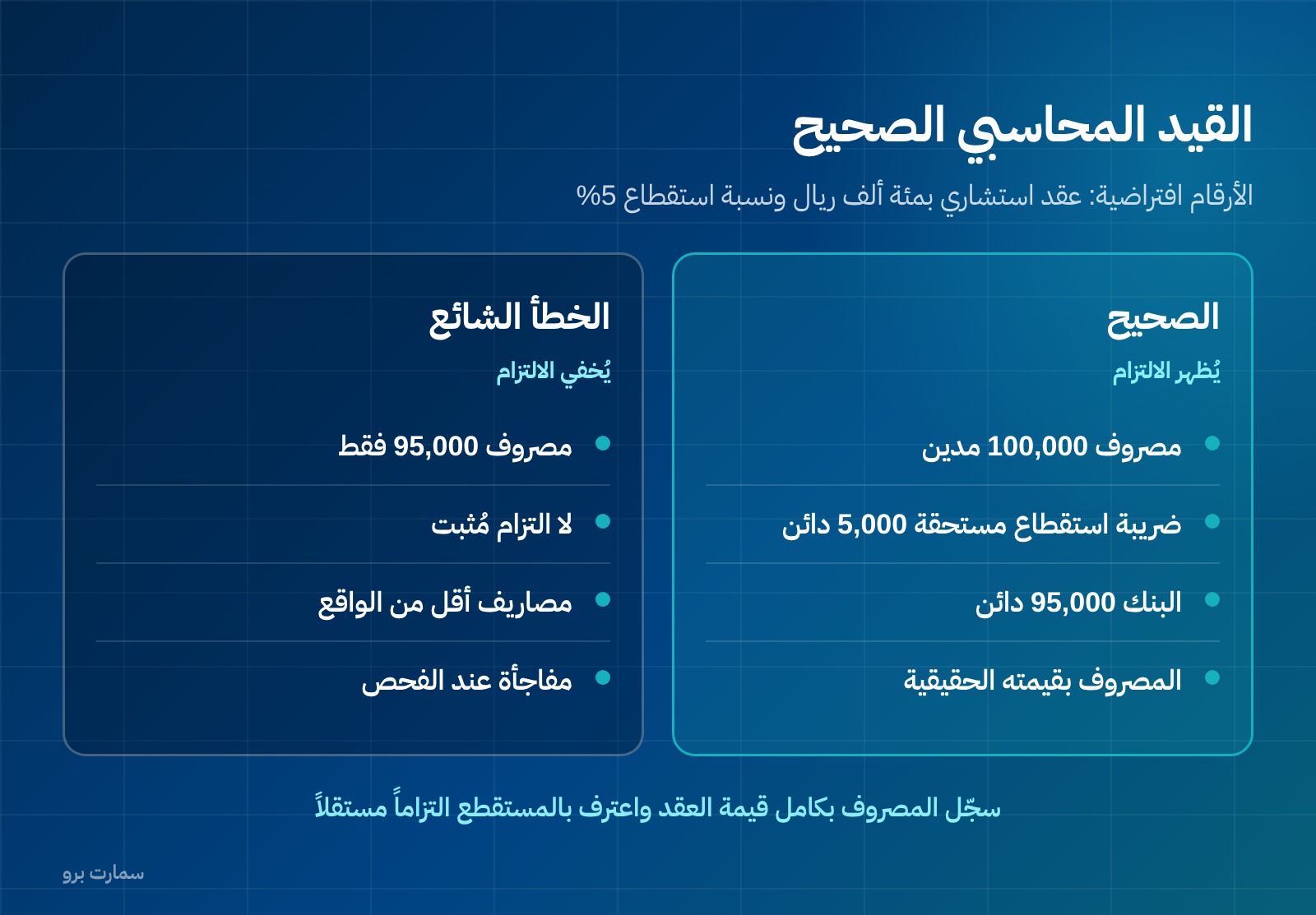
The common accounting mistake is to record the expense at the amount actually transferred. The correct approach is to record the expense at the full contract value. The withheld tax is then recognised as a liability the business owes to ZATCA.
The figures below are hypothetical and only illustrate the method. The example is a SAR 100,000 consulting contract with a non-resident, at a 5% withholding rate.
| Account | Debit | Credit |
|---|---|---|
| Consulting services expense | 100,000 | |
| Withholding tax payable (liability) | 5,000 | |
| Payables / Bank | 95,000 |
Then, when you remit the tax to ZATCA:
| Account | Debit | Credit |
|---|---|---|
| Withholding tax payable | 5,000 | |
| Bank | 5,000 |
The expense now shows its true value of SAR 100,000, not the SAR 95,000 transferred. Recording only the amount transferred understates expenses and hides a liability that still exists. For the basics of building an entry, see writing a journal entry step by step. The separate liability account also needs a place in your chart of accounts.
What should the contract include?
Most losses in this area happen before accounting, when the contract is drafted. The contract should include:
- A clear clause stating that the fee is subject to withholding and that the amount transferred will be net of it.
- A precise description of the service: technical and consulting, management, or royalty. The description determines the rate.
- A commitment to give the recipient a withholding certificate. They can use it in their own country if a double taxation avoidance agreement applies.
- Separate line items if the contract covers services with different rates. A bundled contract at one price exposes you to the highest rate being applied to everything.
- Who bears the tax if the recipient refuses the deduction. This is a commercial decision with a cost you should calculate in advance.
What should a monthly withholding tax checklist cover?
- Identify all of the month's payments to non-residents from the bank statement, not from memory.
- Classify each payment under the correct category in the table. Do not put unknown payments under 5%.
- Check that the expense was recorded at the full contract value, not the amount transferred.
- Review the balance of the withholding tax payable account before the tenth of the month.
- Remit the tax within the first ten days of the following month.
- Keep withholding certificates with their contracts.
- Review new contracts before signing, not after the first payment.
Where is the official reference?
The Zakat, Tax and Customs Authority (ZATCA) publishes the withholding rates, deadlines and late penalty in the general withholding tax guideline and the Income Tax Law on its website: zatca.gov.sa. In specific cases, international double taxation avoidance agreements may reduce the rate. Check the text of the agreement with the country concerned.
Further reading
Article visuals
Frequently asked questions
What are the withholding tax rates in Saudi Arabia?
According to ZATCA's withholding tax guideline, management fees are taxed at 20%. Royalties, land transport within the Kingdom and any other payments are taxed at 15%. Dividends, rent, loan returns, insurance and reinsurance, technical and consulting services, air tickets, air and sea freight, and international telephone services are taxed at 5%.
When must withheld tax be paid to ZATCA?
Withheld tax is due within the first ten days of the month following the month in which the recipient was paid. A payment made on 20 January must be remitted by 10 February. The late penalty is 1% of the unpaid tax for every thirty days of delay, and it runs from the eleventh day, not from the end of the year.
What is the correct journal entry for withholding tax?
Record the expense at the full contract value and recognise the withheld tax as a separate liability owed to ZATCA. Payables or bank are credited only with the amount actually transferred. Recording the expense at the transferred amount alone understates expenses and hides an existing liability.
What if a payment does not fall under a named category in the rates table?
It is subject to 15% withholding under the "any other payments" category. Not classifying a payment does not exempt it. It means the higher rate applies. This is why the contract should describe the service precisely, because during an audit the actual description of the service counts, not the contract's title.