
Joint Arrangements: Joint Operation or Joint Venture?
How joint arrangements are classified as either a joint operation or a joint venture, what joint control means, and why proportionate consolidation is no longer allowed.
Author:سامي الحيدري
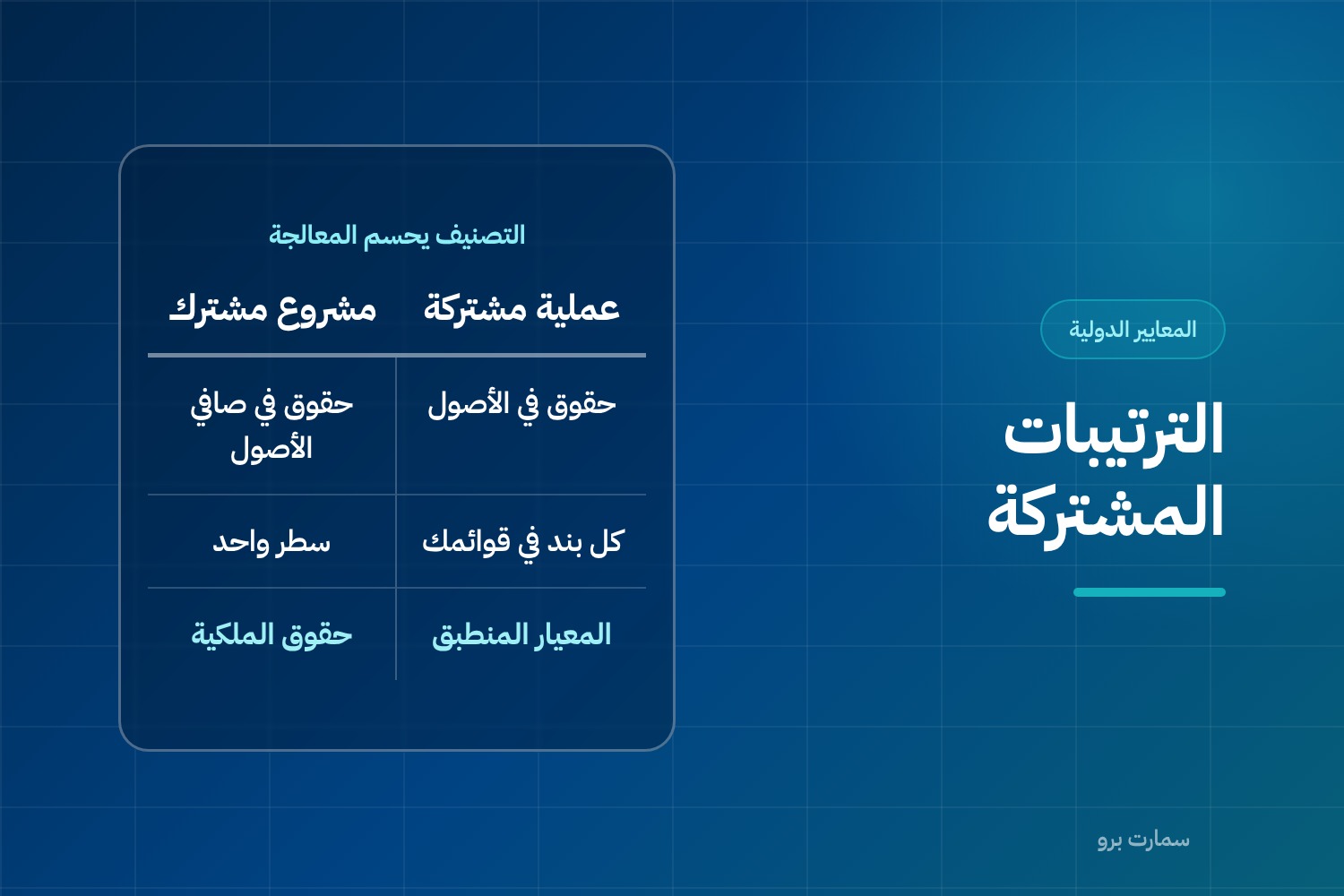
When you go into partnership with another party on a specific project, the accounting question is not "what is my share?" but "what do I actually hold: a share of the assets and liabilities, or a share of the net assets?" The answer leads to two completely different treatments. IFRS 11 is the standard that governs joint arrangements.
Its core principle is that each party classifies the arrangement by assessing its own rights and obligations, and the accounting then follows that classification. It applies to every entity that is a party to a joint arrangement, with no sector exceptions.
What is joint control?
A joint arrangement is an arrangement of which two or more parties have joint control. Joint control is the contractually agreed sharing of control, and it exists only when decisions about the relevant activities require the unanimous consent of the parties sharing control.
Three fine points matter here:
- Unanimity means any party with joint control can prevent the others from making decisions about the relevant activities on their own.
- Requiring unanimous consent only on matters linked to protective rights does not create joint control. A right to veto the liquidation of the project is not control.
- The existence of a dispute resolution mechanism such as arbitration does not, by itself, prevent the arrangement from being under joint control.
How are joint arrangements classified? Two types, and only two
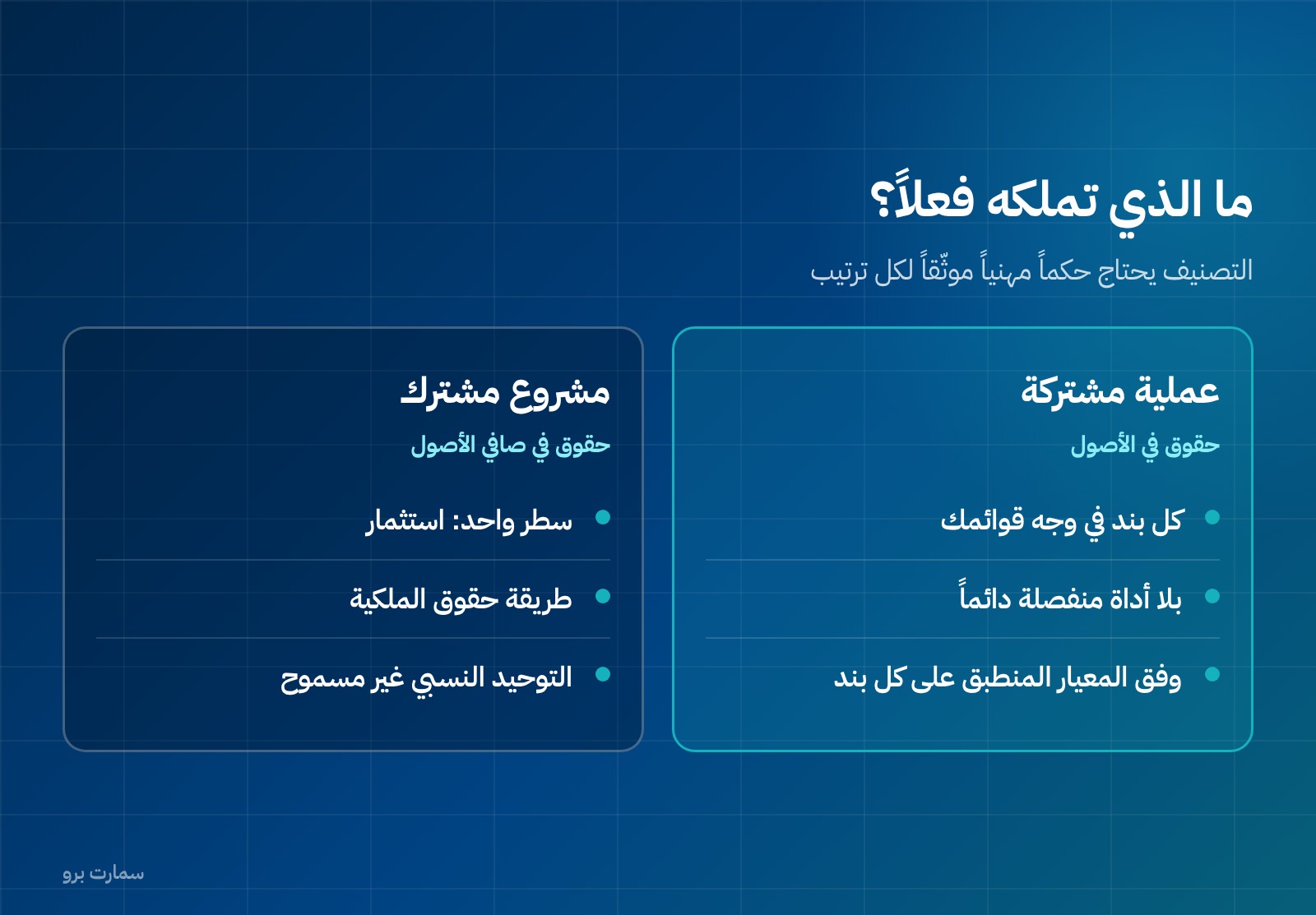
| Type | Parties' rights | Parties are called |
|---|---|---|
| Joint operation | Rights to the assets and obligations for the liabilities | Joint operators |
| Joint venture | Rights to the net assets | Joint venturers |
Classification requires professional judgement and depends on: the structure of the arrangement (whether or not it is set up through a separate vehicle), the legal form of the vehicle, the terms of the contractual arrangement, and other facts and circumstances where they are relevant.
A separate vehicle is a separately identifiable financial structure, including separate legal entities, whether or not they have legal personality.
How do you account for a joint operation?
A joint operator recognises, in relation to its interest:
- Its own assets, including its share of any assets held jointly.
- Its own liabilities, including its share of any liabilities incurred jointly.
- Its revenue from the sale of its share of the output.
- Its share of the revenue from the sale of the output by the joint operation.
- Its expenses, including its share of any expenses incurred jointly.
Each of these items is accounted for under the standard that applies to it. When acquiring an interest in a joint operation constitutes a business, the principles of business combination accounting apply to the extent of the acquirer's share.
How do you account for a joint venture?
A joint venturer recognises its interest as an investment and accounts for it using the equity method under IAS 28, unless it is exempt from applying it.
Proportionate consolidation is not permitted for joint ventures under this standard. This is a fundamental change from the old practice, which allowed a proportionate share of each line item to be combined. Anyone still applying proportionate consolidation is not complying with the standard.
What about parties without joint control?
- A party to a joint operation without joint control: applies the same treatment if it has rights to the assets and obligations for the liabilities. Otherwise, it applies the standard relevant to its interest.
- A party to a joint venture without joint control: applies IFRS 9, or IAS 28 if it has significant influence.
Why does this distinction matter in practice?
The difference is not cosmetic. In a joint operation, the assets, liabilities, revenue and expenses appear on the face of your statements. In a joint venture, you show a single line called "investment in joint venture" and another line for your share of the results.
The effect on ratios is significant. An entity with a joint operation shows higher total assets and liabilities, a different gearing ratio and higher revenue. The same entity, if its arrangement were classified as a joint venture, would show a cleaner balance sheet and lower revenue. That is why classification is scrutinised closely during audits. See financial analysis ratios.
What does the classification change? A worked example
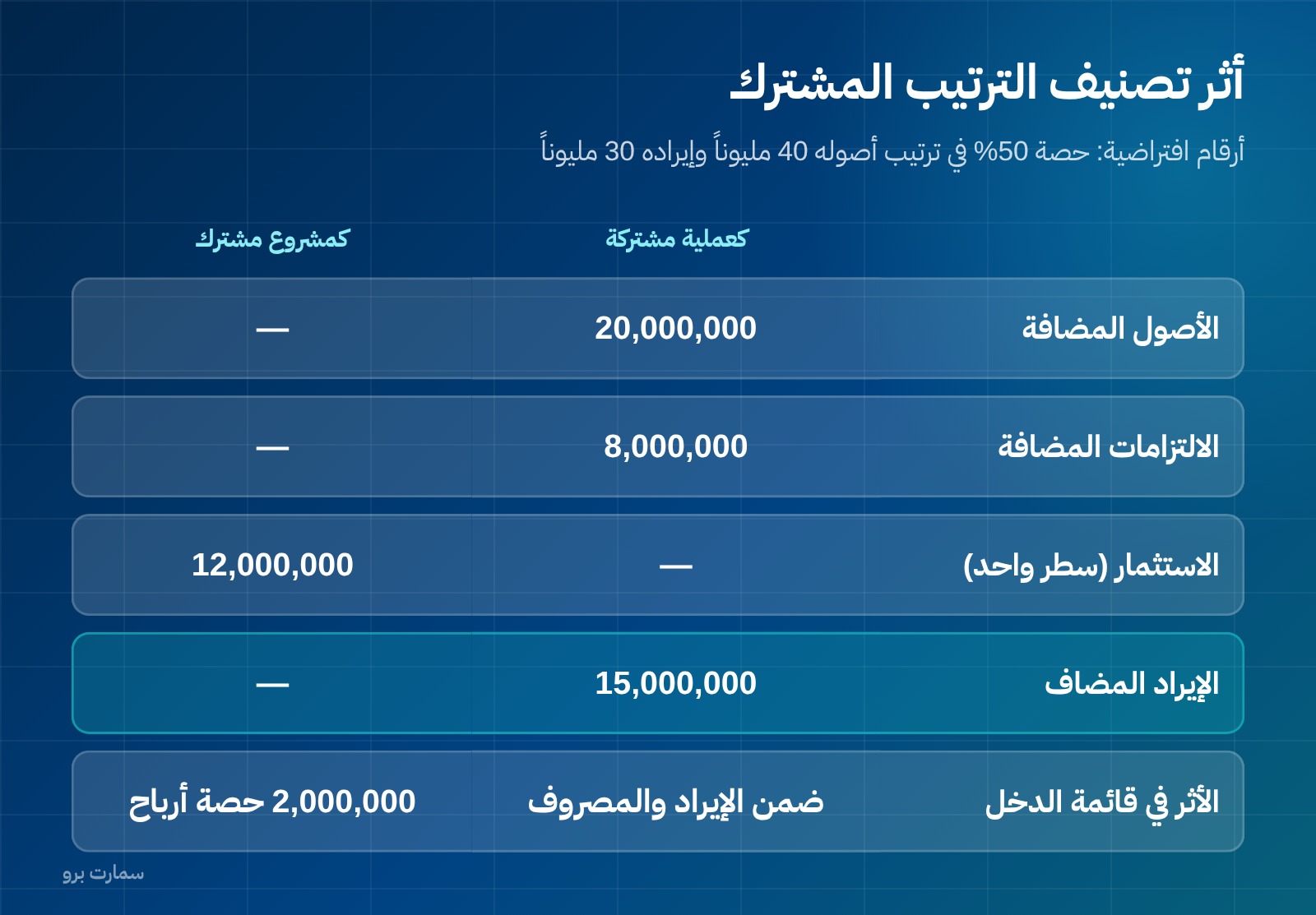
The figures below are hypothetical, to illustrate the method. An entity holds a 50% interest in an arrangement with assets of SAR 40,000,000, liabilities of SAR 16,000,000, annual revenue of SAR 30,000,000 and profit of SAR 4,000,000:
| Line item in the entity's statements | As a joint operation | As a joint venture |
|---|---|---|
| Assets added | 20,000,000 | — |
| Liabilities added | 8,000,000 | — |
| Investment (single line) | — | 12,000,000 |
| Revenue added | 15,000,000 | — |
| Effect on the income statement | Within revenue and expenses | 2,000,000 share of profit |
Same economic reality, two completely different pictures. The entity that classifies its arrangement as a joint operation shows revenue SAR 15 million higher and assets SAR 20 million higher.
How should you document the classification?
Because classification rests on professional judgement, it is good practice to prepare a memo for each arrangement that records: the legal form of the vehicle, the contractual terms governing rights to assets and obligations for liabilities, the decision-making mechanism and evidence that unanimous consent is required, and any obligation to purchase the output or fund the liabilities. This memo, not just the conclusion, is what auditors ask for.
What usually decides the classification?
In arrangements structured without a separate vehicle, the arrangement is always a joint operation, because the parties own the assets and bear the liabilities directly.
With a separate vehicle, the starting presumption is a joint venture, unless the legal form, the contractual terms or other facts give the parties rights to the assets and obligations for the liabilities. The most common indicators are the parties' obligation to purchase all of the arrangement's output and their ongoing funding of its liabilities.
The standard has been effective since 1 January 2013, and its text is available on ifrs.org.
What is the official name used in Saudi Arabia?
The approved Arabic title of this standard is "المعيار الدولي للتقرير المالي 11: الترتيبات المشتركة" (IFRS 11: Joint Arrangements). SOCPA endorsed it without any modification for application in the Kingdom.
Reference: Saudi Organization for Chartered and Professional Accountants (SOCPA), the document endorsing IFRS for application in the Kingdom, updated on 1447/07/04 AH.
Article visuals
Frequently asked questions
What is the difference between a joint operation and a joint venture?
In a joint operation, the parties have rights to the assets and obligations for the liabilities, so each operator recognises its share of the line items on the face of its own statements. In a joint venture, the parties have rights to the net assets, so the interest is recognised as an investment using the equity method.
What is joint control?
Joint control is the contractually agreed sharing of control. It exists only when decisions about the relevant activities require the unanimous consent of the parties sharing control.
Is proportionate consolidation allowed for joint ventures?
No. IFRS 11 does not permit proportionate consolidation and requires the equity method for joint ventures. This is a change from the practice that was common before the standard.
Do protective rights create joint control?
No. Requiring unanimous consent only on matters linked to protective rights does not create joint control. Likewise, a dispute resolution mechanism such as arbitration does not, by itself, prevent an arrangement from being under joint control.
How is an arrangement without a separate vehicle classified?
It is a joint operation, because the parties own the assets and bear the liabilities directly. When there is a separate vehicle, the starting presumption is a joint venture, unless the terms give the parties rights to the assets and obligations for the liabilities.