
Business Combinations: The Acquisition Method and Goodwill Step by Step
How a business combination is accounted for under IFRS 3: the four steps of the acquisition method, how goodwill is measured, and the measurement period that can never exceed one year.
Author:سامي الحيدري
When you buy another business, you are not buying a pile of separate assets. You are buying an operation that already works. That difference separates a business combination from an asset purchase, and it leads to completely different accounting: a business combination produces goodwill, while an asset purchase never does.
IFRS 3 governs this transaction. Its stated objective is to improve the relevance, reliability and comparability of the information an entity reports about a business combination and its effects.
When does IFRS 3 not apply?
The scope has three explicit exclusions:
- The formation of a joint arrangement, in the financial statements of the joint arrangement itself.
- The acquisition of an asset or a group of assets that does not constitute a business: the cost is allocated to the individual identifiable assets and liabilities based on their relative fair values, and no goodwill is recognised.
- A combination of entities under common control, such as moving a subsidiary between two companies owned by the same owner.
Also excluded is an investment entity's acquisition of an investment in a subsidiary that must be measured at fair value through profit or loss.
What are the steps of the acquisition method in a business combination?
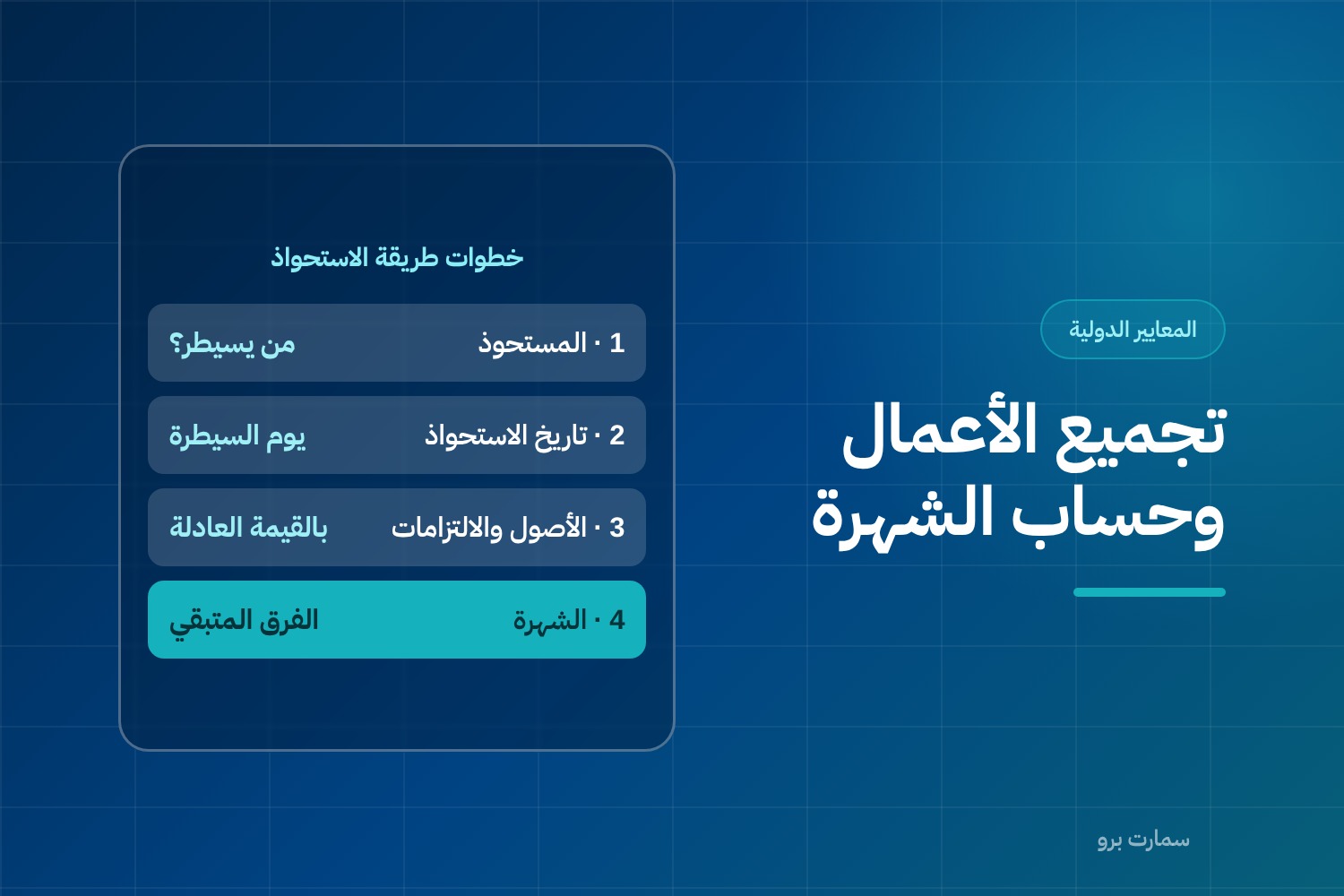
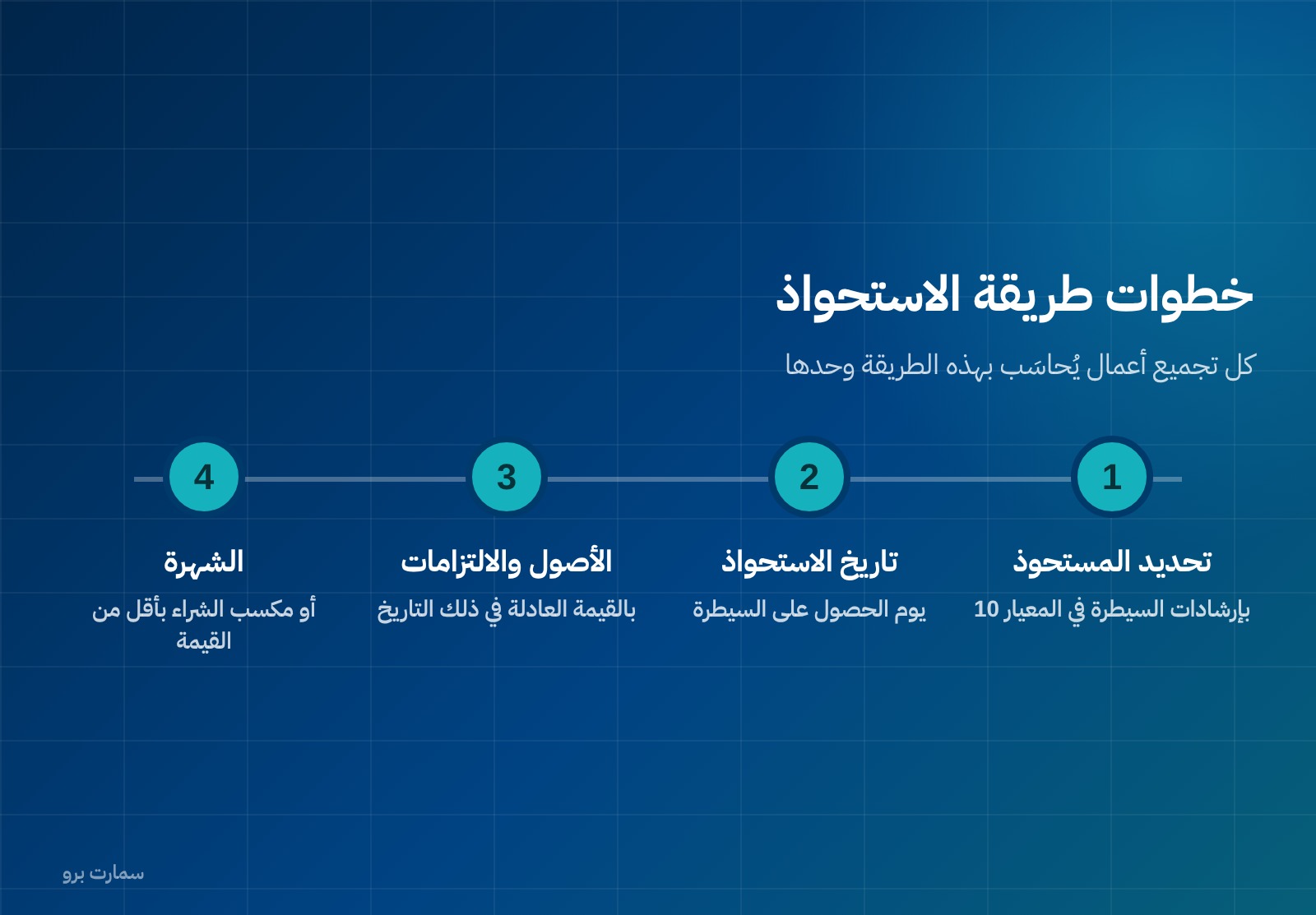
Every business combination is accounted for using one method only, the acquisition method, which has four steps:
- Identify the acquirer: use the control guidance in IFRS 10. If that is not conclusive, apply the additional factors in the standard's appendices.
- Determine the acquisition date: the date control is obtained. This is usually the closing date, but it can fall before or after it.
- Recognise and measure the identifiable assets acquired, the liabilities assumed and any non-controlling interest.
- Recognise and measure goodwill or a gain from a bargain purchase.
What is recognised, and what is not?
Identifiable assets and liabilities are recognised separately from goodwill at the acquisition date, provided they meet the definitions of an asset and a liability in the Conceptual Framework at that date. Two important rules follow:
- Future restructuring, exit or relocation costs are not recognised as a liability at the acquisition date, whatever the acquirer plans. They are expensed later, when they arise.
- You may recognise assets the acquiree never recognised itself, such as an internally developed brand or a patent. The rule that prevents capitalising an internally generated brand does not apply to the buyer. See our guide to IAS 38 intangible assets.
The general measurement rule is fair value at the acquisition date, with limited exceptions covering contingent liabilities, income taxes, employee benefits, indemnification assets, leases, reacquired rights, share-based payments and assets held for sale.
How does the non-controlling interest choice change goodwill?
A non-controlling interest (NCI) is the share of a subsidiary's equity not owned by the parent. For NCI that represents present ownership interests entitling the holder to a proportionate share of net assets on liquidation, you have two options:
| Option | Effect |
|---|---|
| Fair value | Full goodwill, including the minority's share |
| Proportionate share of identifiable net assets | Partial goodwill, attributable to the acquirer only |
The choice is made transaction by transaction, and its effect on the goodwill figure in your balance sheet is far from trivial.
How is goodwill calculated?
Goodwill = the total of three items, minus a fourth:
- The consideration transferred, at its fair value at the acquisition date.
- The amount of the non-controlling interest, under the option you chose.
- In a step acquisition: the acquisition-date fair value of the equity interest the acquirer previously held.
- Minus: the net identifiable assets acquired and liabilities assumed, at their acquisition-date amounts.
If the result is negative, you have a bargain purchase. The standard does not let you record it straight away: you must first reassess the identification and measurement of every item to make sure you have not missed a liability or overstated an asset. If an excess still remains after that review, it is recognised as a gain in profit or loss at the acquisition date.
How long is the measurement period?
In large acquisitions, valuations are often not finished before year-end. The standard therefore allows provisional amounts, which are adjusted retrospectively when new information arrives about facts and circumstances that existed at the acquisition date. The adjustment is offset against goodwill.
This period has a strict ceiling: it cannot exceed one year from the acquisition date, and it ends earlier once you obtain the information or learn that it is not available. After it closes, adjustments are only allowed to correct an error under IAS 8 on accounting policies, estimates and errors.
A worked example of the goodwill calculation
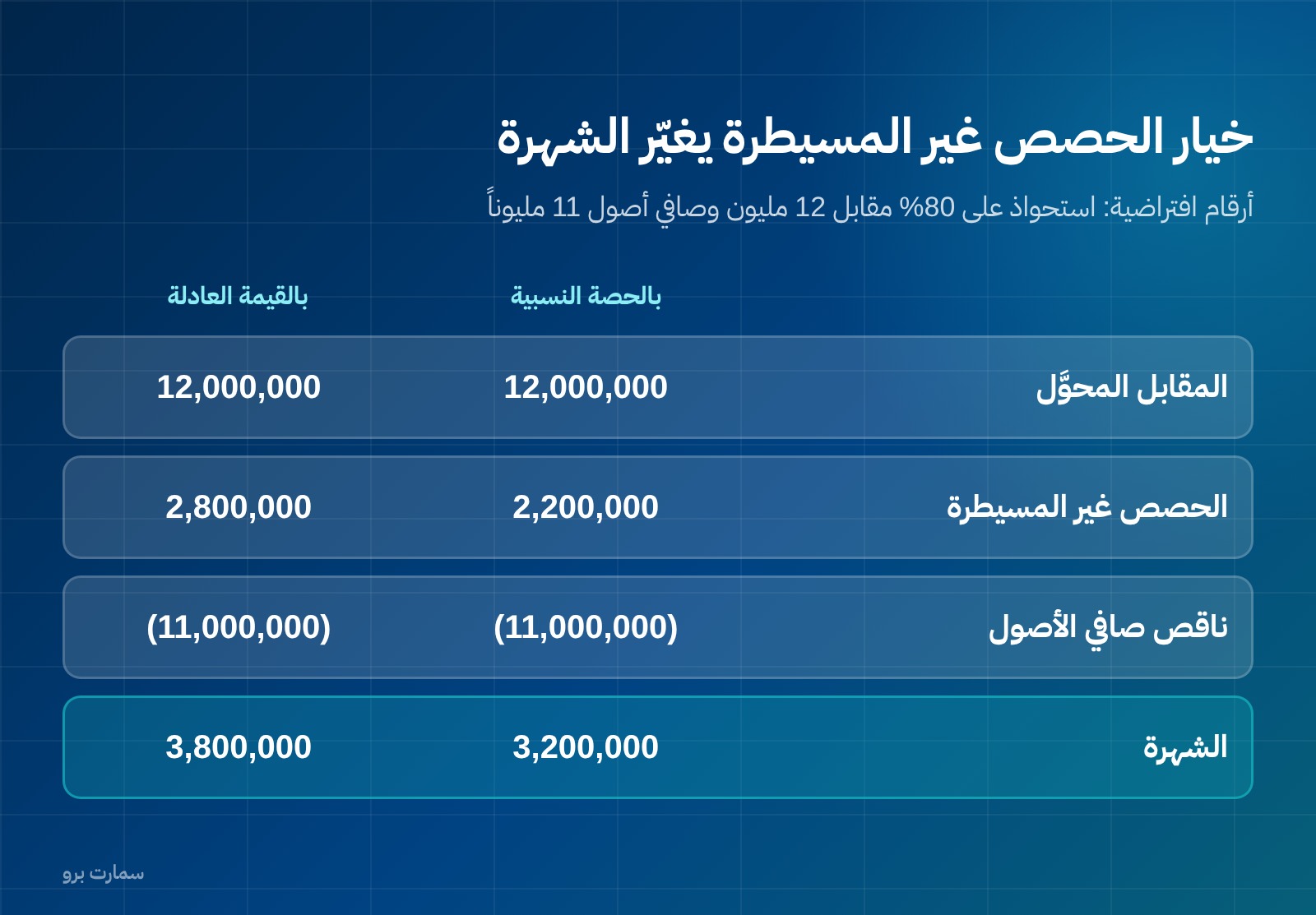
The figures below are hypothetical, to illustrate the method. A company acquires 80% of another company for SAR 12,000,000 in cash. The net identifiable assets acquired, at fair value on the acquisition date, are SAR 11,000,000.
| Item | Proportionate share option | Fair value option |
|---|---|---|
| Consideration transferred | 12,000,000 | 12,000,000 |
| Non-controlling interest | 2,200,000 | 2,800,000 |
| Less: net identifiable assets | (11,000,000) | (11,000,000) |
| Goodwill | 3,200,000 | 3,800,000 |
The SAR 600,000 difference comes from a single choice and nothing else. That choice has a lasting effect: larger goodwill means a larger base for impairment testing every year from now on.
Which three points should you review before closing?
- Is the deal really a business combination, or an asset acquisition? The definition of a business amended in 2018 narrowed this door.
- Have all acquired intangible assets been identified, or have they melted into goodwill? Very large goodwill is often a sign of an incomplete valuation.
- Have planned restructuring liabilities been wrongly charged against goodwill? The standard expressly prohibits this.
What happens to goodwill after the acquisition?
Under IFRS, goodwill is not amortised. It is tested for impairment annually under IAS 36 on asset impairment. This is a fundamental difference from earlier local treatments that used to amortise it over a number of years.
The standard applies to business combinations with an acquisition date on or after the beginning of the first annual period beginning on or after 1 July 2009. One of its most important amendments is the definition of a business, issued in October 2018 and effective from the beginning of the first annual period beginning on or after 1 January 2020. This is the amendment that narrowed the scope for classifying asset purchases as business combinations.
The official text is published on ifrs.org. For the full picture of the standards applied in Saudi Arabia, see our complete guide to IFRS in Saudi Arabia.
What is the standard's official name in Saudi Arabia?
The approved Arabic title of this standard is «المعيار الدولي للتقرير المالي 3: تجميع الأعمال» (IFRS 3: Business Combinations). SOCPA adopted it without any modification for application in the Kingdom.
Reference: Saudi Organization for Chartered and Professional Accountants (SOCPA), the document adopting IFRS for application in the Kingdom, updated on 04/07/1447 AH.
Key takeaway: A business combination is accounted for only by the acquisition method, and goodwill is what remains after measuring every identifiable asset and liability at fair value. The NCI option and the one-year measurement period both shape the goodwill figure you will test for impairment every year.
To see how SmartPro's finance and accounting system keeps your entries and statements organised, start a free trial.
Article visuals
Frequently asked questions
What is the difference between a business combination and buying a group of assets?
A business combination is the acquisition of an operating business, so it is accounted for using the acquisition method and produces goodwill. When you buy a group of assets that does not constitute a business, the cost is allocated to the assets and liabilities based on their relative fair values, and no goodwill is recognised.
How is goodwill calculated in a business combination?
Goodwill equals the consideration transferred, plus the non-controlling interest, plus the fair value of any previously held equity interest. From that total you subtract the net identifiable assets acquired and liabilities assumed, measured at the acquisition date.
What if the goodwill calculation comes out negative?
You have a bargain purchase. You must first reassess the identification and measurement of every item, and if an excess still remains after that review, it is recognised as a gain in profit or loss at the acquisition date.
How long does the measurement period last under IFRS 3?
It ends as soon as you obtain the information you were waiting for or learn that it is not available, and in no case does it exceed one year from the acquisition date. After that, amounts can only be adjusted to correct an error under IAS 8.
Is goodwill amortised under IFRS?
No. Under IFRS, goodwill is not amortised. Instead, it is tested for impairment every year under IAS 36.