
Regulatory Deferral Accounts: IFRS 14 Before It Is Replaced
What IFRS 14 Regulatory Deferral Accounts is, who was allowed to use it, why it remained a narrow interim solution, and when the new IFRS 20 takes its place.
Author:سامي الحيدري
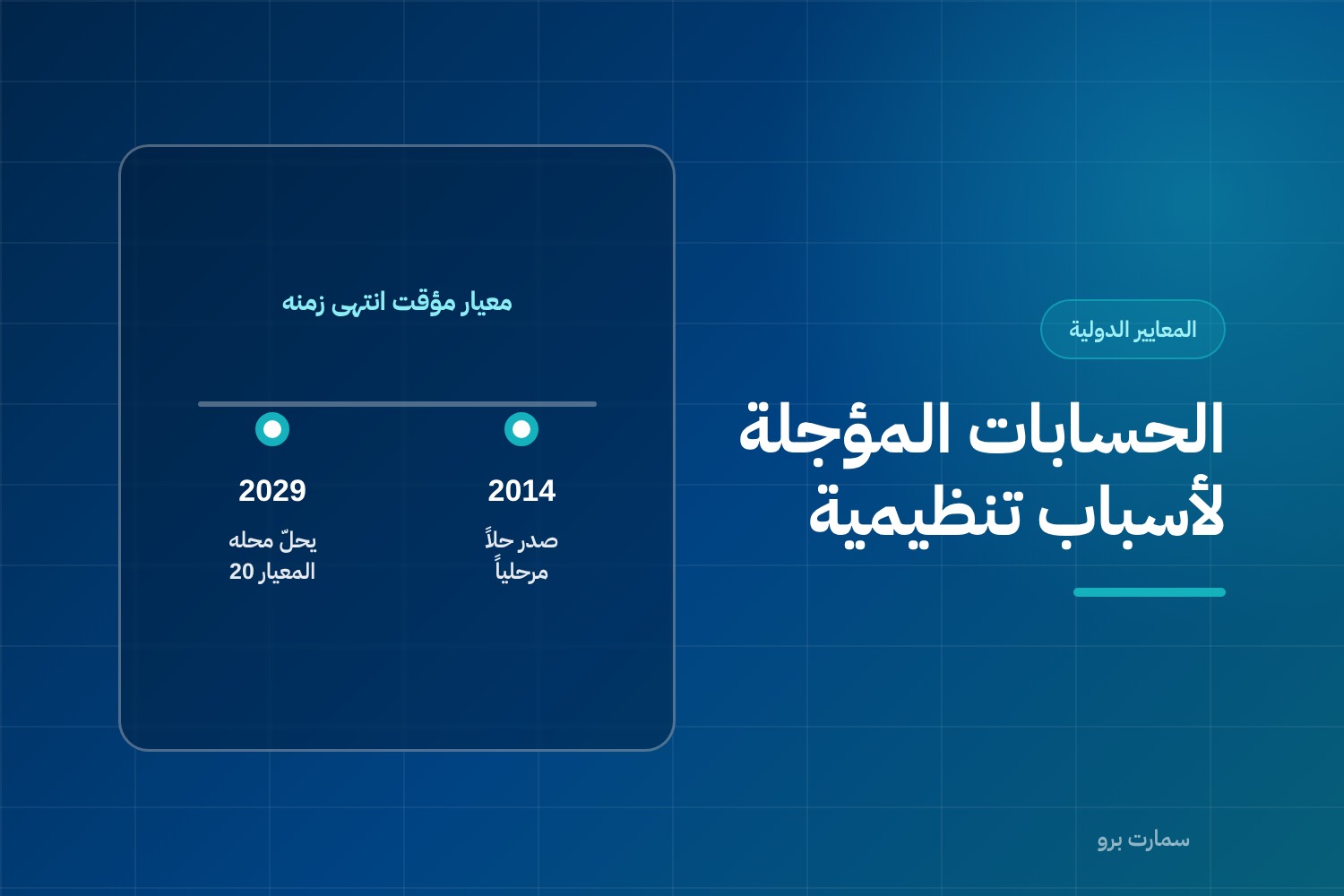
IFRS 14 on regulatory deferral accounts is an unusual standard in the history of IFRS. It was issued openly as an interim solution and stayed that way for twelve years. In May 2026, IFRS 20 was issued to replace it.
Its subject is regulatory deferral accounts. These are balances that arise when an entity supplies goods or services at prices or tariffs subject to a regulator's oversight.
Who could use regulatory deferral accounts?
Its scope is one of the narrowest in IFRS. An entity may apply it in its first IFRS financial statements only if both conditions are met:
- It conducts rate-regulated activities.
- Under its previous accounting framework, it recognised amounts that qualify as regulatory deferral account balances.
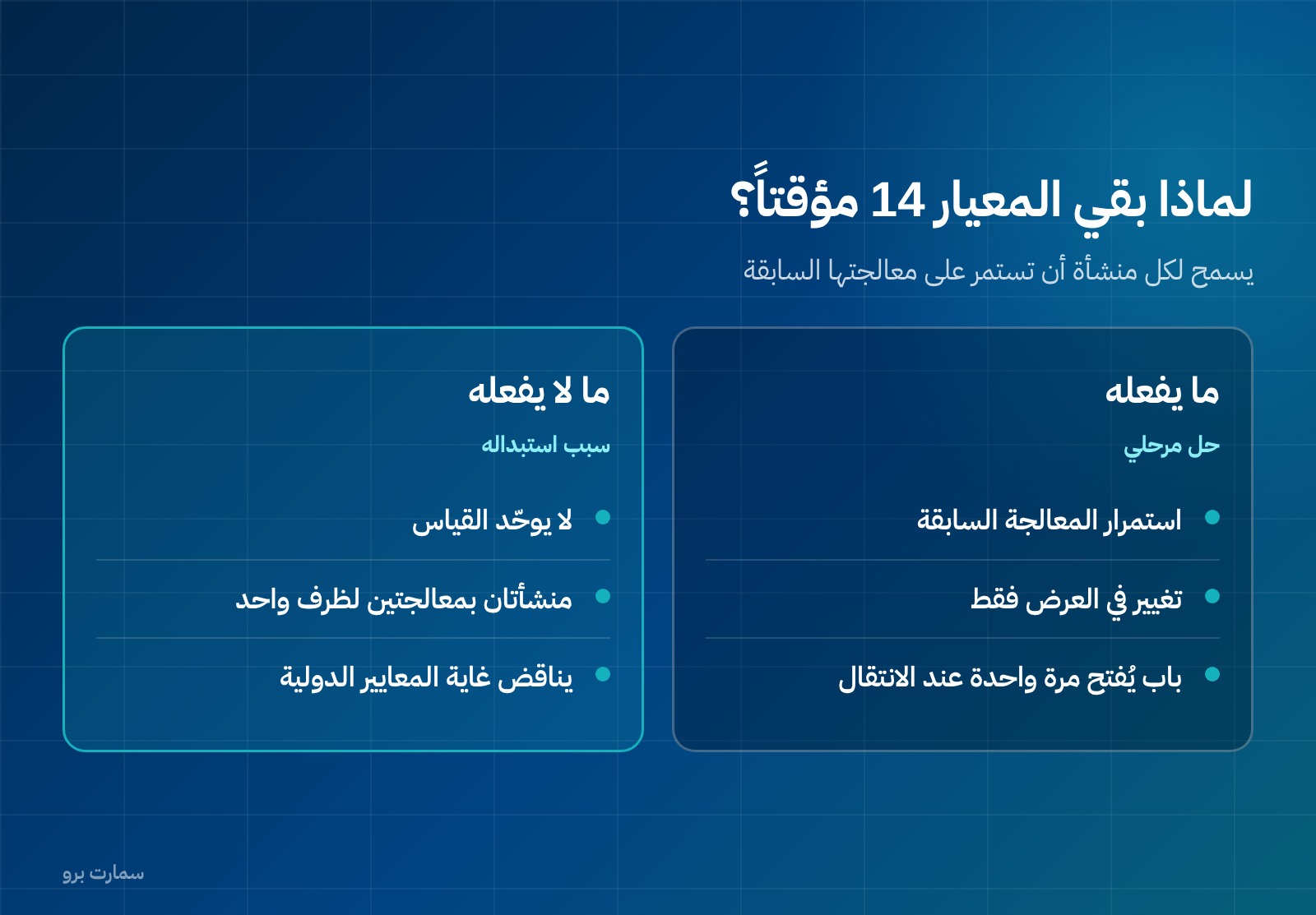
It may continue applying the standard in later periods only if it elected it in those first statements. In practice, this means an entity that already applies IFRS cannot start using it. It is a door that opens once, at transition, and then closes.
Application is optional, but it is all or nothing. An entity that elects it must apply all of its requirements to all regulatory deferral account balances arising from all of its rate-regulated activities.
The principle: carry on with the previous treatment
The core of the standard is simple: recognition, measurement, impairment and derecognition continue under the previous accounting framework. For these balances, the entity is exempt from one paragraph of the hierarchy of sources in IAS 8.
Presentation, however, must follow IFRS 14, and that may require a change from previous presentation.
An entity may not change an accounting policy in order to start recognising these balances. Other changes are accepted only if they make the statements more relevant without making them less reliable, or more reliable without making them less relevant.
Presentation in the statement of financial position
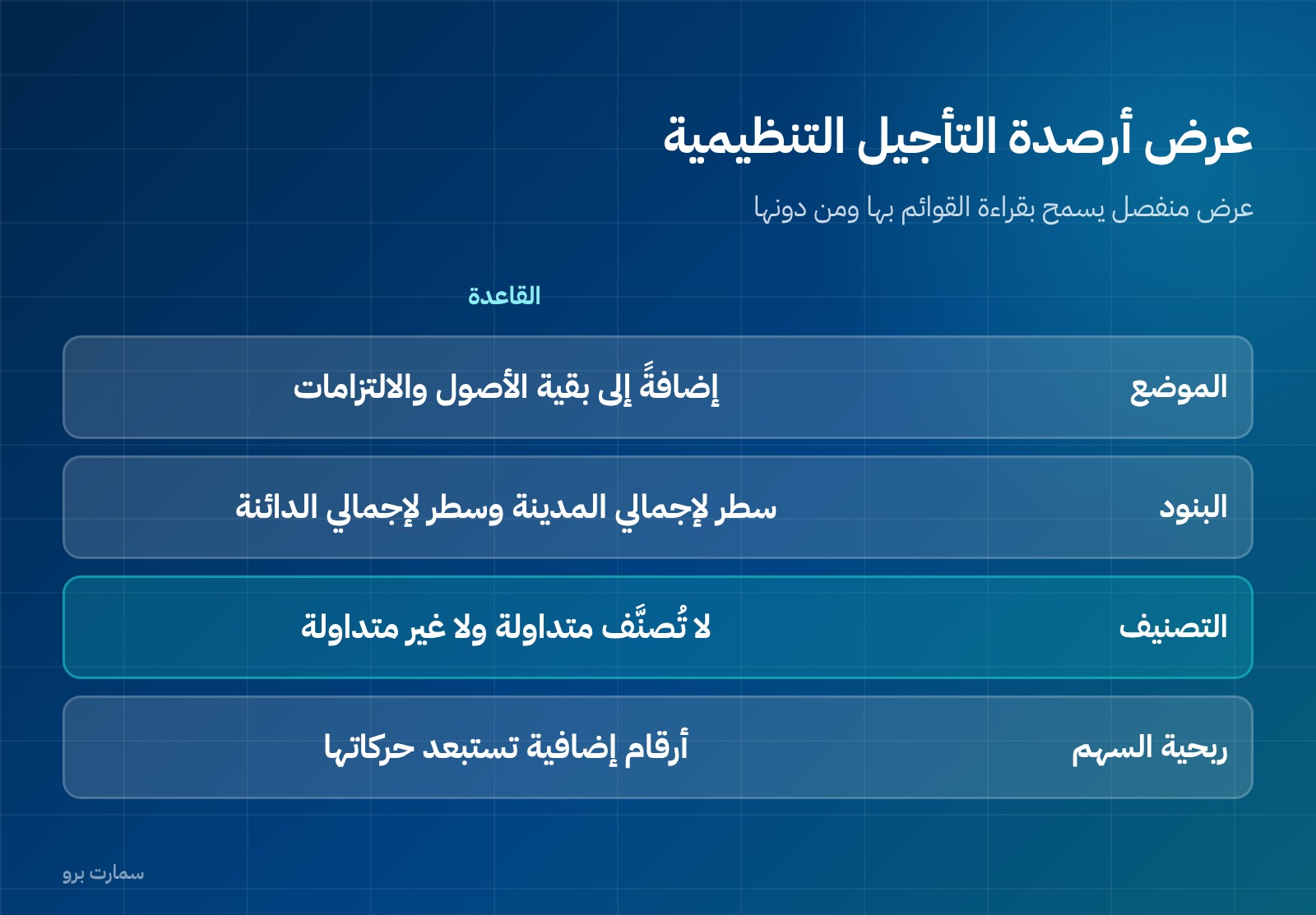
| Rule | Detail |
|---|---|
| Position | In addition to other assets and liabilities, overriding the general presentation rules for those items |
| Line items | A separate line for total debit balances and a separate line for total credit balances |
| Classification | Not classified as current or non-current |
| Order | Presented after the subtotals that precede them |
This separate presentation is deliberate. It lets readers view the statements with and without the regulatory balances and judge their effect for themselves.
Presentation in financial performance
- The net movement relating to items recognised in other comprehensive income is presented in the OCI section, split between items that will be reclassified to profit or loss and items that will not.
- The remaining net movement is presented as a single separate line in profit or loss, distinguished by a subtotal.
- Deferred tax arising from these balances is presented with the balances and their movements, not within the totals of IAS 12.
- Additional basic and diluted earnings per share that exclude movements in these balances are presented alongside the usual figures under the earnings per share standard.
Disclosures
The entity discloses the nature of the rate regulation and the risks associated with it. For each type of rate-regulated activity, it describes the activity and how the tariff is set, the identity of the regulator and whether it is a related party under IAS 24, and the risks affecting recovery or reversal of each class of balance.
It also discloses: the basis of recognition, measurement and recoverability testing; a reconciliation from opening to closing balance for each type of activity and each class of balance; the rate of return or discount rate used; the remaining periods expected for recovery or reversal; income tax effects; and amounts attributable to subsidiaries, associates and joint ventures.
When a balance is no longer fully recoverable, the entity discloses that fact, the reason and the amount of the write-down.
The definitions that drive application
Rate regulation is a framework for setting the prices that can be charged to customers, subject to a regulator's oversight or approval. A rate regulator is a body empowered by statute or regulation to set tariffs. It may be a related party, and it may even be the entity's own board of directors when the law requires the board to set tariffs in the interest of customers while preserving the entity's financial sustainability.
A regulatory deferral account balance is the balance of any expense or income account that would not be recognised as an asset or liability under other standards, but qualifies for deferral because the regulator includes it, or is expected to include it, when setting the tariff.
Why did it remain an interim solution?
Because the standard does not standardise the treatment. It lets each entity continue what it was doing under its previous national framework, so two entities in the same country can end up with two different treatments of the same circumstances. That contradicts the very purpose of IFRS.
The standard came out of a project titled "Rate-regulated Activities: Interim Standard", so the name itself announced that it was temporary. The Board kept working on a permanent standard until it issued one in 2026.
Who was actually affected?
In practice: companies that moved to IFRS while running a rate-regulated business, such as electricity, gas, water and power transmission, and that carried regulatory deferral balances in their national books. Worldwide, this is a small group.
An entity that moved to IFRS without having such balances before never had this option, even if its business was fully rate-regulated. This is one of the standard's oddest restrictions: eligibility depends on what you did in the past, not on the nature of your business today.
What should an entity applying it today do?
IFRS 20 is effective for periods beginning on or after 1 January 2029, with early application permitted. Entities applying IFRS 14 today therefore have time to transition, and the transition is not a formality. The new standard requires measurement based on discounted cash flows instead of keeping the previous treatment, classifies balances as current and non-current, and presents the net amount within revenue.
The official text is on ifrs.org.
The official title adopted in Saudi Arabia
The approved Arabic title of this standard is "المعيار الدولي للتقرير المالي 14: الحسابات المؤجلة لأسباب تنظيمية" (IFRS 14: Regulatory Deferral Accounts). SOCPA adopted it without any modification for application in the Kingdom.
Reference: Saudi Organization for Chartered and Professional Accountants (SOCPA), the document adopting IFRS for application in the Kingdom, updated on 1447/07/04 AH.
Article visuals
Frequently asked questions
What are regulatory deferral accounts?
They are balances of expense or income accounts that would not be recognised as assets or liabilities under other standards. They qualify for deferral because the rate regulator includes them, or is expected to include them, when setting the tariff.
Who can apply IFRS 14?
Only an entity adopting IFRS for the first time, provided it conducts rate-regulated activities and recognised these balances under its previous accounting framework. An entity that already applies IFRS cannot start using it.
How are these balances presented in the balance sheet?
They appear as one separate line for total debit balances and another for total credit balances, in addition to the other assets and liabilities. They are not classified as current or non-current and are presented after the subtotals that precede them.
Does IFRS 14 require additional earnings per share figures?
Yes. The entity presents additional basic and diluted earnings per share that exclude movements in regulatory deferral account balances, alongside the usual figures.
When does IFRS 20 replace IFRS 14?
IFRS 20 was issued in May 2026 and is effective for periods beginning on or after 1 January 2029, with early application permitted. It replaces IFRS 14 with measurement based on discounted cash flows.