
IFRS 20: Regulatory Assets and Regulatory Liabilities
IFRS 20 was issued in May 2026, replaces IFRS 14 and takes effect in 2029. What is a regulatory asset, how is it measured, and where does it appear in the financial statements?
Author:سامي الحيدري
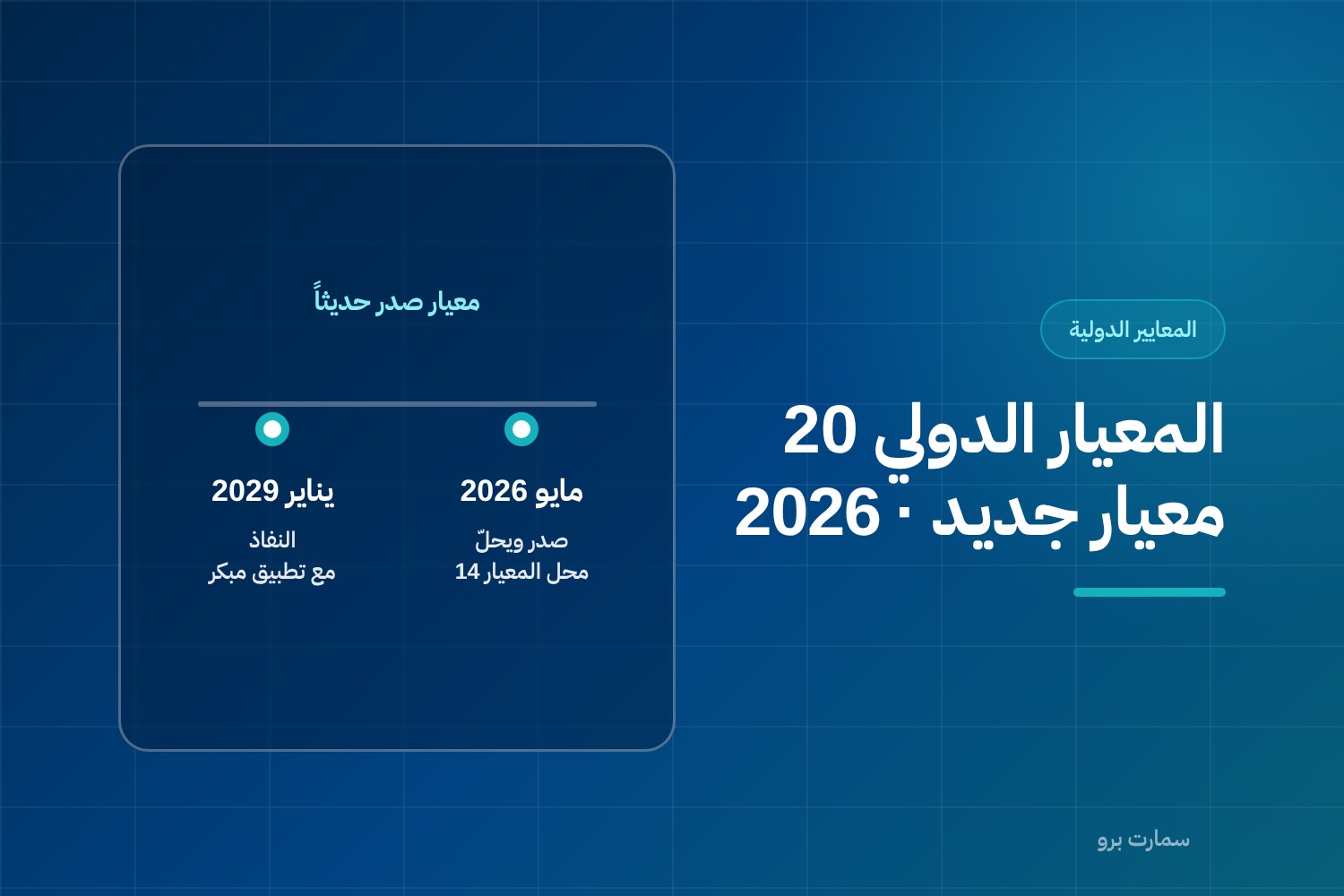
In May 2026 the International Accounting Standards Board (IASB) issued an entirely new standard, *IFRS 20 Regulatory Assets and Regulatory Liabilities*. It is effective for annual periods beginning on or after 1 January 2029, with early application permitted, and it replaces IFRS 14**, which was a temporary, narrow-scope solution.
IFRS 20 is not an amendment to an existing standard. It is a full recognition and measurement standard for a group of entities that had no standard covering them: entities whose prices are set by a regulator's decision.
What problem does IFRS 20 solve?
Picture an electricity or water company. The regulator sets the tariff, and it may decide that a cost the company incurred this year will be recovered from customers through the tariffs of future years. The company delivered the service and bore the cost today, but the matching consideration will reach its revenue years later.
The result under current standards is a distorted income statement. The cost lands in one year and the related revenue in another, and there is no line on the balance sheet that carries this right to recovery.
What are regulatory assets and regulatory liabilities?
| Item | Definition |
|---|---|
| Regulatory asset | A present enforceable right to recover an amount through future regulated prices, because consideration for goods or services already supplied has not yet been reflected in IFRS 15 revenue |
| Regulatory liability | The mirror image: a present enforceable obligation to reduce future regulated prices, because consideration for future supply has already been reflected in revenue |
Regulatory income and regulatory expense are the income and expense arising from changes in these two balances.
Two conditions must both exist for these balances to arise: a regulatory agreement that sets the price, and timing differences between earning the consideration and charging it to the customer.
Which entities fall within the scope of IFRS 20?
The standard applies to an entity that is party to a regulatory agreement that creates regulatory assets or regulatory liabilities. A regulatory agreement creates enforceable rights and obligations that govern how the regulator determines the regulated price. A "regulator" is a body required by law or regulation to determine that price.
Regulated insurance premiums within the scope of IFRS 17 are excluded. The order of application matters: the entity first applies other IFRS Accounting Standards to the underlying rights and obligations, then applies IFRS 20 to whatever remains that meets its criteria.
When are regulatory balances recognised?
The general rule: recognise all regulatory assets and regulatory liabilities existing at the end of the period, and all regulatory income and expense for the period. The existence threshold is "more likely than not".
Two situations carry a specific restriction:
- Balances arising from regulatory depreciation of the regulatory capital base are recognised only if that base has a direct relationship with the related items.
- Balances based on benchmarks that use unobservable inputs are recognised only when the regulator determines the consideration using the actual benchmark.
How are regulatory assets measured?
The default approach is cash-flow based: the entity estimates all future cash flows, including regulatory interest, and discounts them at the regulatory interest rate, which is usually the rate set out in the agreement. In specific cases, an implicit regulatory interest rate is derived at initial recognition.
For uncertain cash flows, the entity uses the most likely amount or the expected value, whichever better predicts the outcome. The discount rate set at initial recognition stays unchanged unless the agreement changes the interest rate.
Where the consideration depends on cash paid or received, a simplified approach applies: the balance is measured starting from the carrying amount of the related asset or liability, adjusted for any differences in risk.
Where do regulatory balances appear in the financial statements?
- Regulatory income minus regulatory expense is presented as a line item within revenue in profit or loss.
- When the related items are recognised in other comprehensive income, the corresponding regulatory amounts also go to other comprehensive income.
- Regulatory assets and regulatory liabilities are presented as separate line items in the statement of financial position, split into current and non-current, unless a liquidity-based presentation is more useful under IFRS 18 on presentation and disclosure.
This is a fundamental difference from IFRS 14, which presented the balances after subtotals and did not classify them as current or non-current.
How does the transition to IFRS 20 work?
An entity has two routes: full retrospective application under IAS 8 on accounting policies, estimates and errors, or a modified retrospective approach that allows the use of hindsight at the transition date. Under both routes, restated comparative information is required for the period immediately preceding first application. First-time adopters of IFRS may also use the modified retrospective approach.
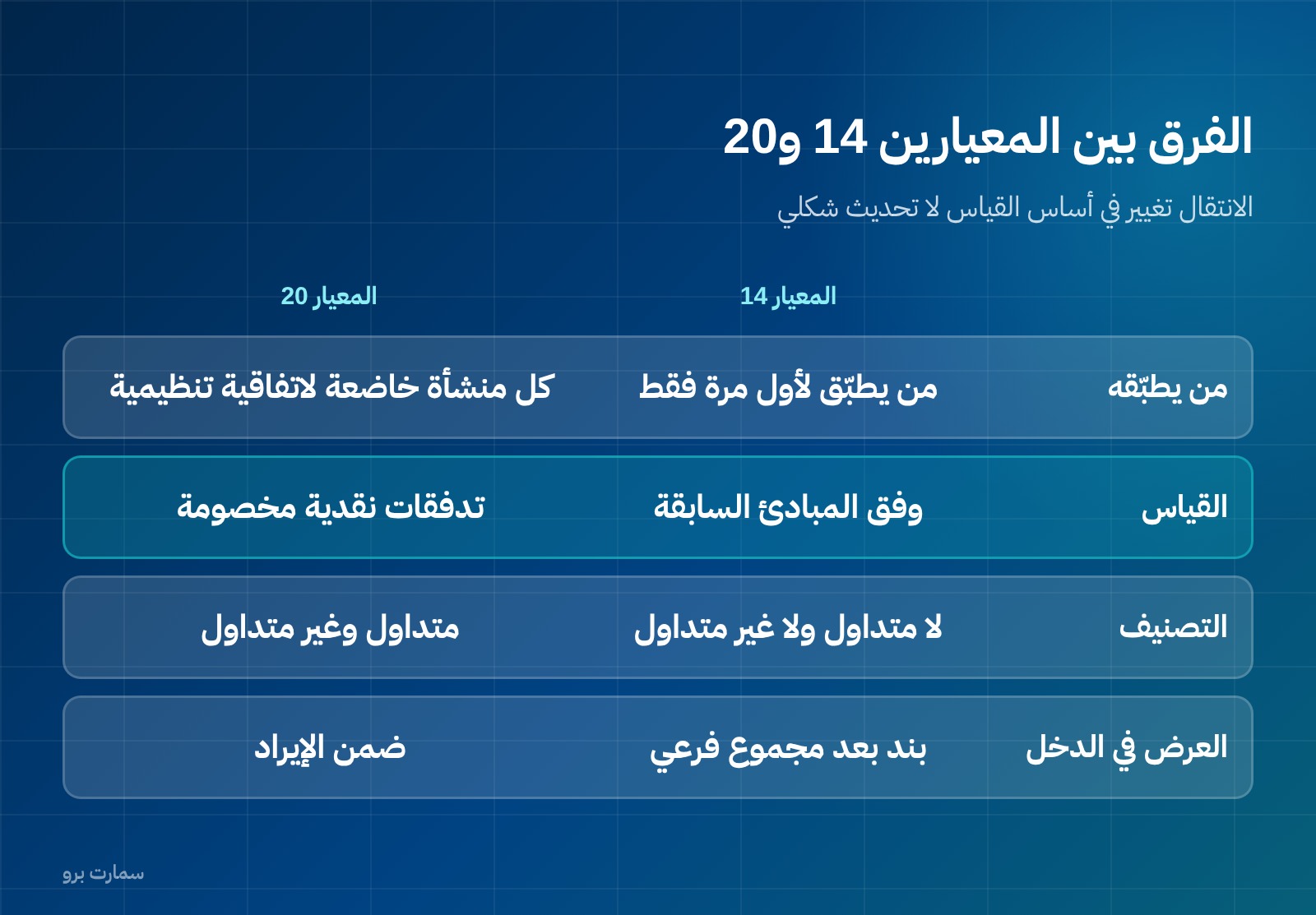
How is IFRS 20 different from IFRS 14?
| Aspect | IFRS 14 | IFRS 20 |
|---|---|---|
| Who applies it | First-time adopters only, and only if they had prior balances | Every entity party to a regulatory agreement |
| Nature | Optional choice that keeps previous treatment | Full recognition and measurement standard |
| Measurement | Under previous accounting principles | Discounted cash-flow based approach |
| Balance sheet classification | Not classified as current and non-current | Classified as current and non-current |
| Presentation in profit or loss | Separate line after a subtotal | Line item within revenue |
Moving from one to the other is not a cosmetic update; it changes the measurement basis itself.
Why is the effective date delayed until 2029?
The long lead time, around three years from issue, is deliberate. The standard requires regulated utilities to build data they did not collect before: future cash-flow schedules for each regulatory item, derived regulatory interest rates, and time-based classification of balances. That is systems work, not year-end close work.
Who does IFRS 20 affect in Saudi Arabia?
The standard concerns entities whose prices are set by a regulator: electricity, water, gas and similar activities. Most commercial and industrial businesses are not directly affected.
The indirect effect deserves attention, though. Anyone dealing with these entities as a supplier, customer or lender will read financial statements that look different from what they are used to, starting from the year of application. The "regulatory assets" lines appearing on their balance sheets are neither receivables nor intangible assets, but a third category with its own logic.
It is important not to confuse a regulatory asset with intangible assets under IAS 38 or with receivables, because its measurement is completely different and its basis is regulatory rather than contractual in the usual commercial sense.
The official text and project summary are published by the IFRS Foundation at ifrs.org. For the full picture, see our guide to IFRS in Saudi Arabia.
What is its status in Saudi Arabia so far?
As of this article's date, there is no officially approved Arabic title for this standard, and it is not included in the standards endorsement document issued by the Saudi Organization for Chartered and Professional Accountants (SOCPA). The document was last updated on 4/7/1447 AH (24 December 2025), which is before the standard was issued in May 2026, and its list ends at IFRS 19.
The Arabic name used in our Arabic edition of this article is a translation of the English title, not an approved name. With the effective date set for 2029, endorsement and an official translation are expected well before then.
Reference: Saudi Organization for Chartered and Professional Accountants (SOCPA).
Key takeaway: IFRS 20 replaces IFRS 14 from 1 January 2029 and requires rate-regulated entities to recognise regulatory assets and liabilities, measure them on a discounted cash-flow basis and present the net effect within revenue. Most Saudi businesses are affected only indirectly, as readers of utilities' financial statements.
If you want financial statements that stay ready for changes like these, you can explore SmartPro's finance and accounting system or start a free trial.
Article visuals

Frequently asked questions
When was IFRS 20 issued and when does it take effect?
IFRS 20 was issued in May 2026 and is effective for annual periods beginning on or after 1 January 2029, with early application permitted. It replaces IFRS 14 Regulatory Deferral Accounts.
What is a regulatory asset?
A regulatory asset is a present enforceable right to recover an amount through future regulated prices. It arises because consideration for goods or services already supplied has not yet been reflected in revenue.
How is a regulatory asset measured under IFRS 20?
It is measured using a cash-flow based approach. All future cash flows, including regulatory interest, are estimated and discounted at the regulatory interest rate, which is usually the rate set out in the regulatory agreement.
Where is regulatory income presented?
Regulatory income minus regulatory expense is presented as a line item within revenue in profit or loss. Amounts relating to items recognised in other comprehensive income are presented in other comprehensive income.
Who has to apply IFRS 20?
Entities that are party to a regulatory agreement creating regulatory assets or regulatory liabilities must apply it. In practice, these are electricity, water, gas and similar utilities whose prices are set by a regulator's decision.