
Assets Held for Sale and Discontinued Operations
When an asset qualifies as held for sale, what "highly probable" really requires, why depreciation stops, and how discontinued operations are presented under IFRS 5.
Author:سامي الحيدري
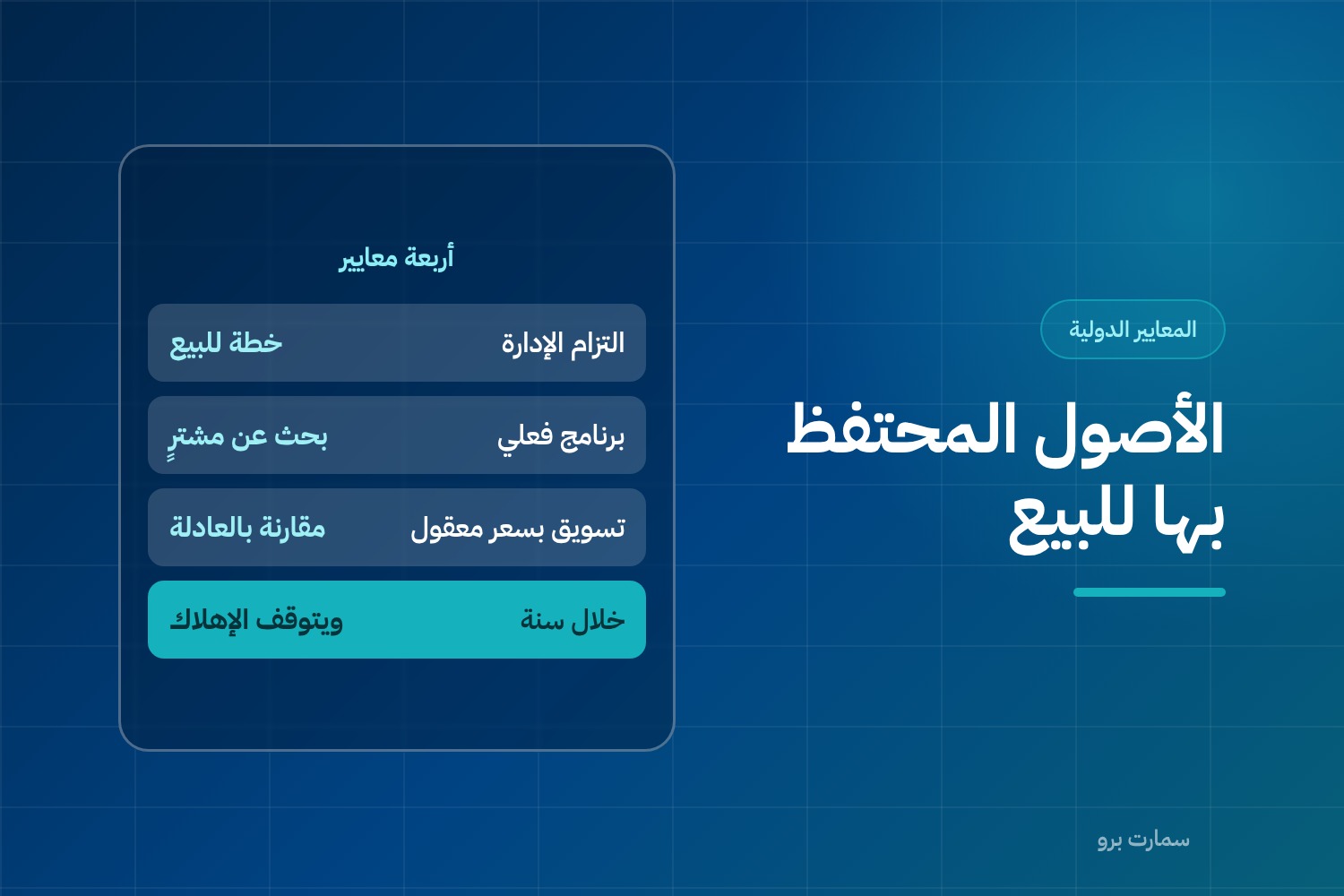
Under IFRS 5, an asset is classified as held for sale when you expect to recover its carrying amount mainly through a sale rather than continued use, it is available for immediate sale in its present condition, and the sale is highly probable. From that date, depreciation stops and the asset is measured at the lower of carrying amount and fair value less costs to sell.
When you decide to sell a branch, a production line or a building, the accounting changes before the sale actually happens. IFRS 5 governs this in-between stage: it sets out when assets move into the assets held for sale category and how discontinued operations are presented.
The governing principle: when you expect to recover the carrying amount (the value at which the asset sits in your books) mainly through a sale transaction rather than through continuing use, the asset is no longer an operating asset.
What are the conditions for classifying assets held for sale?
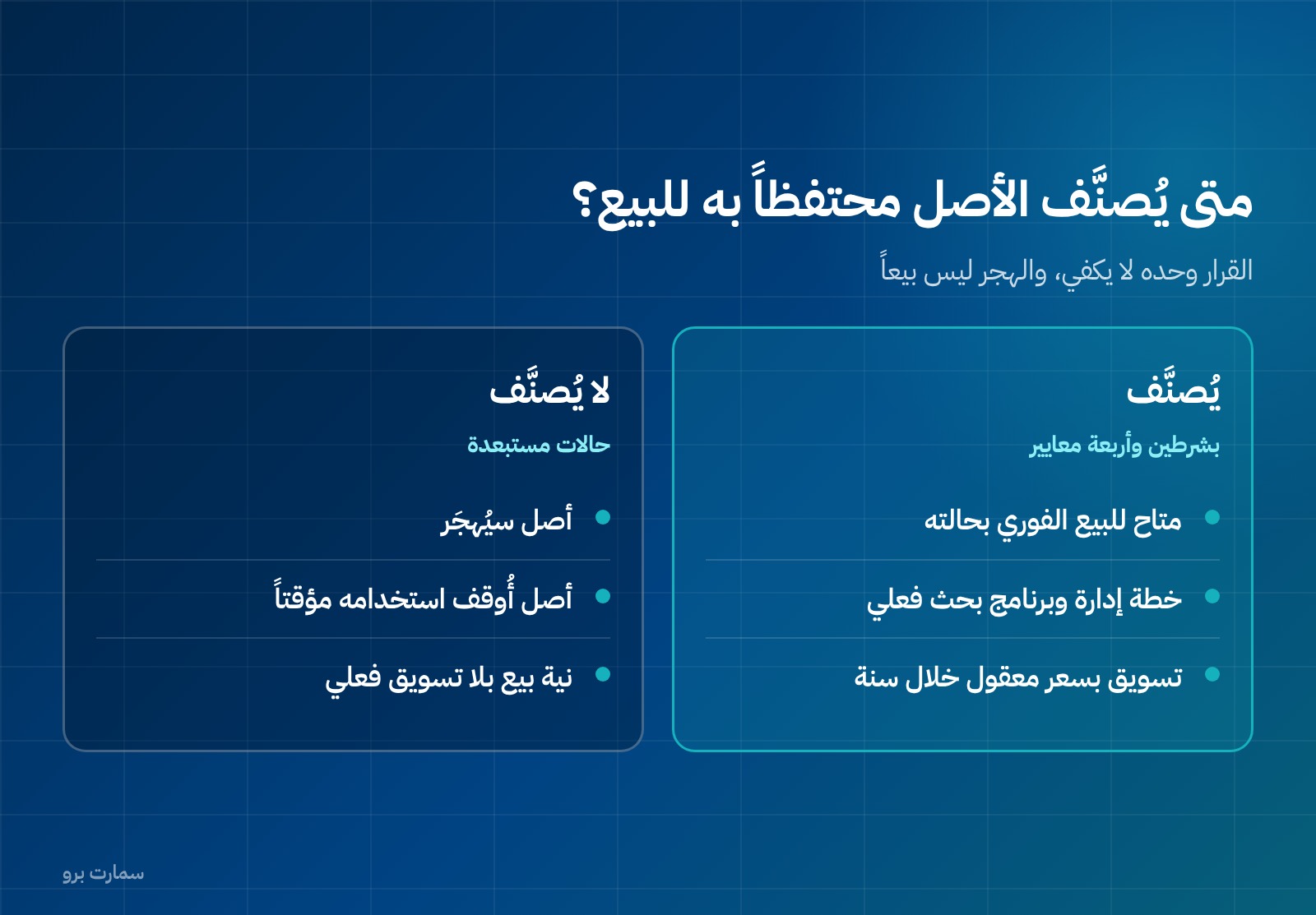
An asset, or a disposal group (a group of assets, and directly related liabilities, to be disposed of together in a single transaction), is classified in this category when two conditions are met:
- It is available for immediate sale in its present condition.
- The sale is highly probable.
The second condition is not a matter of intention. It rests on four criteria, and all of them must be met:
- Management is committed to a plan to sell.
- An active programme to locate a buyer has been initiated.
- The asset is actively marketed at a price that is reasonable in relation to its current fair value.
- The sale is expected to be completed within one year of the classification date.
The one-year limit can be exceeded if the delay is caused by events beyond the entity's control and the entity remains committed to its plan. A bare decision to "get rid of this asset someday" is not enough.
What about assets that will be abandoned?
A subtle point: assets that will be abandoned are not classified as held for sale, because abandonment is not a sale. And an asset that is temporarily taken out of use is not treated as abandoned.
How are held-for-sale assets measured, and does depreciation stop?
| Rule | Detail |
|---|---|
| Measurement | The lower of carrying amount and fair value less costs to sell |
| Before classification | The carrying amount is measured under the standards that already apply to the asset |
| If the sale is expected beyond one year | Costs to sell are measured at present value |
| Depreciation and amortisation | Stop for the whole period of classification |
| Interest and other expenses | Continue on the liabilities of the disposal group |
Stopping depreciation is the most significant practical effect: an asset that stays classified for eight months carries no depreciation charge for those months, so profit for the period is higher.
Which items are excluded from measurement but not from presentation?
The classification, presentation and disclosure requirements apply to all non-current assets and disposal groups. The measurement requirements, however, do not apply to items that stay under their own standards, including deferred tax assets, employee benefit assets, financial assets, and investment property measured at fair value.
What counts as a discontinued operation?
A "component of an entity" is a part whose operations and cash flows can be clearly distinguished from the rest of the entity. A discontinued operation is a component that has been disposed of or is classified as held for sale, and that meets one of three tests:
- It represents a separate major line of business or a separate geographical area of operations.
- It is part of a single coordinated plan to dispose of such a line or area.
- It is a subsidiary acquired exclusively with a view to resale.
So closing a small branch within an ongoing business is not a discontinued operation.
How are they presented in the financial statements?
- A single amount is shown in the statement of comprehensive income, combining the post-tax profit or loss of discontinued operations and the post-tax gain or loss on disposal or remeasurement.
- Disclosures for prior periods are re-presented so they cover all operations that have been discontinued by the end of the latest period.
- Gains and losses on remeasuring held-for-sale assets that are not a discontinued operation are presented within continuing operations.
- Assets held for sale are presented separately from other assets, and the liabilities of a disposal group separately from other liabilities, without offsetting.
- Prior-period balance sheet figures are not restated when an asset is classified later. This differs from the rule for re-presenting the income statement, and the difference is intentional.
What happens if the plan to sell changes?
If the plan changes and the criteria are no longer met, disclose the facts, circumstances and effects. The asset is remeasured at the lower of its carrying amount before classification (adjusted for the depreciation that would have been charged) and its recoverable amount at the date of the decision not to sell.
A worked example: the effect of classification
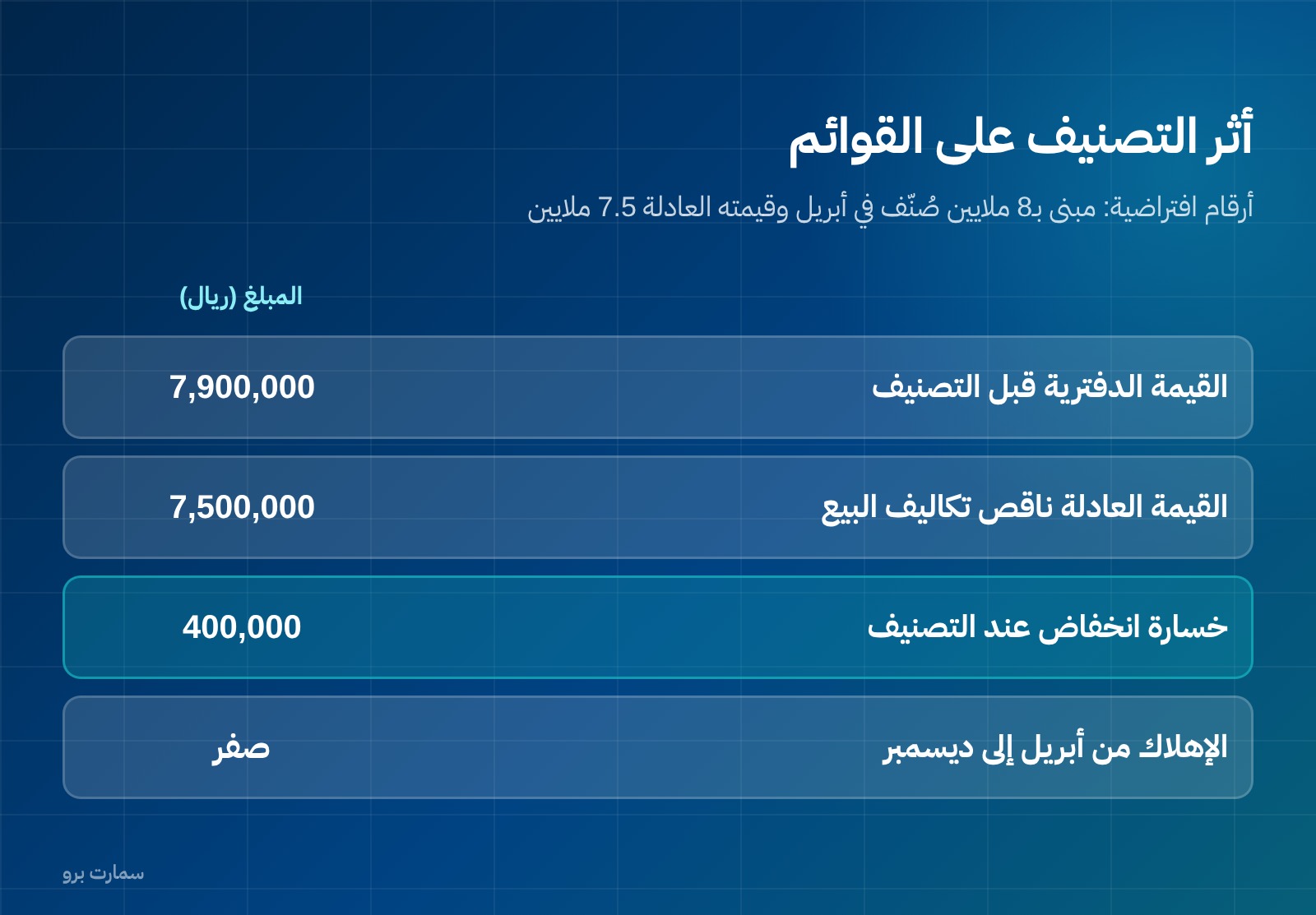
The figures below are hypothetical, to illustrate the method. A building has a carrying amount of SAR 8,000,000 and annual depreciation of SAR 400,000. It is classified as held for sale on 1 April, and its fair value less costs to sell is estimated at SAR 7,500,000:
| Item | Amount (SAR) |
|---|---|
| Carrying amount before classification (after three months' depreciation) | 7,900,000 |
| Fair value less costs to sell | 7,500,000 |
| Impairment loss recognised on classification | 400,000 |
| Depreciation from April to December | Zero |
Without the classification, the period would have carried an additional SAR 300,000 of depreciation. With it, an impairment loss of SAR 400,000 appears in one go. The effect on net profit is different, and so is where the item sits in the income statement.
What are the three most common mistakes?
- Classifying as soon as the decision to sell is made, without actually marketing the asset at a reasonable price.
- Continuing to depreciate after classification, which the standard explicitly prohibits.
- Restating prior-period balance sheet figures, which the standard prohibits, unlike re-presenting the income statement.
How does this affect reading the financial statements?
Separating discontinued operations serves one purpose: letting the reader see what the business earns from the activities that will continue. Anyone comparing two years of profit without noticing this separation may conclude there was an illusory decline or illusory growth. See our guide to the income statement.
The standard has been effective since 1 January 2005, and the amendments made to it by IFRS 18 apply from 1 January 2027. The full text is on ifrs.org.
What is the official name adopted in Saudi Arabia?
The official Arabic title of this standard is «المعيار الدولي للتقرير المالي 5: الأصول غير المتداولة المحتفظ بها للبيع والعمليات غير المستمرة» (IFRS 5: Non-current Assets Held for Sale and Discontinued Operations). SOCPA adopted it without any modification for application in the Kingdom.
Reference: Saudi Organization for Chartered and Professional Accountants (SOCPA), the document adopting IFRS for application in the Kingdom, updated on 04/07/1447 AH.
Key takeaway: Classify an asset as held for sale only when it is ready to sell and the sale is highly probable under all four criteria; from that date, stop depreciation, measure at the lower of carrying amount and fair value less costs to sell, and present discontinued operations as a single amount.
To see how SmartPro's accounting keeps your entries and financial statements organised as these changes happen, start a free trial or book a demo with our team.
Article visuals
Frequently asked questions
When is an asset classified as held for sale?
Under IFRS 5, an asset is classified as held for sale when its carrying amount is expected to be recovered mainly through a sale rather than through continuing use. Two conditions must be met: the asset is available for immediate sale in its present condition, and the sale is highly probable.
What are the criteria for a sale being "highly probable"?
There are four, and all must be met together: management is committed to a plan to sell, an active programme to locate a buyer has started, the asset is marketed at a price that is reasonable compared with its fair value, and the sale is expected to be completed within one year of the classification date.
Does depreciation continue on an asset held for sale?
No. Depreciation and amortisation stop for the whole period the asset is classified as held for sale. However, interest and other expenses on the liabilities of the disposal group continue to be recognised.
What is the difference between an asset held for sale and an asset to be abandoned?
An asset that will be abandoned is not classified as held for sale, because abandonment is not a sale. An asset that is only temporarily taken out of use is not treated as abandoned either.
When is a component of a business a discontinued operation?
A component is a discontinued operation when it has been disposed of or classified as held for sale, and it represents a separate major line of business or geographical area, is part of a single coordinated plan to dispose of one, or is a subsidiary acquired exclusively with a view to resale.