
Agricultural Accounting: Biological Assets and Fair Value Measurement
How biological assets and agricultural produce are measured under IAS 41, what bearer plants are, and when an activity falls outside the standard's scope.
Author:سامي الحيدري
Agricultural activity differs from every other activity in one way: its assets grow and change on their own. A sheep gains weight, a tree bears fruit and a crop ripens without any purchase or sale. International Accounting Standard 41 (IAS 41) was written for exactly this, and its focus is biological assets.
The standard defines agricultural activity as an entity's management of the biological transformation and harvest of biological assets. Biological transformation covers growth, degeneration, production and procreation.
What exactly falls within the scope of IAS 41?
The standard applies to:
- Biological assets, meaning a living animal or a living plant, except bearer plants.
- Agricultural produce at the point of harvest only.
- Government grants related to biological assets.
It does not apply to: land related to agricultural activity, bearer plants themselves, grants related to them, intangible assets, and right-of-use assets arising from a lease of agricultural land.
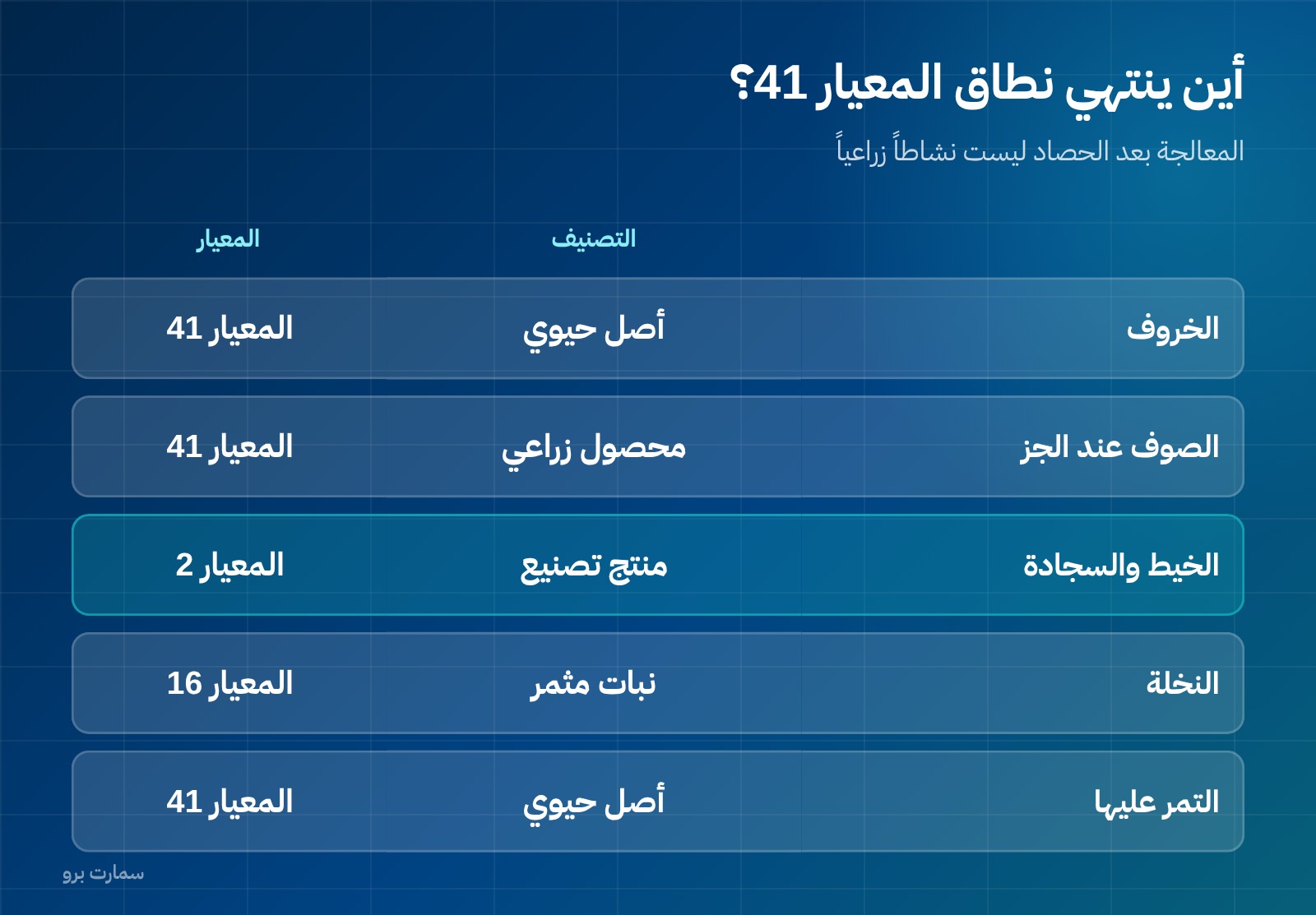
The example the standard gives shows the whole chain:
| Stage | Classification | Standard |
|---|---|---|
| Sheep | Biological asset | 41 |
| Wool at shearing | Agricultural produce | 41 |
| Yarn and carpet | Manufactured product | IAS 2 |
So turning grapes into wine, or milk into cheese, is entirely outside IAS 41. Processing after harvest is not agricultural activity as the standard defines it.
What are bearer plants and why are they excluded?
A bearer plant is a living plant that is used in the production or supply of agricultural produce, is expected to bear produce for more than one period, and has only a remote likelihood of being sold as agricultural produce, except for incidental scrap sales.
Bearer plants, such as date palms, grapevines and apple trees, are accounted for under IAS 16 as property, plant and equipment, that is, at cost less depreciation.
But watch the detail: the produce growing on a bearer plant is a biological asset within IAS 41. The palm tree is a fixed asset; the dates on it are a biological asset.
Three things are not bearer plants: trees grown for timber, trees grown for both fruit and timber, and annual crops.
When is a biological asset recognised?
A biological asset or agricultural produce is recognised when three conditions are all met:
- The entity controls the asset as a result of past events.
- It is probable that future economic benefits will flow to the entity.
- The fair value or cost of the asset can be measured reliably.
How are biological assets measured?
This is where IAS 41 parts ways with most standards: a biological asset is measured at fair value less costs to sell, on initial recognition and at the end of each reporting period, not at cost.
Costs to sell are the incremental costs directly attributable to disposing of an asset, excluding finance costs and income taxes.
The practical effect: a livestock farm remeasures its herd at every year end, and the remeasurement difference goes straight to profit or loss. Animals growing produce an accounting profit before anything is sold.
Why fair value rather than cost?
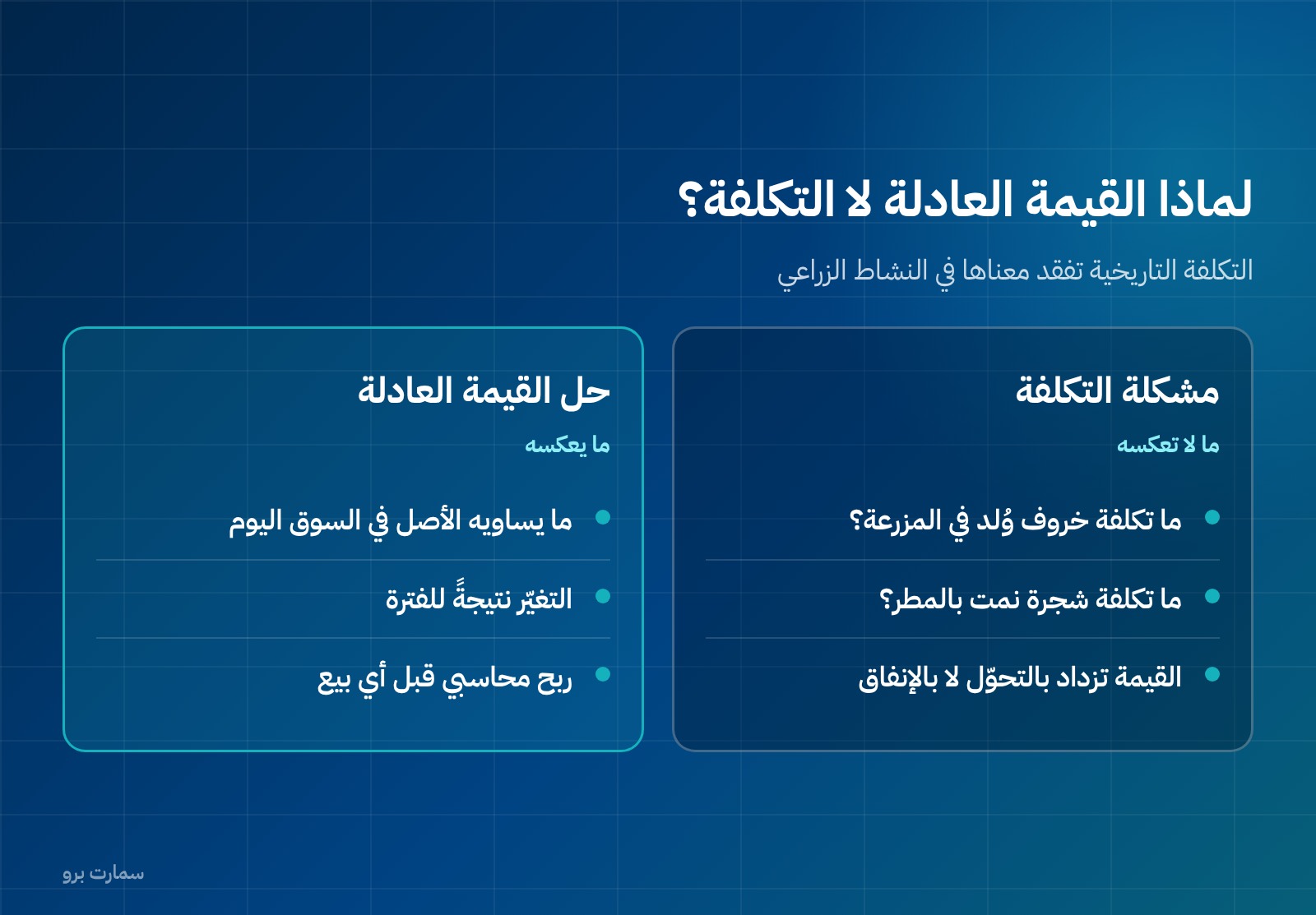
Because measuring at cost loses its meaning in agriculture. What did a lamb born on the farm cost? What did a tree that grew with the rain cost? Historical cost does not reflect the economic value of an asset whose value rises through biological transformation, not through spending.
That is why the standard measures what the asset is worth in the market today and shows the change as a result for the period. See fair value for the measurement methodology.
How does this affect reading an agricultural company's statements?
Three consequences deserve attention:
- Profit volatility: the year's profit includes value changes that have not yet turned into cash. A business can report a large profit and a negative cash flow in the same year. See the statement of cash flows.
- The importance of disclosing the valuation basis: the assumptions, reference markets and discount rates used.
- Separating what grows from what is manufactured: a group that owns both a farm and a factory applies two different standards to two consecutive stages of the same chain.
Is there any exception to fair value?
The standard allows one narrow exception: if the fair value of a biological asset cannot be measured reliably on initial recognition, it is measured at cost less accumulated depreciation and accumulated impairment losses. It stays on that basis until its fair value becomes reliably measurable, at which point it moves to the general rule.
This exception does not apply to agricultural produce at harvest: it is always measured at fair value less costs to sell, because it has a market at the moment of harvest.
How are government grants treated in agriculture?
Grants related to a biological asset measured at fair value less costs to sell have a treatment specific to this standard, not the one in the government grants standard: an unconditional grant is recognised in profit or loss only when it becomes receivable. A conditional grant is recognised only when its conditions are met.
Grants related to bearer plants, however, follow the usual government grants standard, because bearer plants are outside the scope of IAS 41 in the first place.
What must be disclosed, and why does it matter?
The entity discloses the aggregate gain or loss arising during the period on initial recognition of biological assets and agricultural produce, and from the change in fair value less costs to sell. It also discloses a description of each group of biological assets, the nature of the activities relating to each group, and non-financial measures of the quantities of each group and its output during the period.
A reconciliation of changes in the carrying amount of biological assets between the beginning and end of the period is presented, showing the gain or loss from fair value changes, purchases, sales and harvest. This reconciliation is what lets the reader separate biological growth from buying and selling activity.
What does this mean in the Saudi context?
With the growth of investment in agriculture and livestock, this standard has a real effect on the statements of companies working in poultry, dairy, date palms and aquaculture. The first question when building the chart of accounts for these businesses is: where do the boundaries of IAS 41 end and those of inventory begin? Defining that point clearly settles how every cost after it is treated. A connected finance and accounting system helps keep that boundary consistent in the entries.
The official text is on ifrs.org.
What is the official name of the standard in Saudi Arabia?
The approved Arabic name of this standard is «المعيار الدولي للمحاسبة 41: الزراعة» (International Accounting Standard 41: Agriculture). SOCPA endorsed it with a general modification: illustrative examples that conflict with Sharia were replaced, so the pig was removed and other animals used instead, and wine was replaced with juice. The change is to the examples, not the rules, so the accounting treatment is unchanged.
Reference: Saudi Organization for Chartered and Professional Accountants (SOCPA), the document endorsing IFRS for application in the Kingdom, updated on 1447/07/04 AH.
Key takeaway: Under IAS 41, biological assets and produce at harvest are measured at fair value less costs to sell, with changes going to profit or loss, while bearer plants follow IAS 16 at cost. Draw the line clearly between what grows and what is processed.
To see how connected accounting handles your farm's entries, book a demo with a SmartPro product expert.
Article visuals
Frequently asked questions
How are biological assets measured?
Under IAS 41, biological assets are measured at fair value less costs to sell, both on initial recognition and at the end of each reporting period. The remeasurement difference goes straight to profit or loss.
What is a bearer plant and why is it excluded?
A bearer plant is a living plant used to produce agricultural produce that is expected to bear produce for more than one period, with only a remote chance of being sold as produce. It is accounted for under IAS 16 as property, plant and equipment at cost less depreciation, but the produce growing on it is a biological asset under IAS 41.
When does a product leave the scope of IAS 41?
At the point of harvest. Any processing or manufacturing after harvest falls under the inventory standard or another applicable standard. For example, turning grapes into wine is outside the scope of IAS 41.
What are costs to sell under IAS 41?
Costs to sell are the incremental costs directly attributable to disposing of an asset. They exclude finance costs and income taxes.
Why do agricultural companies' profits fluctuate?
Because the year's profit includes changes in the fair value of biological assets that have not yet turned into cash. As a result, an agricultural business may report a large profit alongside a negative cash flow in the same year.