
First-Time Adoption of IFRS: Your Transition Roadmap
How your business moves to IFRS: the opening statement of financial position, the date of transition, mandatory exceptions and optional exemptions.
Author:سامي الحيدري
First-time adoption of IFRS is not a change in accounting policy. It is a rebuild of your financial statements from a new starting point. That is why it has its own standard, IFRS 1. Its aim is for your first IFRS statements to contain transparent information that is comparable across all periods presented, and to provide a suitable starting point, at a cost that does not exceed the benefits.
Who does IFRS 1 apply to?
Your "first IFRS financial statements" are the first annual statements in which your business adopts IFRS through an explicit and unreserved statement of compliance. This includes cases such as:
- Previous statements that were not fully compliant with IFRS.
- Statements prepared for internal use only.
The standard does not apply to a business that has already made an explicit and unreserved statement of compliance. Nor does it cover changes in accounting policy by businesses that already apply IFRS; those fall under IAS 8 on accounting policies, estimates and errors.
What is the date of transition and the opening statement of financial position?
The date of transition is the beginning of the earliest period for which you present full comparative information. On that date you prepare an opening statement of financial position under IFRS.
In this opening statement you carry out four operations:
- Recognise all assets and liabilities that IFRS requires you to recognise.
- Derecognise items that IFRS does not permit you to recognise.
- Reclassify items into their correct categories under IFRS.
- Measure everything in line with IFRS.
All resulting adjustments go to retained earnings, or another category of equity, at the date of transition, not to profit or loss. This is a key point: the transition itself creates no profit or loss in your income statement.
Why must you use one set of accounting policies?
You use a single set of accounting policies across the opening statement and every period presented, consistent with the standards in force at the end of your first IFRS reporting period. You may not use superseded versions of standards. The transitional provisions in other standards generally do not apply to a first-time adopter.
What is the difference between exceptions and exemptions?
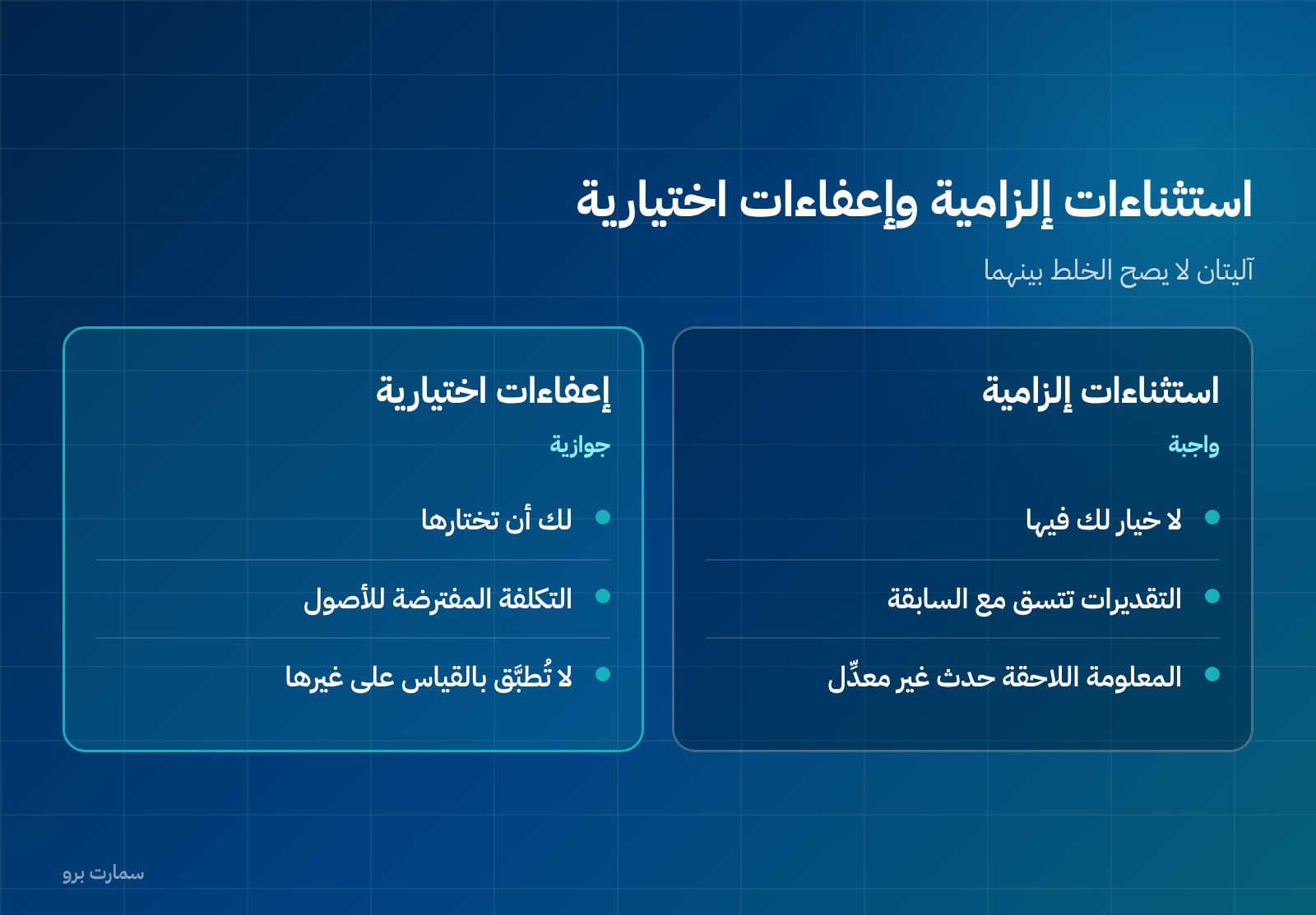
IFRS 1 distinguishes between two mechanisms that must not be confused:
| Type | Nature | Effect |
|---|---|---|
| Mandatory exceptions to retrospective application | Required | You have no choice |
| Optional exemptions | Permitted | You may elect them, but you may not apply them by analogy to other cases |
In practice, the optional exemptions save the most effort. One of the best known is using a previous fair value or revaluation as deemed cost for an item of property, plant and equipment, instead of rebuilding its historical cost and accumulated depreciation going back years.
Can you revise estimates at transition?
Estimates at the date of transition must be consistent with the estimates made under your previous accounting principles, unless there is objective evidence that those estimates were in error. Information received after that date is treated as a non-adjusting event. The same rule applies to the comparative periods.
In other words, transition is not a chance to re-estimate with hindsight. If you estimated a bad debt provision at a certain amount in 2024 based on what you knew then, that estimate stands, even if it later proves to have been optimistic.
What must be presented and disclosed?
- At least three statements of financial position, two of each other primary statement, and the related notes.
- A reconciliation of equity at the date of transition and at the end of the latest comparative period under previous principles.
- A reconciliation of total comprehensive income, in enough detail for readers to understand the material adjustments.
- Separation of error corrections from policy changes in those reconciliations.
- Historical summaries that do not comply with IFRS must be labelled as such, with the nature of the main adjustments disclosed.
The IAS 8 disclosure requirements for changes in accounting policy do not apply to first IFRS statements.
What does a realistic transition timeline look like?
The following is hypothetical, meant to show the sequence rather than a binding duration. A mid-sized business targeting 2026 IFRS statements:
| Phase | Output |
|---|---|
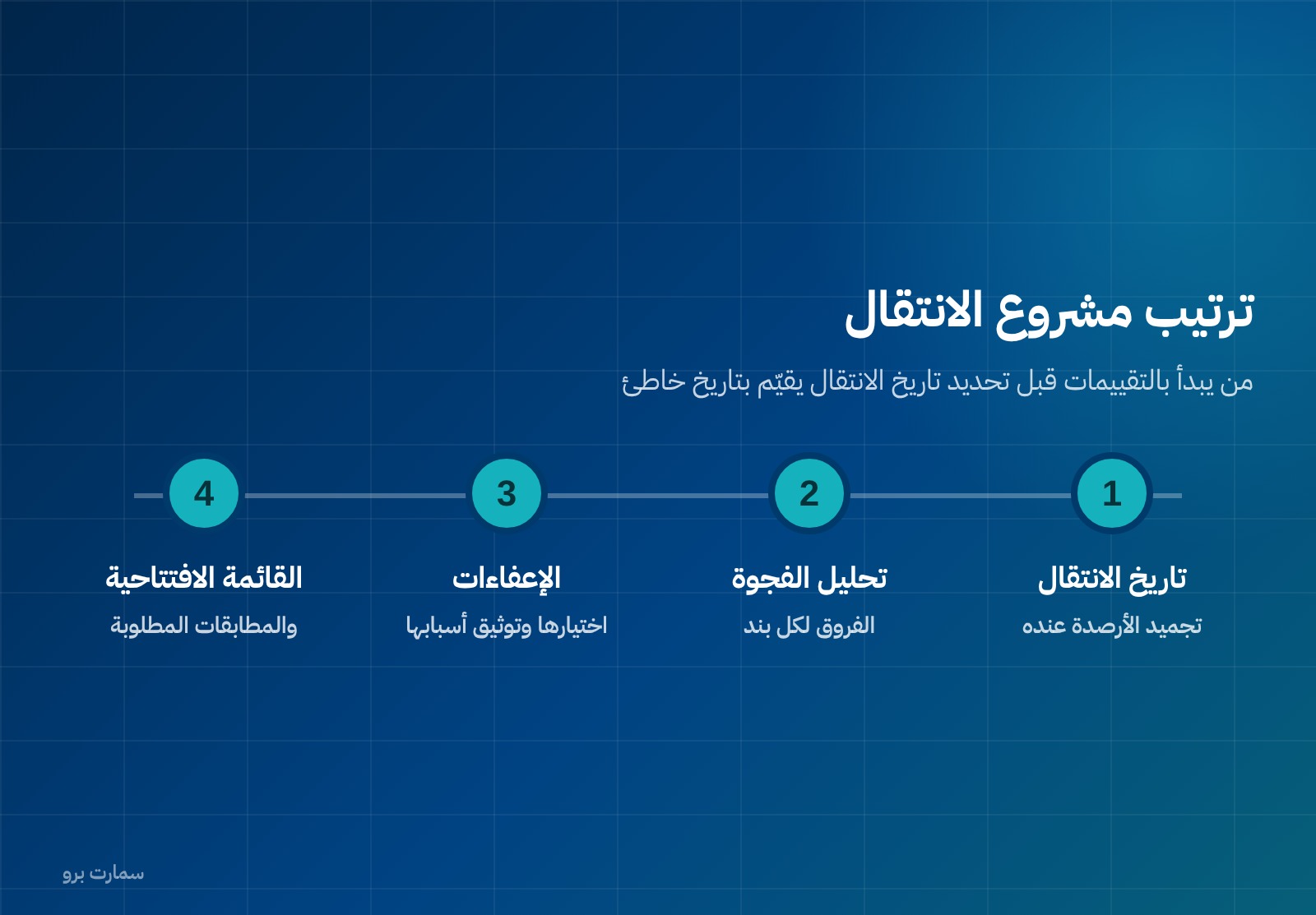
| Set the date of transition and freeze balances at that date | Trial balance at 1 January 2025 under previous principles |
| Gap analysis between previous principles and IFRS | A list of differences for each line item |
| Choose optional exemptions and document the reasons | An approved policy memo |
| Valuations and models (assets, leases, credit losses, end of service) | Technical reports |
| Build the opening statement and reconciliations | Opening statement + equity and comprehensive income reconciliations |
The order is deliberate: if you start valuations before fixing the date of transition, you value assets at the wrong date.
How does transition affect zakat and tax?
Changes in carrying amounts at transition change the base on which zakat and tax calculations are built, and they create temporary differences that are dealt with under deferred tax. It is important that the transition project includes an estimate of its zakat impact before the year-end close, not after it.
What does this mean in practice for a transition project?
Transition is a project, not a journal entry. Its heaviest workstreams are usually four: valuing property, plant and equipment, reviewing lease contracts under IFRS 16, building an expected credit loss model, and calculating the end-of-service provision on an actuarial basis under IAS 19.
The common mistake is starting from the financial statements instead of the date of transition. If you want 2026 IFRS statements with 2025 comparatives, your date of transition is 1 January 2025, and you need data as at that date, not as at today.
IFRS 1 applies if your first IFRS statements cover a period beginning on or after 1 July 2009. The official text is on ifrs.org.
What is the official name adopted in Saudi Arabia?
The approved Arabic name of the standard translates as "IFRS 1: First-time Adoption of International Financial Reporting Standards". SOCPA adopted it with Saudi modifications in its endorsement document. Saudi modifications to the standards usually serve one of three purposes: adopting one of the alternatives permitted in the international text, adding disclosures, or responding to requirements specific to the Saudi environment. They are an integral part of the standard as adopted in the Kingdom, so you must refer to the endorsement document when applying it.
Reference: Saudi Organization for Chartered and Professional Accountants (SOCPA), document endorsing IFRS for application in the Kingdom, updated 1447/07/04 AH.
Key takeaway: First-time adoption starts with the date of transition, not the financial statements: fix that date, build the opening statement of financial position, and take every adjustment to equity, not to profit or loss.
To see how SmartPro's finance and accounting system keeps your trial balance and statements ready for a project like this, start a free trial.
Article visuals
Frequently asked questions
What are first IFRS financial statements?
They are the first annual statements in which a business adopts IFRS through an explicit and unreserved statement of compliance. This includes businesses whose previous statements were not fully compliant or were prepared for internal use only.
What is the date of transition?
It is the beginning of the earliest period for which full comparative information is presented, and an opening IFRS statement of financial position is prepared at that date. A business that wants 2026 statements with 2025 comparatives has a date of transition of 1 January 2025.
Where do transition adjustments go?
They go to retained earnings, or another category of equity, at the date of transition, not to profit or loss. The transition itself therefore creates no profit or loss in the income statement.
What is the difference between mandatory exceptions and optional exemptions?
Mandatory exceptions to retrospective application are required, with no choice involved. Optional exemptions are permitted, but they may not be applied by analogy to cases the standard does not specify.
Can estimates be revised at transition?
No. Estimates at the date of transition must be consistent with those made under previous accounting principles, unless there is objective evidence they were in error. Information received later is treated as a non-adjusting event.