
Exploration and Evaluation of Mineral Resources: IFRS 6
How IFRS 6 treats spending on the exploration and evaluation of mineral resources, what the temporary exemption allows, and the four impairment indicators specific to the standard.
Author:سامي الحيدري
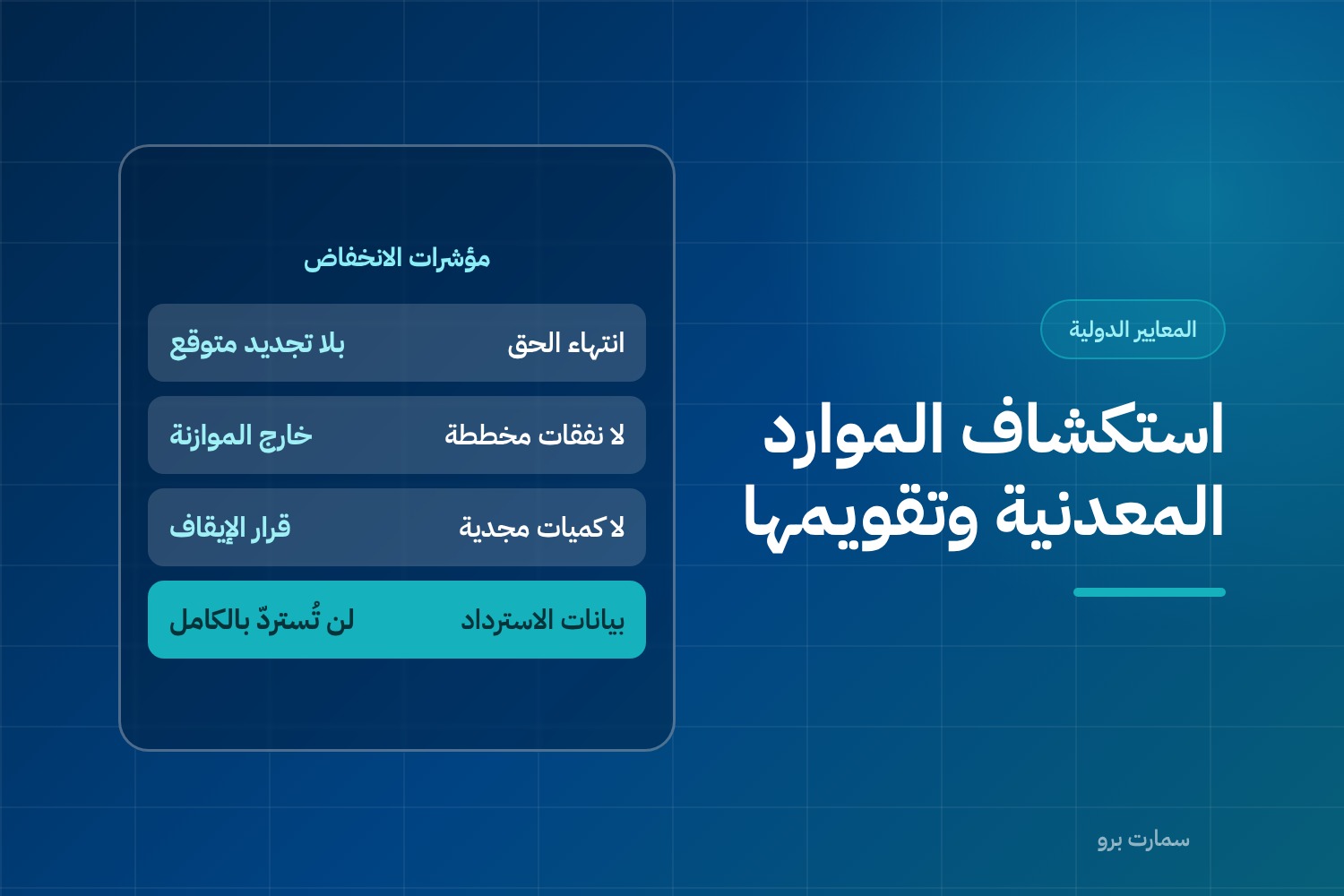
Saudi Arabia's mining sector is growing, and it has its own accounting treatment for a stage unlike any other activity: the search that happens before anyone knows whether there is something worth extracting. IFRS 6 governs the exploration and evaluation of mineral resources.
The standard is openly modest in its ambition. It makes limited improvements to existing practice rather than setting out a complete framework, because the IASB postponed a comprehensive treatment of extractive activities.
What does IFRS 6 cover?
The standard applies only to exploration and evaluation expenditure. It does not apply to expenditure incurred:
- Before exploration and evaluation begins, for example before the entity obtains the legal rights to explore a specific area.
- After the technical feasibility and commercial viability of extraction become demonstrable, which means the development and production phases fall outside its scope.
In short, the standard covers the period between obtaining the right and demonstrating feasibility, and nothing more.
What is the temporary exemption from the IAS 8 hierarchy?
This is the most important feature of the standard. When developing an accounting policy for exploration and evaluation assets, an entity applies paragraph 10 of IAS 8 but is exempt from paragraphs 11 and 12 of that standard.
The practical effect is that an entity may continue applying the policies it used before adopting IFRS 6, even if they are not consistent with the usual hierarchy of sources. That is why practice still varies between companies in the sector, and the variation is intentional rather than a flaw.
What is capitalised in the exploration and evaluation of mineral resources?
The asset is measured initially at cost. The entity must set a policy, and apply it consistently, that specifies which expenditure is capitalised, based on the degree to which the expenditure can be associated with finding specific mineral resources.
The standard gives these examples:
- Acquisition of rights to explore.
- Topographical, geological, geochemical and geophysical studies.
- Exploratory drilling.
- Trenching and sampling.
- Activities to evaluate technical feasibility and commercial viability.
Development expenditure must not be recognised as an exploration and evaluation asset. Obligations for removal and restoration incurred during exploration are accounted for under IAS 37.
Are exploration assets tangible or intangible?
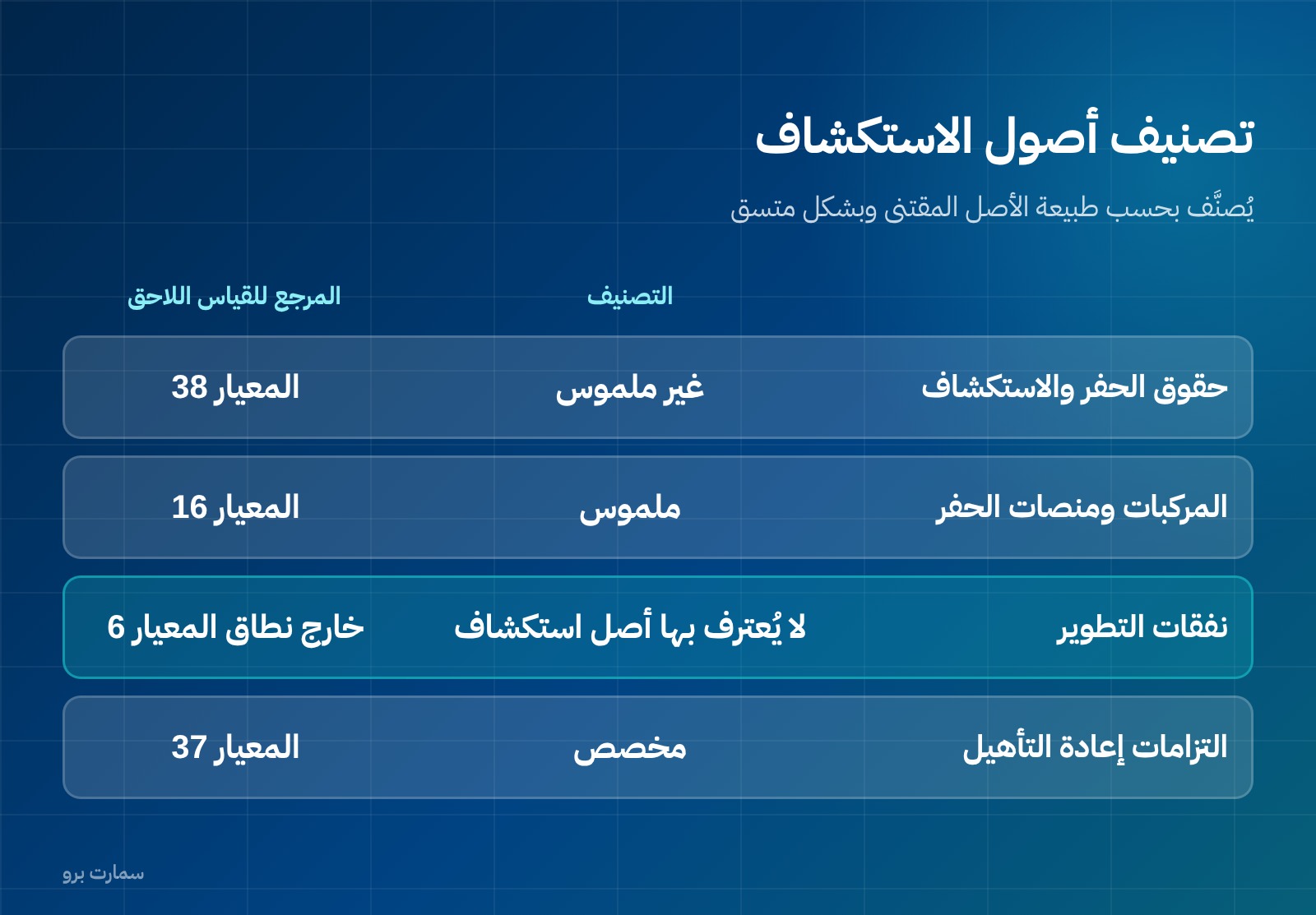
Exploration and evaluation assets are classified according to the nature of the assets acquired, and the classification is applied consistently. The standard's examples are clear:
| Asset | Classification |
|---|---|
| Drilling rights | Intangible |
| Vehicles and drilling rigs | Tangible |
One subtle point: when a tangible asset is consumed in developing an intangible asset, that consumption adds to the cost of the intangible asset, but it does not turn the tangible asset into an intangible one.
For subsequent measurement there are two options: the cost model or the revaluation model, under IAS 16 or IAS 38 depending on the classification.
When does an asset leave the exploration and evaluation category?
Once technical feasibility and commercial viability are demonstrable, the asset is no longer an exploration and evaluation asset. It must be tested for impairment, and any loss recognised, before reclassification, not afterwards. This timing point is where many get it wrong.
What are the four impairment indicators in IFRS 6?
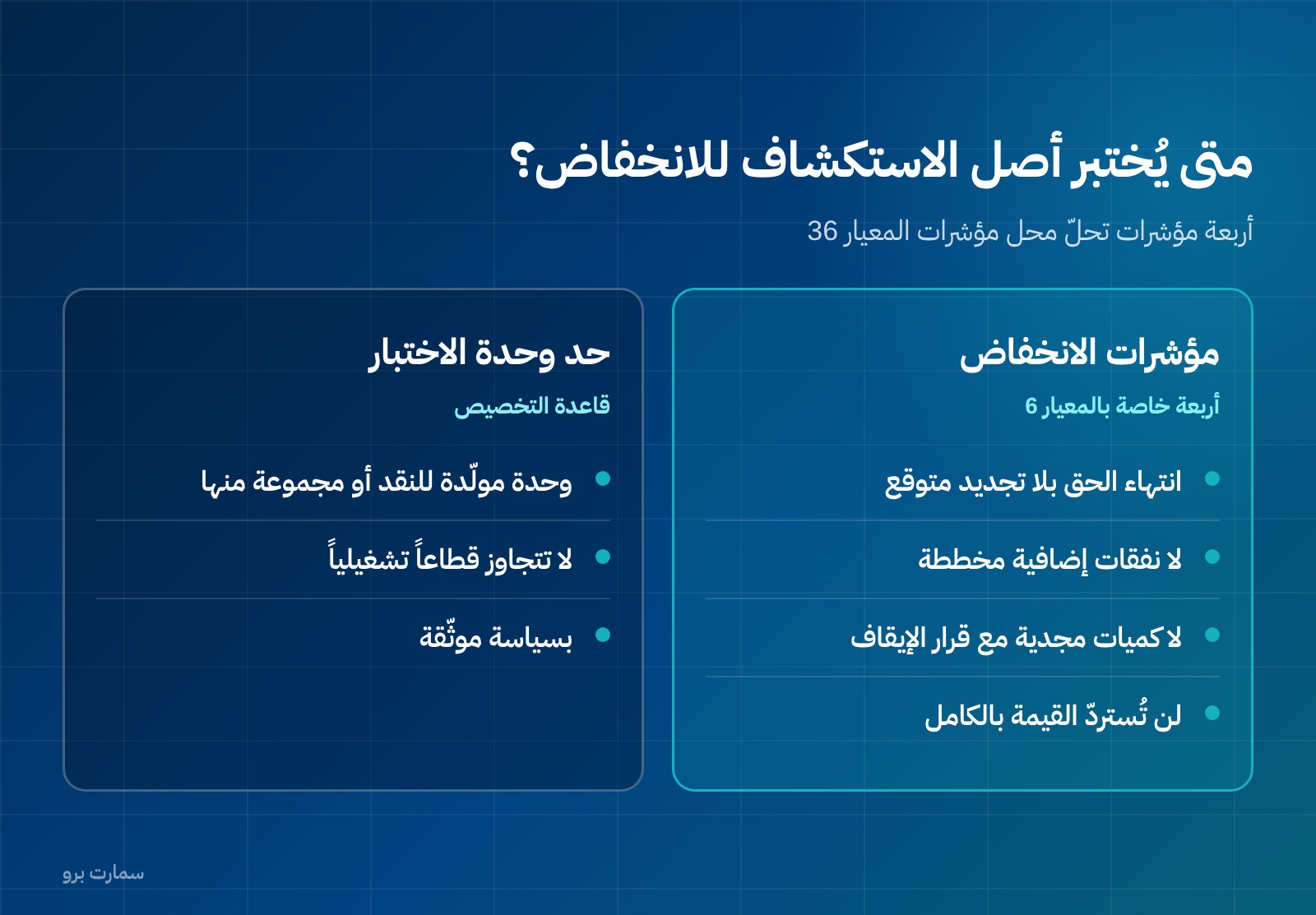
The asset is tested when facts and circumstances suggest that its carrying amount may exceed its recoverable amount. Impairment is measured under IAS 36, but IFRS 6 replaces the IAS 36 indicators with four of its own:
- The right to explore has expired or will expire soon and is not expected to be renewed.
- Substantive further exploration and evaluation expenditure is neither budgeted nor planned.
- Exploration has not led to the discovery of commercially viable quantities, and the entity has decided to stop activities in the area.
- Data indicate that the carrying amount is unlikely to be recovered in full from successful development or from sale.
The allocation rule matters: the entity sets a policy for allocating exploration and evaluation assets to cash-generating units or groups of units, and no unit or group may be larger than an operating segment as determined under IFRS 8 on operating segments. A cash-generating unit is the smallest group of assets that generates cash inflows largely independent of other assets.
What must be disclosed about exploration assets?
The entity discloses its accounting policies for exploration and evaluation expenditure, including how the assets are recognised, and the amounts of assets, liabilities, income, expense and operating and investing cash flows arising from them. Exploration and evaluation assets are presented as a separate class of assets, with the disclosures required by IAS 16 or IAS 38 depending on their classification.
Which three decisions does the entity make once?
Because the standard leaves wide room for accounting policy, three decisions are taken at the outset and applied consistently afterwards:
- The capitalisation threshold: which expenditure is capitalised and which is expensed, based on how closely it relates to finding specific resources. Some entities capitalise all spending in an area, while others capitalise only what relates to a particular well or site.
- Classification: a table that maps each type of expenditure to tangible or intangible.
- The impairment testing unit: how exploration assets are grouped into cash-generating units, provided no unit exceeds an operating segment.
Documenting these three in an approved policy memo is what makes the financial statements auditable, because the standard itself does not impose a single answer.
How does this relate to restoration obligations?
Mining sites carry an obligation to restore the land once activity ends. That obligation is outside the scope of IFRS 6 even when it arises during exploration; it is accounted for as a provision under the provisions standard. Estimating its cost and discounting it to present value is a material item on mining companies' balance sheets, and it is reviewed every year as estimates and prices change.
The disclosure serves a specific purpose: to show the reader how much has been spent on searching and how much is still carried on the balance sheet, because exploration assets are among the balance sheet items most exposed to sudden write-off once a project proves unviable.
What is the future of IFRS 6?
The IASB completed a research project on extractive activities and decided not to develop new or amended requirements, as it found no compelling evidence that they were needed. The standard stays as it is, and the variation in policies will continue.
The standard has been effective since 1 January 2006, and its text is available on ifrs.org.
What is the official title adopted in Saudi Arabia?
The official Arabic title adopted for this standard is «المعيار الدولي للتقرير المالي 6: استكشاف الموارد المعدنية وتقويمها» (IFRS 6: Exploration for and Evaluation of Mineral Resources). SOCPA adopted it without any modification for application in the Kingdom.
Reference: Saudi Organization for Chartered and Professional Accountants (SOCPA), the document endorsing IFRS for application in the Kingdom, updated on 04/07/1447 AH.
Key takeaway: IFRS 6 covers only the window between obtaining exploration rights and demonstrating feasibility, lets entities keep their existing policies, and replaces the IAS 36 indicators with four of its own, so document your capitalisation, classification and impairment-unit decisions once and apply them consistently.
To keep exploration costs, cost centres and journal entries organised in one place, see SmartPro Finance & Accounting or start a free trial.
Article visuals
Frequently asked questions
What is the scope of IFRS 6?
IFRS 6 applies only to expenditure on the exploration and evaluation of mineral resources. It does not apply to expenditure before exploration begins, such as before obtaining exploration rights, nor to expenditure after technical feasibility and commercial viability have been demonstrated.
What is the temporary exemption in IFRS 6?
When developing an accounting policy for exploration and evaluation assets, an entity is exempt from the two paragraphs of IAS 8 (paragraphs 11 and 12) that set the hierarchy of sources. As a result, it may continue applying the policies it used before adopting IFRS 6.
Are exploration assets classified as tangible or intangible?
They are classified according to the nature of the assets acquired, and consistently: drilling rights are intangible, while vehicles and drilling rigs are tangible. Consuming a tangible asset to develop an intangible one does not turn the tangible asset into an intangible asset.
What are the impairment indicators specific to IFRS 6?
There are four, and they replace the IAS 36 indicators: the exploration right expires with no expected renewal, no further substantive expenditure is budgeted or planned, exploration finds no commercially viable quantities and the entity decides to stop, and data show the carrying amount is unlikely to be recovered in full.
When does an asset leave the exploration and evaluation category?
An asset leaves the category once technical feasibility and commercial viability of extraction become demonstrable. It must be tested for impairment, and any loss recognised, before it is reclassified, not afterwards.