
IFRS for SMEs in Saudi Arabia: When It Fits and When to Move to Full IFRS
Who applies IFRS for SMEs in Saudi Arabia, the main differences from full IFRS, when moving to full IFRS becomes mandatory and how to prepare for it.
Author:سامي الحيدري
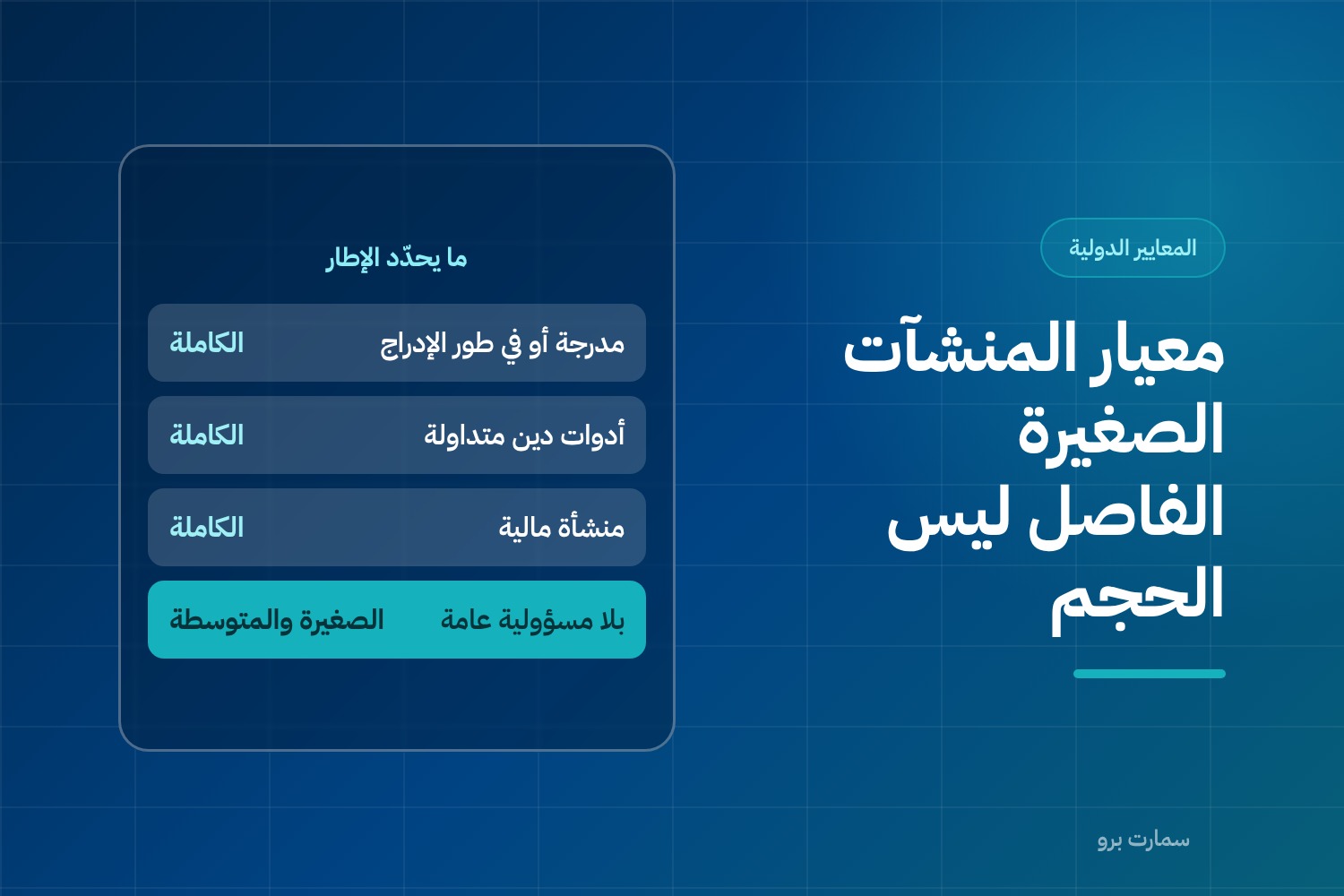
IFRS for SMEs applies in Saudi Arabia to entities that publish general-purpose financial statements for external users and have no public accountability. It is mandatory for periods beginning on or after 1 January 2018. The dividing line is public accountability, not revenue. Listing, issuing traded debt or becoming a financial institution triggers the move to full IFRS.
Many Saudi businesses apply IFRS for SMEs without realising it. Others apply full IFRS when they don't need to, and carry preparation and disclosure costs that nobody is asking for. The line between the two cases is not revenue size, as many assume. It is public accountability. This guide explains who applies which framework, the main differences between them, and when a move becomes necessary.
Who applies IFRS for SMEs in Saudi Arabia?
The Saudi Organization for Chartered and Professional Accountants (SOCPA) has defined the two frameworks clearly:
- Full IFRS as endorsed by SOCPA applies to entities with public accountability. These are entities listed on the capital market or in the process of listing, entities with traded debt instruments, and financial entities such as investment funds. It is mandatory for periods beginning on or after 1 January 2017.
- IFRS for SMEs applies to entities that publish general-purpose financial statements for external users and have no public accountability. It is mandatory for periods beginning on or after 1 January 2018, with early adoption permitted from 1 January 2017. SOCPA adopted Section 1 of the standard as part of its third-phase standards.
- Non-profit entities apply IFRS for SMEs together with SOCPA's own standards for them, under the Board resolution of 16-4-1437 AH (26 January 2016).
There was also a transitional case: new companies whose first financial statements covered a first financial year ending in 2017 could apply either framework, whichever suited them.
What is public accountability, and why does it decide the framework?
Public accountability is the status of an entity whose financial statements are relied on by outside users who cannot demand the information they need. A large family-owned business with substantial revenue whose instruments are not publicly traded may fall under IFRS for SMEs. A mid-sized company with traded sukuk or other debt instruments falls under full IFRS. Size is an indicator, not the rule.
The practical question that settles it: does your business have external users who cannot ask you for additional information? Holders of traded debt instruments, market investors and fund subscribers are all in that position. A bank that finances you can request whatever information it wants, so a bank loan alone does not create public accountability.
How does IFRS for SMEs differ from full IFRS?
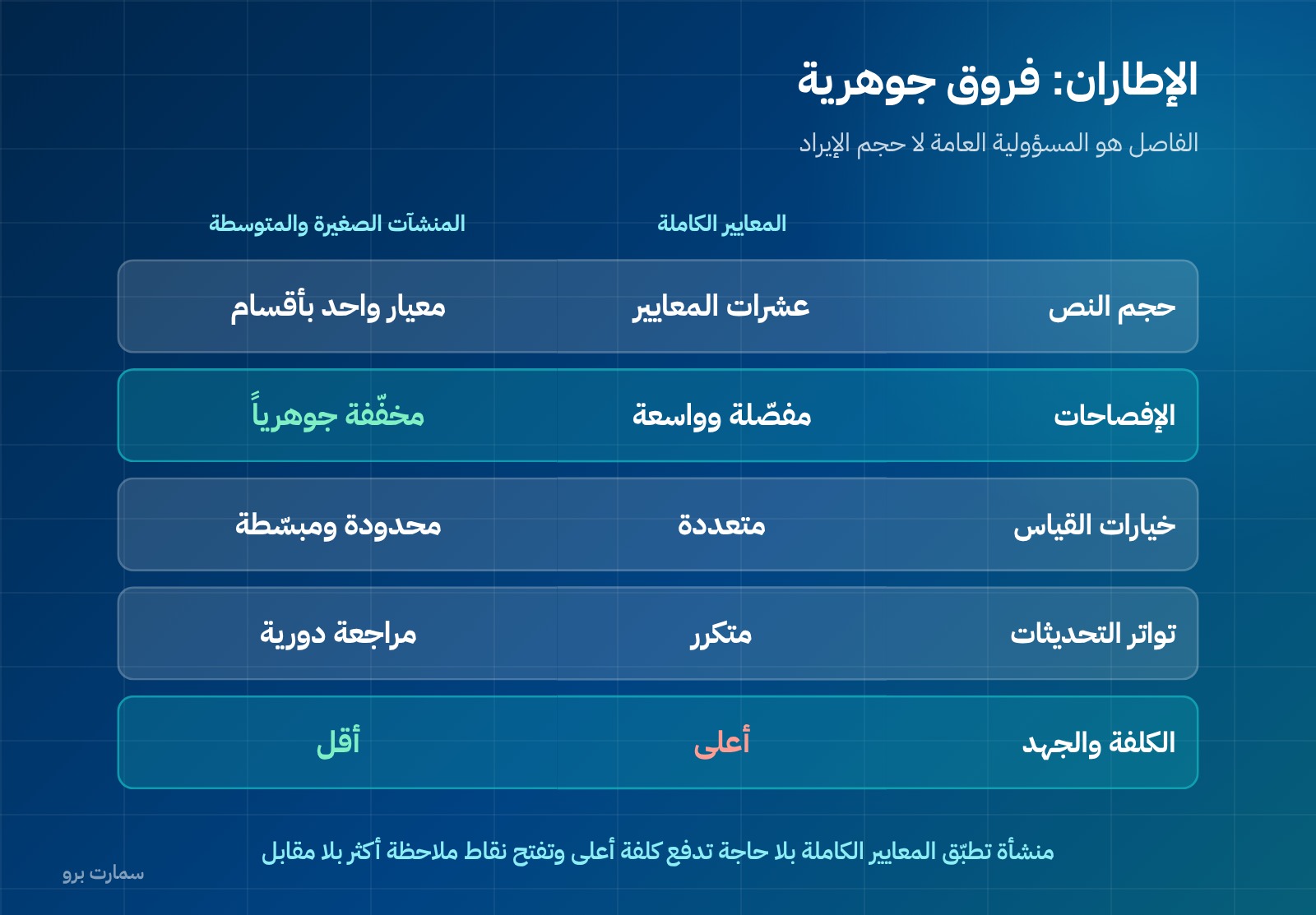
The standard is designed to reduce the burden while preserving the quality of information:
| Aspect | Full IFRS | IFRS for SMEs |
|---|---|---|
| Size of the text | Dozens of separate standards | A single standard divided into sections |
| Disclosures | Detailed and extensive | Substantially reduced |
| Measurement options | Several for many items | Limited and simplified |
| Updates | Frequent | Periodic review, less often |
| Cost and effort | Higher | Lower |
In practice, a business that applies full IFRS without needing to pays more for preparation, audit and disclosure, and opens itself up to more audit findings, for no benefit.
When do you have to move to full IFRS?
The move becomes necessary when your business acquires public accountability:
- Applying to list on the capital market, or entering the listing process.
- Issuing traded debt instruments such as sukuk.
- Becoming a financial entity such as an investment fund.
You may also choose to move voluntarily for commercial reasons: a foreign investor who asks for full IFRS statements, international financing, or early preparation for a listing. A voluntary move should be decided well in advance, not in the year you need it.
How do you prepare for the transition?
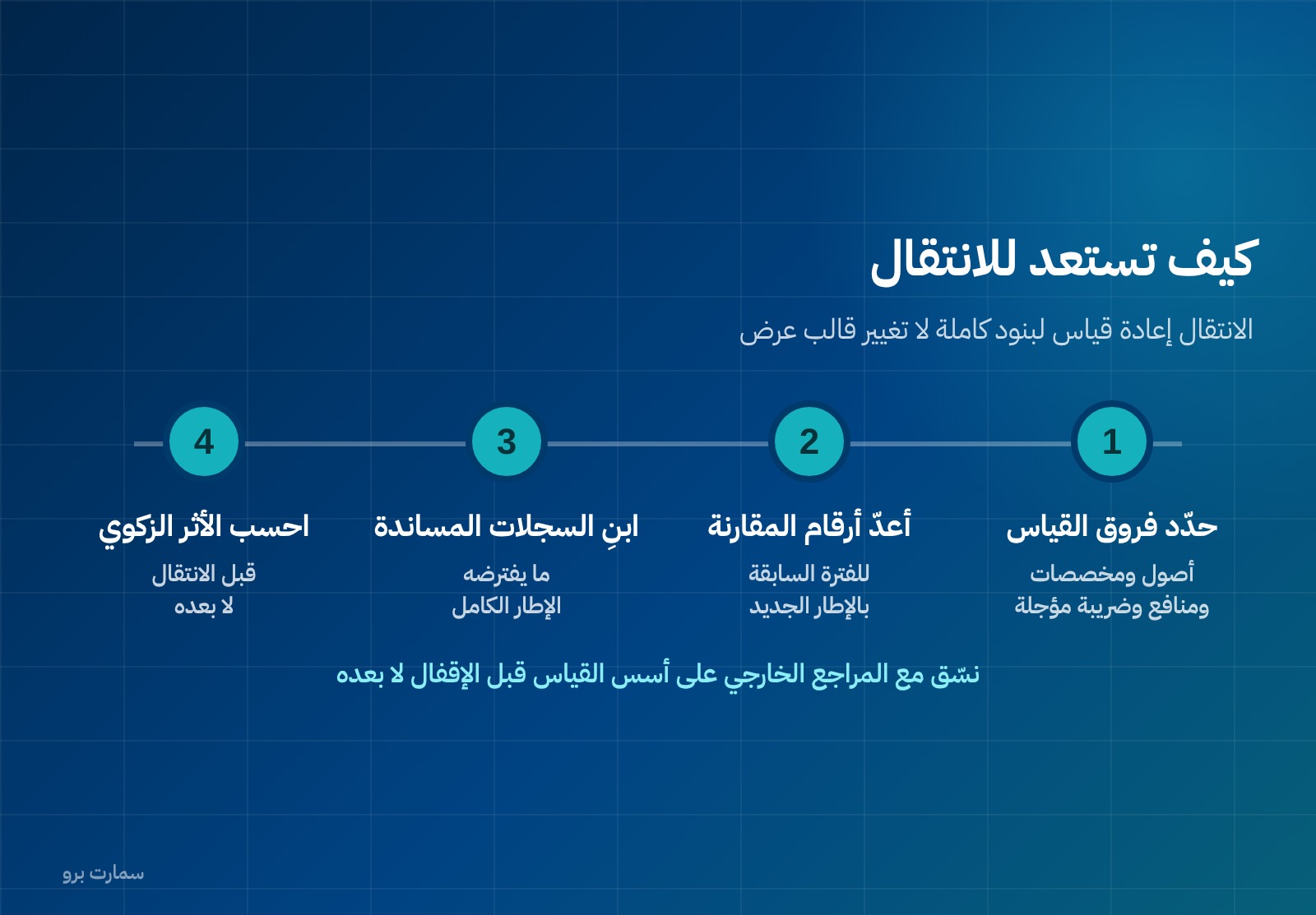
The transition is not a change of presentation template. It is a remeasurement of entire line items.
- Identify the measurement differences between what you apply now and what you will apply: fixed assets, intangible assets, provisions, employee benefits and deferred tax.
- Prepare comparative figures for the prior period under the new framework. This assumes your detailed data can be remeasured.
- Build the supporting records that full IFRS expects: a fixed asset register with two columns, a lease contracts register, a provisions movement schedule and a related-parties file.
- Rewrite your accounting policies document in full. See accounting policies, estimates and errors.
- Agree measurement bases with your external auditor early, before the close rather than after it.
- Calculate the effect on zakat before the move. A change in measurement changes equity, and therefore the zakat base, as explained in zakat calculation for businesses.
What is the costly mistake of confusing the framework with the template?
Some businesses think that applying a framework means using a particular presentation template for the statements. In reality, the framework governs measurement before presentation: when you recognise revenue, how you measure inventory and assets, and how you calculate provisions. A business that copies the layout of a listed company's statements while its measurements rest on internal judgement calls is not applying any framework. It is presenting numbers in a borrowed format.
The practical sign of this confusion: financial statements that look "right" but have no written accounting policies document and no supporting records showing how the figures were reached.
What stays the same whatever framework you apply?
Some obligations have nothing to do with your choice of framework:
- E-invoicing and its regulatory requirements.
- Filing your VAT return on time, as covered in the VAT return in Saudi Arabia.
- Keeping invoices, books and accounting records.
- Maintaining regular books that let you extract balances at any time, which is what the accounting cycle measures.
A business without this foundation will not be helped by any framework, because the framework governs how data is measured and presented; it does not create the data. This is where connected software helps: in SmartPro, every sale, receipt and payment turns into a journal entry automatically, with a live trial balance and financial statements, as described on the Finance & Accounting page.
Checklist
- The framework applied has been decided in writing, with the reason for choosing it documented.
- There is no existing or expected public accountability within the next two years.
- The accounting policies document matches the framework applied.
- The external auditor is aware of the framework and agrees with it.
- There is a written transition plan if a listing or a debt issue is on the table.
- Supporting balances are ready to be measured under full IFRS when needed.
- The effect of the transition on the zakat base has been estimated in advance.
Where is the official reference?
SOCPA publishes the endorsed frameworks, their effective dates and who applies each one on its website: socpa.org.sa. The original text of the standard is available from the IFRS Foundation at ifrs.org. Check the definition of SMEs and its details directly on SOCPA's pages.
Read also
- IFRS 18: Your financial statements are about to change significantly
- Notes to the financial statements: what must they include?
Key takeaway: Public accountability, not size, decides whether you apply IFRS for SMEs or full IFRS. If a listing, sukuk issue or foreign investor is on the horizon, plan the remeasurement and its zakat effect well before the year you need it.
To see how SmartPro keeps your books ready for either framework, start a free trial or book a demo.
Article visuals
Frequently asked questions
Who applies IFRS for SMEs in Saudi Arabia?
Entities that publish general-purpose financial statements for external users and have no public accountability. It is mandatory for periods beginning on or after 1 January 2018, with early adoption permitted from 1 January 2017. Non-profit entities apply it together with SOCPA's own standards for them.
What determines the framework: size or something else?
Public accountability, not size. An entity that is listed or in the process of listing, has traded debt instruments, or is a financial entity such as an investment fund applies full IFRS whatever its size. A large family business with no public accountability may fall under IFRS for SMEs.
When does moving to full IFRS become mandatory?
When the business acquires public accountability: applying for or entering the listing process, issuing traded debt instruments such as sukuk, or becoming a financial entity. You may also move voluntarily for commercial reasons, such as a foreign investor or international financing, and it is best to do this well in advance rather than in the year you need it.
Will the transition change my business's figures?
Yes, because it is a remeasurement of entire line items, not a change of presentation template: fixed and intangible assets, provisions, employee benefits and deferred tax. You must prepare comparative figures under the new framework and estimate the effect on equity, and therefore on the zakat base, before the move.