
ZATCA-Approved Accounting Software: What Does the Phrase Really Mean?
"ZATCA-approved accounting software" is a widely misunderstood phrase. Here is what ZATCA actually publishes, where the responsibility sits, and how to check a system yourself in six steps.
Author:سامي الحيدري
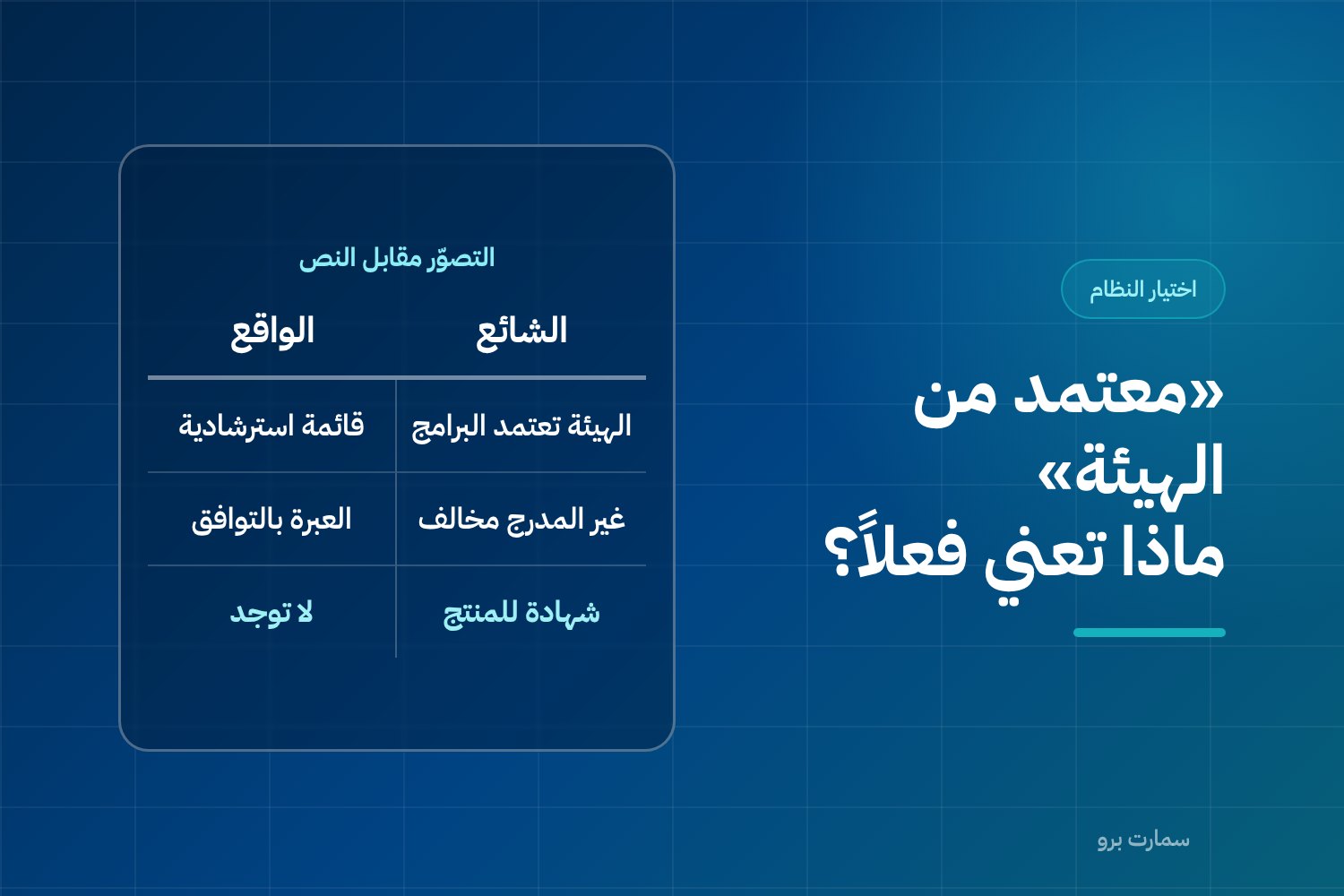
"ZATCA-approved accounting software" appears on almost every vendor's website, and it is one of the most misunderstood phrases in the Saudi market. Most readers assume ZATCA (the Zakat, Tax and Customs Authority) has tested and certified the software the way laboratories or products are certified, and that using "unapproved" software puts them in breach.
The regulatory reality is different. Knowing it can save you from a wrong decision, and possibly a large sum of money.
ZATCA-approved accounting software: what actually exists?
ZATCA publishes an indicative list of e-invoicing solution providers, which lists providers of systems that have passed the qualification requirements. That is all there is to it.
| Common belief | What actually exists |
|---|---|
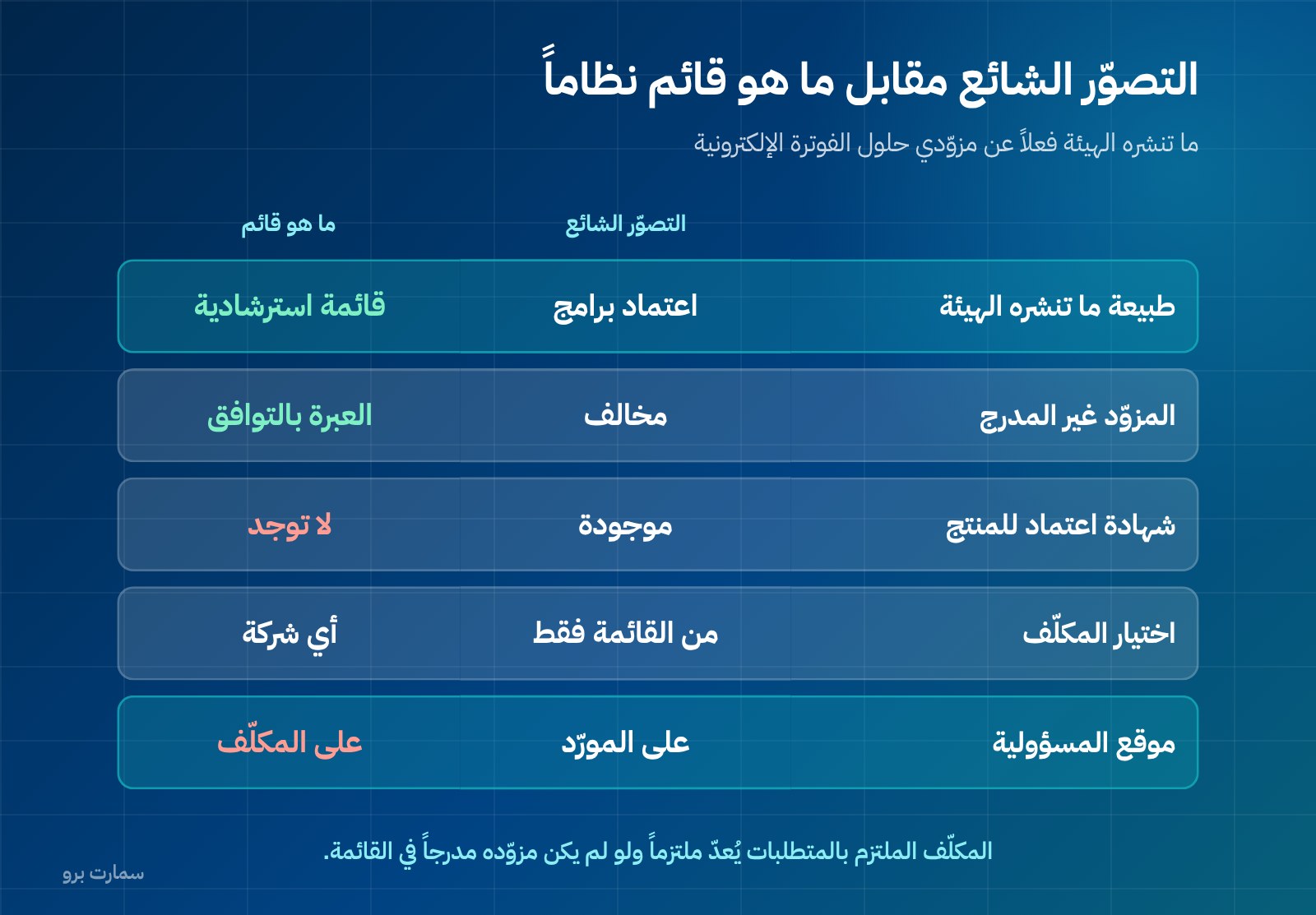
| ZATCA "approves" accounting software | It publishes an indicative list of providers that passed the qualification requirements |
| Software not on the list is non-compliant | No; what matters is whether the system meets the requirements |
| Approval is a product certificate | There is no product approval certificate in that sense |
| The taxpayer must choose from the list | No; they may work with any company that provides electronic systems |
The decisive point: a taxpayer who meets the requirements is considered compliant, even if their provider is not on the indicative list. Responsibility rests on the system you use and whether it complies, not on a vendor's name appearing on a list.
This does not diminish the list's value. A vendor being on it is a good sign, but it is not the legal condition people imagine it to be.
Why is the phrase so widespread, then?
Because it saves the vendor a long explanation and saves the buyer a hard decision. The buyer wants a guarantee from an official body instead of checking for themselves, and the vendor wants one word that ends the discussion.
The result is a market trading reassurance that no regulation supports. The first to pay for it is the small business that bought on the strength of the phrase, then discovered at its first audit that its invoices were missing a mandatory field, and bore the consequences itself, not the vendor.
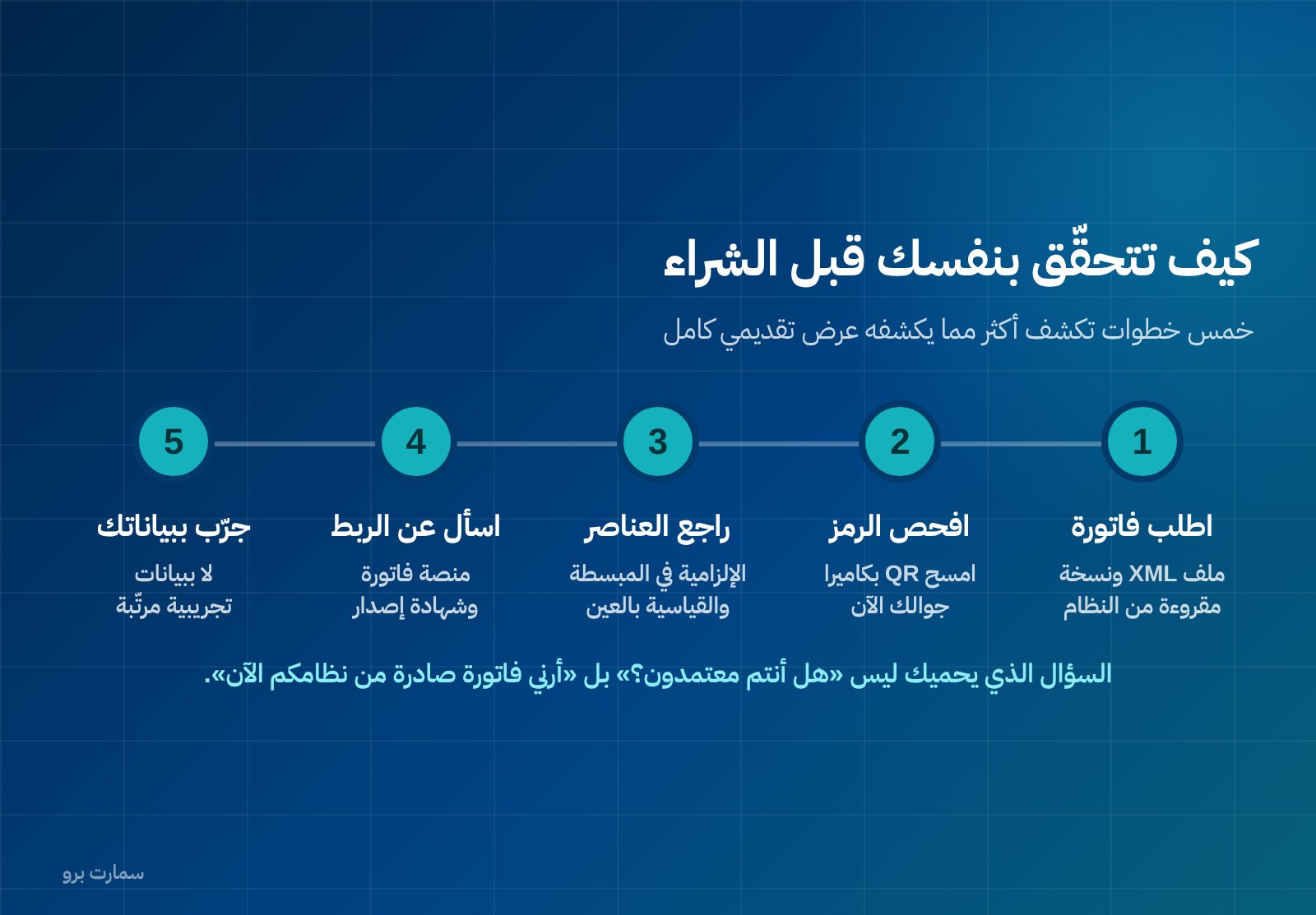
So the question that protects you is not "Are you approved?" (the answer will always be yes) but "Show me an invoice issued from your system right now." The first asks about a claim; the second asks for evidence.
Where does the responsibility lie?
With the taxpayer. You are the one required to ensure your invoices meet the requirements, not the vendor. If your system issues incomplete invoices, the violation falls on you, whatever the vendor's proposal said.
That is why the right question is not "Is the software approved?" but "Does it issue invoices that meet the requirements, and can it prove that in practice?" The gap between those two questions is the gap between a marketing slogan and evidence you can inspect.
How do you check for yourself? Six steps
- Ask for a real invoice issued from the system: not a slide from the sales presentation, but the XML file (the structured, machine-readable invoice) and a readable copy.
- Scan the QR code with your phone camera and confirm it reads and displays the data.
- Check the mandatory fields on both the simplified and the standard tax invoice; they are published and can be checked by eye.
- Ask about the Phase 2 route: is the integration done through the Fatoora platform, with a cryptographic stamp identifier (CSID) issued for the device?
- Ask for a trial on your own data, not on demo data arranged in advance.
- Ask about the reference: when there is a disagreement, does the vendor point you to ZATCA's text or to their own word?
The first step alone reveals more than an hour-long presentation. See tax invoice requirements and QR code requirements.
What should the system actually do?
| Requirement | Why it matters to you |
|---|---|
| Issues XML in the UBL 2.1 standard | The Phase 2 invoice format |
| Cryptographic stamp and a counter that never resets | Prevents tampering and proves the sequence |
| A hash chain linking each invoice to the previous one | Any gap shows up immediately |
| A printed, readable QR code | Mandatory on simplified invoices |
| No editing after issue | Corrections are made by credit or debit note, not by editing |
| Archiving that keeps the original file | The legal document is the XML, not the image |
Of these six, the last is the one most often overlooked at purchase, and its effect shows up years later at the first audit. The details are in e-invoice archiving and Phase 2 and what integration means.
Which four marketing phrases deserve scrutiny?
"Approved by ZATCA"
Ask: approved in what sense? If they mean listing on the indicative list, they should say so plainly. Listing is something you verify with ZATCA, not something you take from the vendor.
"Phase 2 compliant"
Ask for the evidence: an issued XML invoice, a stamp certificate, and a working integration route. Compliance is demonstrated, not claimed.
"Ready for any future update"
A promise about the future cannot be checked today. A better question: how many times have you updated the system over the past two years, and when was the last time?
"Supports all requirements"
A vague phrase. Replace it with the six items above and check them one by one on a real invoice.
What if you find your system is not compliant?
The remedy is not to postpone. The shortest practical path:
- Document the current situation: what exactly is missing from your invoices?
- Ask your vendor for a written timeline, not verbal reassurance.
- Estimate the cost of staying against the cost of moving, including potential penalties.
- Avoid switching mid tax period if you can, and keep the old system's archive.
The move is covered in detail in moving from Phase 1 to Phase 2 and e-invoicing penalties.
The summary in three lines
First: there is no "approval certificate" for accounting software in the sense people use; there is an indicative list of providers that passed the qualification requirements.
Second: a taxpayer who meets the requirements is considered compliant even if their provider is not on the list.
Third: the responsibility is yours, so buy on the basis of an invoice you have inspected yourself, not a slogan.
Where is the official reference?
The indicative list of e-invoicing solution providers, together with the system requirements and technical specifications, is published by the Zakat, Tax and Customs Authority (ZATCA). It is the reference whenever anything a vendor says disagrees with it, including what is written here.
Read also
- Phase 2: what integration is and why it differs
- Tax invoice requirements
- Accounting software or ERP: which do you need
Key takeaway: ZATCA does not certify accounting software; it publishes an indicative list, and compliance depends on what your system's invoices actually contain. Judge any system by a real invoice you have checked yourself.
To test SmartPro's Fatoora Phase 2 invoices on your own data, start a free trial or book a demo.
Article visuals
Frequently asked questions
Does ZATCA approve accounting software?
ZATCA publishes an indicative list of e-invoicing solution providers, which lists providers of systems that have passed the qualification requirements. There is no product approval certificate in the commonly used sense. A taxpayer may work with any company that provides electronic systems, provided the system meets the requirements.
Am I non-compliant if my provider is not on the list?
No. A taxpayer who meets the requirements is considered compliant even if their provider is not on the indicative list. What matters is whether the system you use meets the e-invoicing requirements, not whether the vendor's name is listed.
Who is responsible if the system issues incomplete invoices?
The taxpayer. You are the one required to ensure your invoices meet the requirements, and the violation falls on you whatever the vendor's proposal said. That is why a system should be checked on a real invoice before you buy, not after.
How can I check a system's compliance myself?
Ask for a real invoice issued from the system as an XML file plus a readable copy, and scan its QR code with your phone camera. Review the mandatory fields, and ask about the integration route through the Fatoora platform and the stamp certificate. Finally, ask for a trial on your own data rather than prepared demo data.