
Numbering Orders on the Rack: A Tag That Lasts Until Delivery
Numbering orders on the rack keeps thirty near-identical thobes from getting mixed up. What goes on the tag, a tag that survives pressing, and sorting the rack by delivery date.
Author:سامي الحيدري
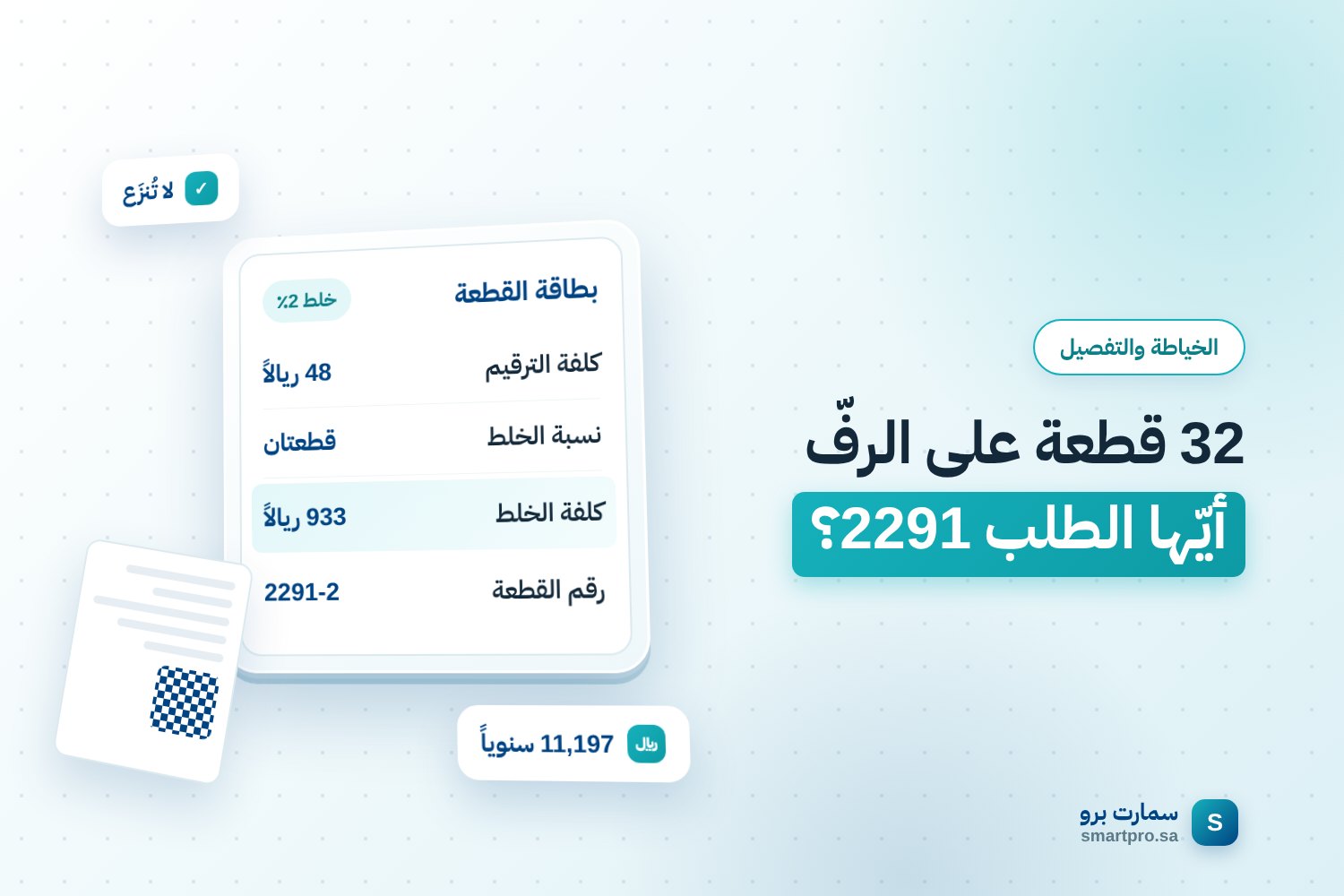
Order numbering in the system is one thing; numbering the garment hanging on the rack is another. A workshop can have an excellent system that knows order 2291 is at the pressing stage and still not know which thobe of the thirty-two hanging in front of it is order 2291.
This is the problem that management guides never write about: thirty white thobes in the same fabric, in similar sizes, on one rack. The eye cannot tell them apart, memory fails, and guessing hands a thobe to the wrong customer.
A garment that cannot physically identify itself is a lost garment, even when it is right in front of you.
Order numbering: the problem nobody writes about
Mix-ups do not happen because someone was careless. They happen because three factors build up in the workshop at the same time:
- Visual similarity. White thobes in the same fabric cannot be told apart by sight, and black abayas are even harder.
- Many pieces in progress. At 120 thobes delivered a month with a seven-day turnaround, a workshop has about 32 pieces in progress at any moment, as explained in order stages.
- Many hands. Each piece passes through at least four people along the route: intake → cutting → sewing → pressing → ready → delivered. Every handover is a chance to lose the identification.
What goes on the tag
The tag is not a name label. It is the minimum needed to work without asking anyone:
- Order number — the only key, and it should be the largest text on the tag.
- Piece sequence within the order — 2 of 3; the reason is explained below.
- Delivery date — not the intake date, because the rack is sorted by delivery date.
- Item and short measurement — thobe, chest 104.
- Measurement version number — the link to the measurement records; it reveals whether the piece was sewn to an old measurement.
- Customer number, not full name and phone number. The rack is visible to other customers, and there is no reason to show anyone's details to them.
- Six stage boxes — ticked in order, so the tag becomes a progress record, not just an identifier.
A tag that survives pressing and handling
The press is the tag killer. Heat and steam wipe out ink and melt adhesive, so a piece goes into pressing identified and comes out anonymous:
| Tag type | Against pressing | Against handling | Note |
|---|---|---|---|
| Printed paper with a clip | Removed before the press | Average | Gets lost the moment it is removed |
| Card tag on a string | Moved aside, not removed | Good | Lowest cost and most practical |
| Adhesive label on the bag | After pressing only | Good | Does not identify the piece during work |
| Temporary mark stitched in contrasting thread | Survives fully | Excellent | One extra minute; unpicked at delivery |
| QR code on a card tag | Moved aside, not removed | Good | Links the piece to the record without manual copying |
The rule that follows from the table: a tag that comes off at any stage is not a tag. If pressing requires moving it, move it aside on its string, but never separate it from the piece.
The tag goes on the garment, not the hanger
A simple, recurring mistake: the tag is hung on the hanger or tucked into the packaging bag. Hangers get swapped and bags get replaced at pressing, so the identification moves to another piece.
The result is worse than losing the tag. A lost tag gets noticed; a tag that has moved to the wrong piece is not noticed until two customers receive each other's thobes.
So the requirement is: the tag is tied through a loop or with thread to a fixed spot on the garment itself — the sleeve opening, for example — and never attached to anything that can be swapped.
Worked example: 40 halalas against SAR 400
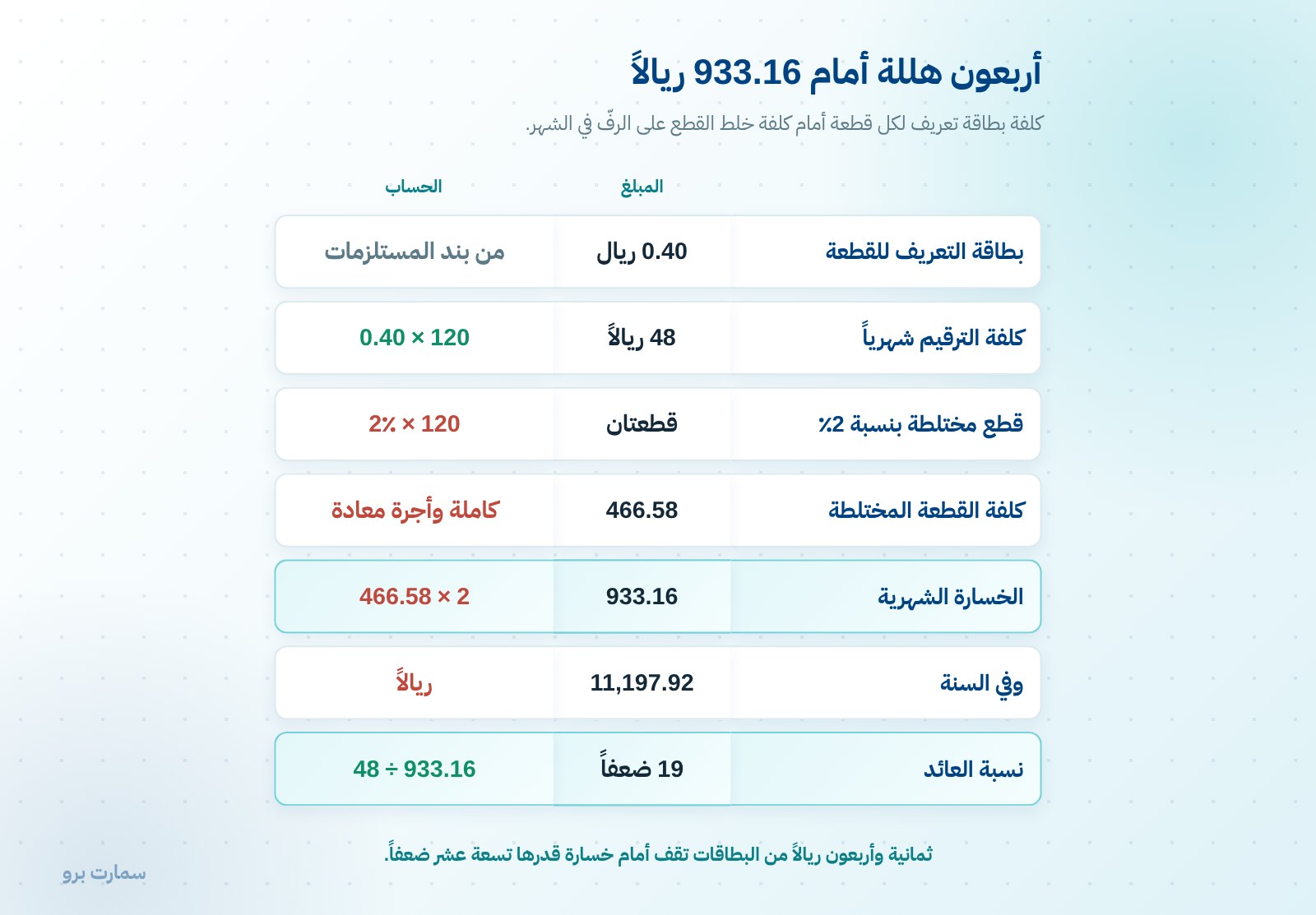
The following figures are hypothetical to illustrate the method and do not represent prevailing market prices. The identification tag in tailoring trims is estimated at SAR 0.40 per piece:
- Full numbering cost: 120 × 0.40 = SAR 48 a month
On the other side, assume a conservative mix-up rate of 2% of pieces:
- 120 × 2% = 2.4, i.e. two pieces a month
- A mix-up is usually discovered at or after delivery, and it costs SAR 466.58 per piece using the figures from receiving fabric rolls: the piece at its full cost plus the refunded tailoring fee
- Monthly cost: 2 × 466.58 = SAR 933.16
- Per year: SAR 11,197.92
In other words, SAR 48 of tags stands against a loss of about SAR 930 a month — nineteen times as much. And that excludes the effect on the workshop's reputation of a thobe reaching the wrong customer, which cannot be priced.
Sort the rack by delivery date, not arrival
The tag identifies the piece; sorting the rack makes that identification usable. A rack sorted by arrival forces you to read thirty-two tags to find one.
The practical arrangement is sections by delivery date:
| Section | What it holds | Who checks it |
|---|---|---|
| Overdue | Past its due date | The workshop owner first, every morning |
| Today | Due for delivery today | Reception |
| Tomorrow and the day after | Coming up soon | Rack supervisor |
| Rest of the week | Further out | Rack supervisor |
| Ready | Passed inspection and awaiting the customer | Rack supervisor |
| Unidentified | Lost its tag | Resolved the same day |
Put the Overdue section in the most visible spot, not the furthest, because what is hidden does not get dealt with. How to handle it is covered in late order handling, and pieces that sit too long in Ready are covered in uncollected orders.
One order, several pieces
A customer who orders three thobes is one order and three pieces. If all three carry only the order number, they spread across stages, two get finished while the third lags behind, and the order is delivered incomplete.
That is why each piece carries the order number and its sequence: 2291-1, 2291-2 and 2291-3. An order may be delivered only when all three pieces are in the Ready section together, not when one of them is ready.
When a tag gets lost
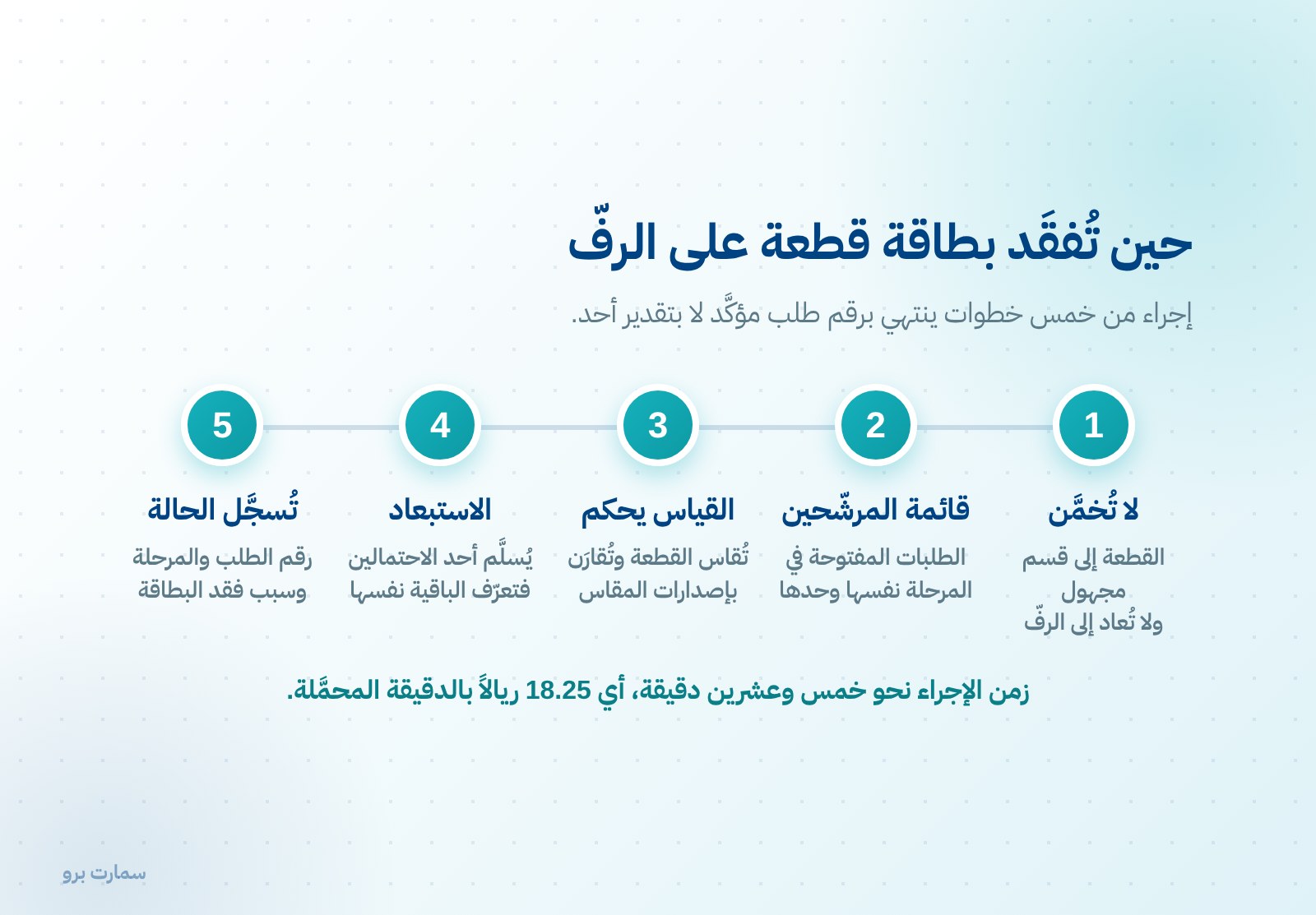
The following figures are hypothetical to illustrate the method and do not represent prevailing market prices. What follows is a five-step procedure that ends with a number:
- Do not guess. A piece without a tag goes to the Unidentified section and is not put back on the rack on anyone's hunch.
- The candidate list is short. Open orders at the same stage are few, so compare item, colour and fabric first.
- Measurements decide. Measure the piece and compare it with the candidates' measurement versions; this usually settles it.
- The last candidate identifies itself. If two possibilities remain, deliver one and the remaining piece is identified by elimination.
- Record the case. Order number, stage and why the tag was lost. If the same cause comes up three times, the tag type is wrong, not the staff careless.
The procedure takes about 25 minutes, or SAR 18.25 at the loaded per-minute rate — much cheaper than guessing, and much more expensive than a tag that was never lost.
Three numbering mistakes
First: relying on memory with small volumes. A workshop with eight pieces knows them by sight, so it builds no system. Then the season brings forty pieces and the time to build one has passed.
Second: a tag that comes off at pressing. This is the single point where identification is lost most often in the whole workshop.
Third: an order number without a piece sequence. A single order is then delivered incomplete, and nobody finds out until the customer does.
The official reference
Requirements for storage areas in tailoring shops and their space are published by the Ministry of Municipalities and Housing, which is the reference in case of any discrepancy; details are in tailoring shop requirements.
Workshops that get this right usually do it inside one system, such as SmartPro's tailoring workshop software.
Key takeaway: Tie a tag carrying the order number and piece sequence to the garment itself, choose a tag that is moved aside rather than removed at pressing, and sort the rack by delivery date.
To see order stages and tags managed in one place, start a free trial of SmartPro.
Read also
Article visuals
Frequently asked questions
How do I number orders on the rack?
Use a tag tied to the garment itself at a fixed spot, not to the hanger or the bag, since both get swapped. It should show the order number in the largest text, the piece's sequence within the order, the delivery date, the item and short measurement, the measurement version number, and a customer number instead of the full name and phone number.
Which tag survives pressing?
A tag that is moved aside rather than removed, because the press's heat and steam wipe out ink and melt adhesive. A card tag on a string is the lowest-cost and most practical option, and a temporary mark stitched in contrasting thread is the most durable. Paper tags with clips and adhesive labels come off before the press, and the identification is lost the moment they are removed.
How much does mixing up pieces cost?
Many times the cost of the tag. In the hypothetical example, numbering costs SAR 48 a month for 120 pieces, while a 2% mix-up rate means two pieces a month at SAR 466.58 each, or SAR 933.16 a month — nineteen times as much, before any damage to reputation.
What should I do if a piece loses its tag?
Never guess. Move the piece to a marked Unidentified section, compare it with open orders at the same stage, then measure it and compare it with the candidates' measurement versions. If two possibilities remain, deliver one and the other is identified by elimination, and record why the tag was lost every time.