
Borrowing Costs: When Are They Capitalised and When Are They an Expense?
What counts as a qualifying asset, when capitalisation of borrowing costs starts and stops, and how to calculate the amount you can capitalise under general borrowings.
Author:سامي الحيدري
A contracting company is building a warehouse for its own use over two years, funded by a bank loan. Is the interest during construction an expense in the income statement, or part of the warehouse's cost? The answer changes profit for both years and the value of an asset you will depreciate for twenty years. Borrowing costs have a clear rule that settles this.
Borrowing costs: what is the basic rule?
Borrowing costs that are directly attributable to the acquisition, construction or production of a qualifying asset form part of that asset's cost, so they are capitalised. To capitalise means to add a cost to an asset's carrying amount instead of recording it as an expense. All other borrowing costs are recognised as an expense in the period in which they are incurred.
Borrowing costs include interest calculated using the effective interest method, finance charges relating to leases, and exchange differences arising from foreign-currency borrowings to the extent they are regarded as an adjustment to interest costs.
What is a qualifying asset?
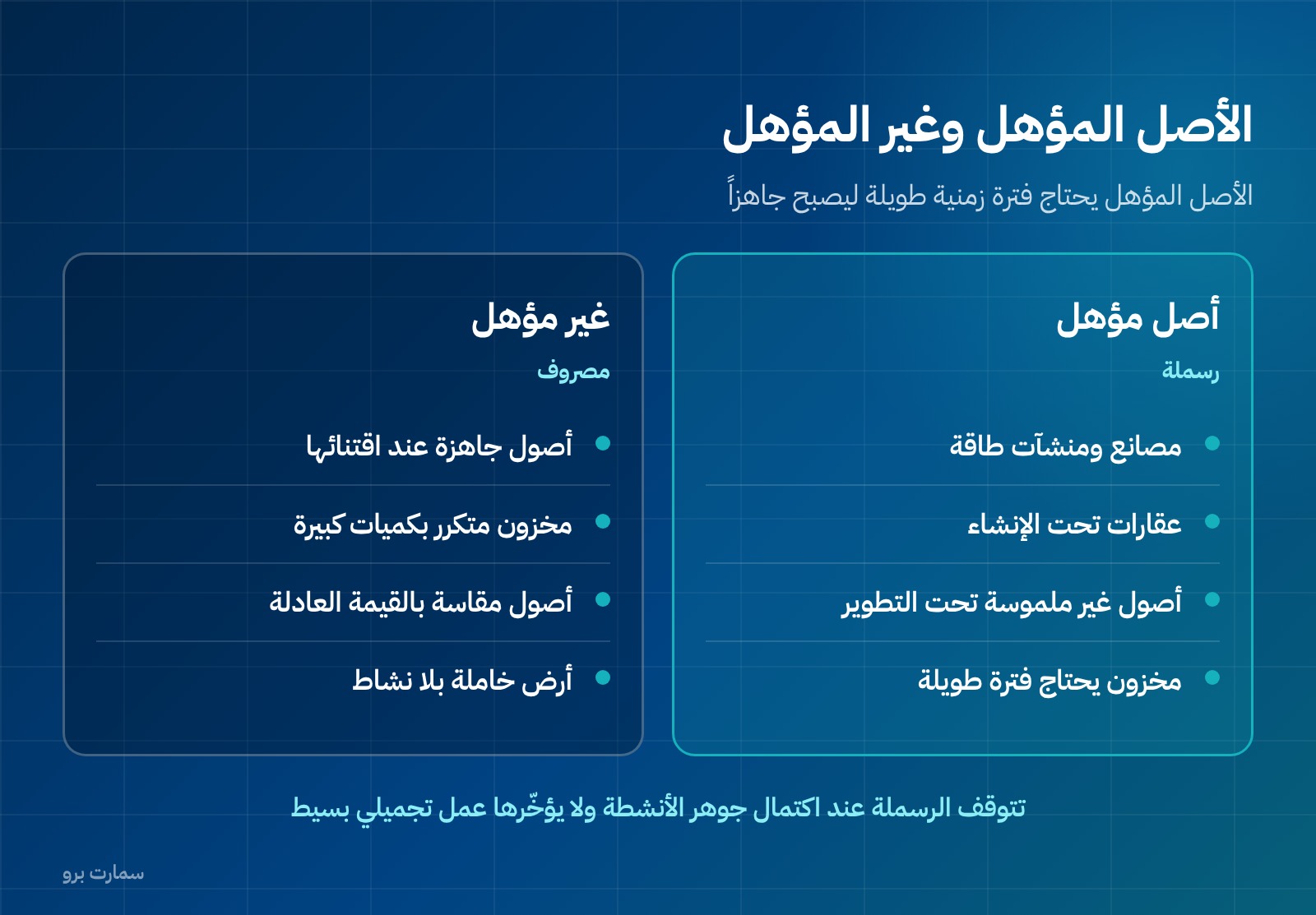
A qualifying asset is one that necessarily takes a substantial period of time to get ready for its intended use or sale. Examples include factories, power generation facilities, property under construction, intangible assets under development, and inventory that takes a long time to reach a saleable condition.
What is not a qualifying asset:
- Assets that are ready for use or sale when acquired.
- Inventory manufactured repeatedly and in large quantities over a short period.
- Assets measured at fair value.
So buying a ready-made machine with financing does not lead to capitalisation, because the machine is ready for use as soon as it arrives and is installed.
When does capitalisation start and when does it stop?
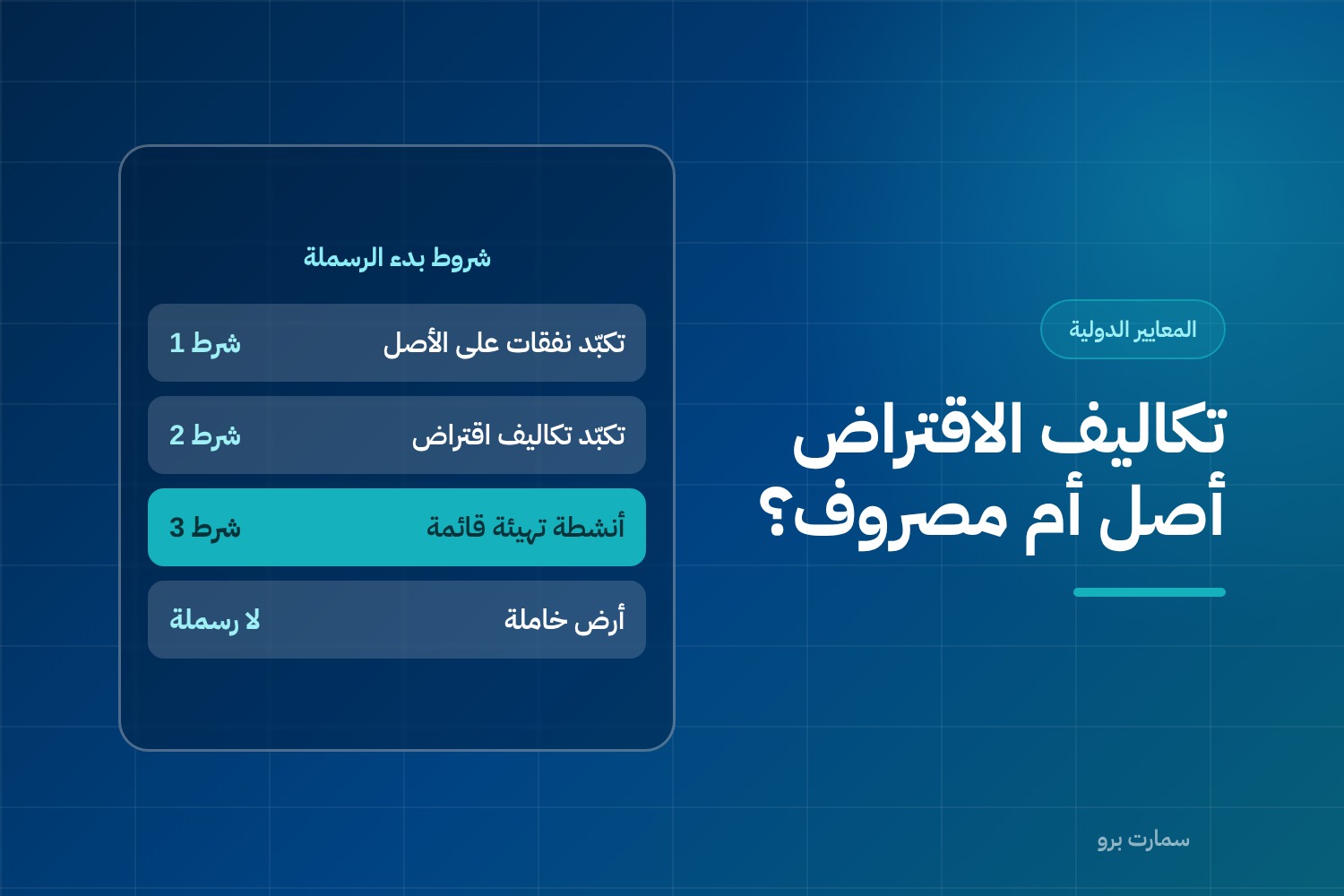
Capitalisation starts when all three of these conditions are met:
- Expenditure is being incurred on the asset.
- Borrowing costs are being incurred.
- Activities necessary to prepare the asset for its intended use or sale are under way.
The third condition is broader than physical construction. It covers technical and administrative work before construction begins, such as obtaining permits. However, it does not cover simply holding an asset with no activity that changes its condition, such as land that has been bought but where no work has started.
Capitalisation is suspended during extended periods in which active development is halted. It is not suspended during necessary technical delays, such as waiting for concrete to cure, or during expected seasonal interruptions.
Capitalisation ceases when substantially all the activities needed to prepare the asset are complete. Minor decorative work still outstanding does not delay this.
If the asset is completed in parts, each usable on its own, capitalisation stops on each part as it is completed. If the asset can only be used once it is fully complete, capitalisation continues until the whole asset is finished.
How much exactly is capitalised?
Specific borrowings for the asset: capitalise the actual borrowing costs incurred during the period, less any investment income earned from temporarily investing those funds.
This point is often missed. If you draw down a loan and temporarily invest part of it until you need it, the return on that investment is deducted from the amount capitalised.
General borrowings: apply the capitalisation rate to the average expenditure incurred on the asset. The capitalisation rate is the weighted average of borrowing costs on the borrowings outstanding during the period, excluding specific borrowings.
In every case, the amount capitalised cannot exceed the total borrowing costs actually incurred during the period.
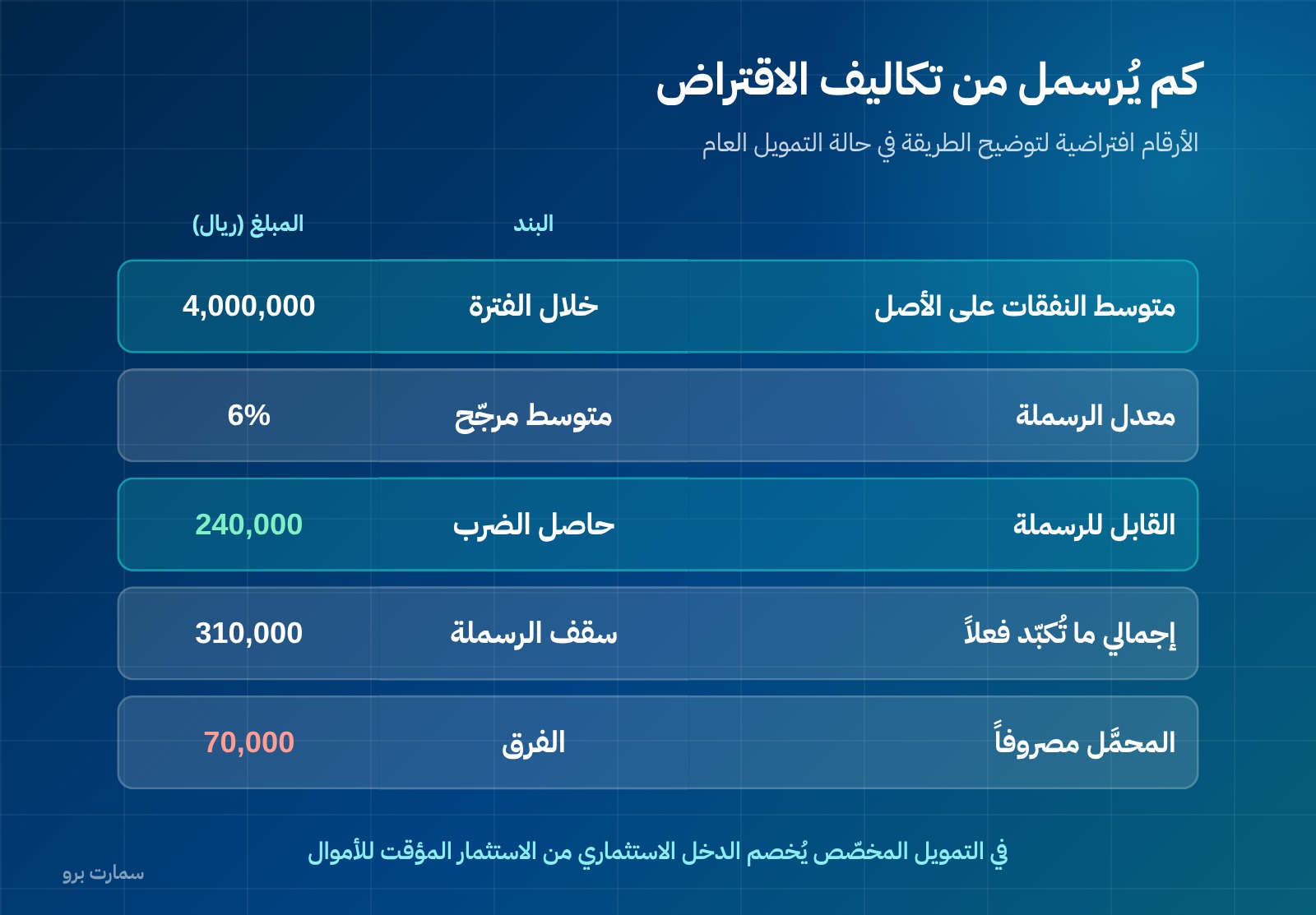
The following figures are hypothetical, to illustrate the method: average expenditure on the project of SAR 4,000,000, a capitalisation rate of 6%, and a full year.
| Item | Amount (SAR) |
|---|---|
| Average expenditure on the asset | 4,000,000 |
| Capitalisation rate | 6% |
| Borrowing costs eligible for capitalisation | 240,000 |
| Total borrowing costs incurred | 310,000 |
| Capitalised | 240,000 |
| Expensed | 70,000 |
What mistakes come up most often?
Capitalising all interest during the construction period. The capitalised amount is limited to what is directly attributable to the qualifying asset, limited by the capitalisation rate for general borrowings, and limited to the total actually incurred.
Forgetting to deduct investment income. With specific borrowings, the return on temporarily investing funds not yet used must be deducted.
Continuing to capitalise after substantial completion. Once a building is ready for use, capitalisation of its costs stops, even if decorative work remains or operations have not actually begun.
Capitalising on idle land. Holding land with no activity that changes its condition does not meet the "activities necessary to prepare the asset" condition.
Not documenting the capitalisation rate. The rate is a weighted average that changes as outstanding borrowings change, so it must be recalculated every period, not just once.
How does capitalisation affect the financial statements and tax?
Capitalisation increases the asset's value and reduces the period's expense, and the cost is then used up through depreciation over the years. In other words, it defers the cost rather than eliminating it, and changes how it is spread across years.
Its effect reaches three places: operating profit in the income statement; net fixed assets in the statement of financial position, and therefore the zakat deduction in your zakat calculation; and the tax depreciation schedule covered in accounting depreciation vs tax depreciation.
With IFRS 18, effective for periods beginning on or after 1 January 2027, the placement of borrowing costs within the financing category becomes clear-cut, while the capitalised portion leaves the income statement and goes into the asset. See IFRS 18: presentation and disclosure.
What should your review checklist include?
- Qualifying assets are identified and kept separate from other assets in the register.
- The capitalisation start date is documented against the three conditions.
- Extended suspension periods are recorded and capitalisation is halted during them.
- The substantial completion date is documented, not postponed for decorative work.
- Investment income from specific borrowings is deducted from the capitalised amount.
- The capitalisation rate for general borrowings is calculated and documented.
- The capitalised amount does not exceed the amount actually incurred.
- The capitalisation policy is written into your accounting policies document.
Where is the official reference?
International standards as endorsed in the Kingdom are published by the Saudi Organization for Chartered and Professional Accountants (SOCPA) on its website: socpa.org.sa. The full texts of the standards are available from the IFRS Foundation at ifrs.org.
Read also
- Property, plant and equipment: recognition, measurement and depreciation
- Lease contracts under IFRS 16
- Accounting policies, estimates and errors
Key takeaway: Capitalise borrowing costs only on qualifying assets, only between the documented start and substantial-completion dates, and never above what was actually incurred. Everything else is an expense of the period.
To keep project costs, cost centres and journal entries traceable in one system, explore SmartPro Finance & Accounting and start a free trial or book a demo.
Article visuals
Frequently asked questions
What is a qualifying asset?
A qualifying asset is one that takes a substantial period of time to get ready for its intended use or sale, such as factories, property under construction and intangible assets under development. An asset that is ready when acquired is not a qualifying asset. Neither is inventory manufactured repeatedly over a short period, nor an asset measured at fair value.
When does capitalisation of borrowing costs start?
It starts when three conditions are met together: expenditure is incurred on the asset, borrowing costs are incurred, and activities necessary to prepare the asset are under way. The third condition includes technical and administrative work before construction, such as obtaining permits. It does not include merely holding an asset with no activity that changes its condition.
How much of the borrowing costs can be capitalised?
For specific borrowings, you capitalise the actual costs incurred less any investment income from temporarily investing those funds. For general borrowings, you apply the capitalisation rate, the weighted average of borrowing costs on outstanding borrowings excluding specific ones, to the average expenditure on the asset. The capitalised amount can never exceed the total borrowing costs actually incurred.
When does capitalisation of borrowing costs stop?
It stops when substantially all the activities needed to prepare the asset are complete, and minor decorative work still outstanding does not delay this. It is suspended during extended periods when active development is halted. It is not suspended during necessary technical delays, such as waiting for concrete to cure.